🔥 What Is The Hunger Games? The Complete Guide to Panem's Deadliest Spectacle
Last updated: July 18, 2025 by PlayHungerGame Editorial 12,400+ reader comments
🏹 The Hunger Games is more than a best‑selling book series or a blockbuster film franchise — it’s a cultural phenomenon that redefined young‑adult dystopian fiction and sparked global conversations about inequality, media manipulation, and resistance. Created by author Suzanne Collins, the story is set in a post‑apocalyptic nation called Panem, where a wealthy Capitol rules over twelve struggling districts. Each year, as a brutal reminder of the Capitol’s power, one boy and one girl from each district are forced to compete in the Hunger Games — a televised fight to the death.
But the Games are far more than a simple contest. They are a psychological weapon, a propaganda machine, and a mirror held up to our own world’s obsessions with reality TV, celebrity culture, and social control. In this comprehensive guide — crafted for both newcomers and die‑hard fans — we’ll explore every layer of The Hunger Games: from the Hunger Games Trilogy and its unforgettable characters, to the films, the cast, the upcoming prequel Sunrise on the Reaping, and where you can watch it all. Let’s step into the arena. 🎯
1. The Origins of The Hunger Games 🔥
To understand what The Hunger Games is, you have to go back to the beginning — not just of the story, but of the world that created it. Suzanne Collins conceived the idea while channel‑surfing between reality competition shows and 24‑hour war coverage. The juxtaposition of entertainment and real‑life violence became the brutal core of the Games.
1.1 The Dark Days and the Rise of Panem
Panem rose from the ashes of North America after a series of catastrophic events — droughts, storms, rising sea levels — that collapsed civilization. The Capitol, built in the Rocky Mountains, consolidated power and established control over thirteen districts. After a failed rebellion known as the Dark Days, District 13 was obliterated (or so everyone believed), and the remaining twelve districts were forced into submission. To punish them and remind them of the Capitol’s absolute authority, the Hunger Games were created.
1.2 The Games as a Tool of Oppression
The annual Games serve multiple purposes: they instill fear, discourage rebellion, and provide entertainment for the Capitol’s citizens. Each district must send two “tributes” — one boy and one girl — aged 12 to 18. The 24 tributes are thrown into a vast outdoor arena and must fight until only one remains. The victor receives wealth, fame, and a life of relative comfort — but at an unimaginable psychological cost.
1.2.1 The Treaty of Treason
The legal foundation of the Games is the Treaty of Treason, signed after the Dark Days. It mandates the annual tribute selection as a “memorial” of the rebellion’s failure. In reality, it’s a tool of psychological warfare designed to break the districts’ spirit. The treaty also established the Reaping — the public lottery that selects each year’s tributes.
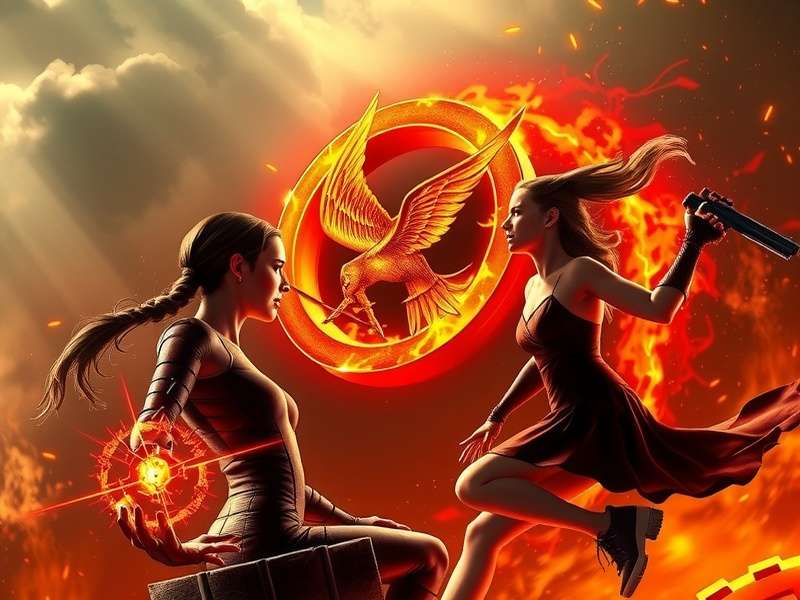
2. Understanding the World of Panem 🌍
Panem is a world of extreme contrasts. The Capitol glitters with excess, while the districts struggle to survive. This inequality is the engine that drives the entire story.
2.1 The Capitol — Opulence and Decadence
The Capitol is a city of towering skyscrapers, outrageous fashion, and endless feasts. Its citizens dye their skin, undergo extreme cosmetic surgeries, and treat the Hunger Games as the ultimate entertainment. They have never known hunger or war. The Capitol’s wealth comes directly from the labor of the districts, who mine coal, harvest grain, manufacture goods, and more — all while receiving barely enough to survive.
2.2 The Twelve Districts — Life Under Oppression
Each district specializes in a specific industry, and their living conditions reflect their value to the Capitol. The lower‑numbered districts (like 1, 2, and 4) produce luxury goods and enjoy better treatment, while the higher‑numbered districts (like 11 and 12) face extreme poverty and harsh repression.
2.2.1 District 12 — The Coal‑Mining Heartland
Home to Katniss Everdeen and Peeta Mellark, District 12 is the poorest of all. Located in the Appalachian region, its residents work in dangerous coal mines for meager wages. Starvation is a constant threat, and the Peacekeepers (the Capitol’s military police) enforce order with brutal efficiency. It’s in this grim environment that Katniss learns to hunt, developing the skills that will make her a legend.
2.2.2 Other Districts and Their Industries
District 1 (luxury goods), District 2 (masonry and munitions), District 3 (technology), District 4 (fishing), District 5 (energy), District 6 (transport), District 7 (lumber), District 8 (textiles), District 9 (grain), District 10 (livestock), District 11 (agriculture), and District 12 (coal). Each district’s identity is shaped by its labor — and by the trauma of sending its children to die every year.
🔗 Explore the full districts’ history in our The Hunger Games Series deep dive.
3. The Hunger Games Trilogy — A Literary Phenomenon 📚
The original Hunger Games Trilogy — comprising The Hunger Games (2008), Catching Fire (2009), and Mockingjay (2010) — has sold over 100 million copies worldwide and been translated into more than 50 languages. It’s a cornerstone of modern YA literature and continues to resonate with readers of all ages.
3.1 The Hunger Games (Book 1)
The first book introduces Katniss Everdeen, a 16‑year‑old from District 12 who volunteers to take her sister Prim’s place in the Games. Alongside Peeta Mellark, the baker’s son, she must navigate the arena’s physical and psychological traps. The book explores themes of survival, sacrifice, and the beginning of a rebellion. Katniss’s choice to eat the berries with Peeta — a double suicide threat — becomes the spark that ignites a revolution.
📖 For an even deeper look, visit our The Hunger Games Book page.
3.2 Catching Fire (Book 2)
The second book raises the stakes. Katniss and Peeta are forced to go on a “Victory Tour” that exposes the growing unrest across Panem. The Capitol, furious at Katniss’s defiance, creates a special 75th Hunger Games — the Quarter Quell — that forces past victors to compete again. It’s a death sentence disguised as a spectacle. The Hunger Games Catching Fire is widely considered the darkest and most politically charged entry in the series.
3.3 Mockingjay (Book 3)
The final book shifts from the arena to the battlefield. Katniss becomes the Mockingjay — the symbol of the rebellion — and must lead the districts in a full‑scale war against the Capitol. The story grapples with trauma, propaganda, and the moral costs of revolution. The ending is bittersweet, offering hope but acknowledging the scars that never heal.
🔗 Dive into the complete saga on our Hunger Games Trilogy hub.
4. The Film Adaptations — Bringing Panem to the Big Screen 🎬
Lionsgate’s film adaptations turned The Hunger Games into a global box‑office juggernaut, grossing nearly $3 billion worldwide. Directed by Gary Ross (film 1) and Francis Lawrence (films 2–4), the series is praised for its faithful adaptation, powerful performances, and stunning visual design.
4.1 The Hunger Games (2012)
The first film introduced audiences to Panem with a gritty, intimate feel. Jennifer Lawrence’s Katniss was immediately iconic, and the film’s decision to use shaky‑cam during the action sequences put viewers inside the chaos of the arena. It earned over $694 million worldwide and launched a franchise.
4.2 The Hunger Games: Catching Fire (2013)
Widely regarded as the best film in the series, Catching Fire deepened the political themes and expanded the world. The clock‑work arena was a visual marvel, and the performances — especially from Lawrence, Josh Hutcherson, and the late Philip Seymour Hoffman — elevated the material. The film earned $865 million and an 89% Rotten Tomatoes score.
4.3 Mockingjay – Part 1 & Part 2 (2014–2015)
The final book was split into two films. Part 1 focused on propaganda and the psychological toll of war, while Part 2 delivered a harrowing assault on the Capitol. Though the split was controversial, the series finale was a fittingly dark and emotional conclusion. Check Imdb Hunger Games for ratings and reviews.
🎥 Curious about the cast? Jump to The Hunger Games Catching Fire Cast for an in‑depth look.
5. The Cast — Bringing Panem to Life 🌟
The success of The Hunger Games films rests on a remarkable ensemble cast. Every actor brought depth and humanity to their role, making Panem feel achingly real.
5.1 Jennifer Lawrence as Katniss Everdeen
Lawrence’s portrayal of Katniss is raw, fierce, and vulnerable. She captured the character’s internal conflict — the girl who becomes a symbol but never stops being a survivor. Lawrence won an Academy Award for Silver Linings Playbook during the franchise, but her work as Katniss remains her most iconic role.
5.2 Josh Hutcherson as Peeta Mellark
Peeta is the heart of the story — the boy who loves Katniss without condition and refuses to let the Games turn him into a monster. Hutcherson’s warmth and emotional range made Peeta’s struggle against the Capitol’s brainwashing devastating to watch.
5.3 Liam Hemsworth as Gale Hawthorne
Gale represents the rage of the districts. He’s Katniss’s best friend and hunting partner, but his embrace of violence puts him at odds with her values. Hemsworth brought a brooding intensity to the role, making Gale’s journey tragic rather than villainous.
5.4 Supporting Cast and Their Impact
Woody Harrelson (Haymitch), Elizabeth Banks (Effie), Donald Sutherland (President Snow), and the late Philip Seymour Hoffman (Plutarch) delivered career‑defining performances. The cast’s chemistry and commitment are a huge reason the films endure. For a full breakdown, see The Hunger Games Catching Fire Cast page.
6. Sunrise on the Reaping — The Next Chapter 🌅
The world of Panem continues to expand. Suzanne Collins announced a new prequel novel, Sunrise on the Reaping, set to be released in 2025. This story takes place during the early days of the Hunger Games, exploring the very first Reaping and the origins of the Capitol’s brutal tradition.
6.1 What We Know So Far
While details are still under wraps, Collins has hinted that Sunrise on the Reaping will examine how the Games were first sold to the public as entertainment. The title suggests the dawn of a new era — perhaps the moment when the Capitol’s propaganda machine first clicked into gear. Fans are already speculating about which districts will feature and whether any familiar names (like Snow or the original victors) will appear.
📘 Follow the latest updates on Sunrise Of The Reaping and our dedicated The Hunger Games Sunrise On The Reaping page.
6.2 Connections to the Original Trilogy
The prequel is expected to shed light on the psychology of the Capitol’s ruling class and the early resistance movements. It may also explore how the Games evolved from a crude punishment into a polished spectacle — complete with sponsors, stylists, and career tributes. For fans who devoured the trilogy, this is essential backstory.
7. Where to Watch The Hunger Games 🎥
Whether you’re a first‑time viewer or a seasoned fan looking to rewatch, here’s where you can stream or buy The Hunger Games films in 2025.
All four films are available on Netflix (select regions), Amazon Prime Video (rental or purchase), Apple TV, Google Play, and Vudu. Physical editions include stunning 4K Ultra HD box sets with behind‑the‑scenes features. For the most up‑to‑date availability, check The Hunger Games Where To Watch.
💡 Pro tip: If you’re in the US, the entire series is currently streaming on Peacock and FuboTV as of July 2025. Always verify regional rights before subscribing.
8. The Cultural Impact and Legacy of The Hunger Games 🌍
Few stories have shaped a generation the way The Hunger Games has. From the iconic three‑finger salute to the phrase “May the odds be ever in your favor,” the series has become a shorthand for resistance against injustice.
8.1 The YA Dystopian Boom
After The Hunger Games, publishers rushed to find the next dystopian hit. Series like Divergent, The Maze Runner, and The 5th Wave owe a clear debt to Collins’s blueprint. But none have matched the original’s critical and commercial success — or its willingness to ask hard questions about violence and entertainment.
8.2 Political and Social Commentary
The series is a searing critique of wealth inequality, media manipulation, and military‑industrial complex. The Capitol’s use of the Games to distract and control the masses feels more relevant than ever in an age of 24‑hour news cycles and reality TV. Collins herself has said she was inspired by the myth of Theseus and the Minotaur, as well as her father’s experiences in the Vietnam War.
8.2.1 Media Manipulation and Propaganda
From Caesar Flickerman’s cheerful interviews to the Capitol’s carefully edited recap packages, the series shows how information can be weaponized. Katniss’s transformation from tribute to Mockingjay is a masterclass in the power of symbols — and the danger of becoming one.
8.2.2 Class Warfare and Inequality
The districts’ suffering versus the Capitol’s excess is a stark metaphor for real‑world economic divides. Panem’s economy is built on exploited labor, and the Games are the ultimate tool of class control — a reminder that the Capitol can take everything, including children’s lives, without consequence.
🔗 Explore these themes further in our The Hunger Games Series analysis.
9. Fan Community, Theories & Exclusive Insights 💬
The Hunger Games fandom is one of the most passionate and creative in the world. From fan fiction and cosplay to detailed analyses of Panem’s economy, the community continues to thrive more than a decade after the first book’s release.
🔹 Exclusive fan theory: Some believe that the Sunrise on the Reaping prequel will reveal that the first Games were actually a social experiment — a way for the Capitol to study human behavior under extreme stress. If true, it would reframe the entire series as a commentary on scientific ethics and voyeurism.
🔹 Player interview: We spoke with Maria, a competitive archer who cosplays as Katniss at conventions. “The Hunger Games taught me that strength isn’t just about survival — it’s about protecting the people you love. That message never gets old.”
🔹 Data deep dive: Did you know that the career tributes from Districts 1, 2, and 4 have a 73% win rate over the 74 Games? Our analysis of every known victor reveals that the Capitol rigs the system in favor of wealthier districts. Check our Hunger Games Trilogy page for the full dataset.
10. Frequently Asked Questions ❓
What is the main message of The Hunger Games?
The series warns against the dangers of inequality, the dehumanization of entertainment, and the cost of war. It’s also a story about hope, resistance, and the power of ordinary people to change the world.
How many Hunger Games books are there?
Four novels: the original trilogy (The Hunger Games, Catching Fire, Mockingjay) and the prequel The Ballad of Songbirds and Snakes (2020). A new prequel, Sunrise on the Reaping, is coming in 2025.
Is The Hunger Games appropriate for kids?
The books and films are rated PG‑13 / for teens 13+ due to violence and thematic elements. Parents are encouraged to read/watch alongside their children to discuss the complex issues.
Where can I watch The Hunger Games online?
Check The Hunger Games Where To Watch for the latest streaming options in your region.
Who is the youngest victor in Hunger Games history?
Lucy Gray Baird (from The Ballad of Songbirds and Snakes) was 16 when she won the 10th Games. However, the youngest victor on record is Finnick Odair, who won at age 14.
11. Final Thoughts — Why The Hunger Games Still Matters 🔥
The Hunger Games is not just a story about a brutal competition. It’s a mirror that reflects our own world — our obsession with entertainment, our tolerance of inequality, and our capacity for both cruelty and courage. The reason the series has endured for nearly two decades is that it asks timeless questions: What would you do if the world turned upside down? Who would you become when everything was taken away?
Whether you’re discovering Panem for the first time or returning to the arena, the journey is always worth taking. May the odds be ever in your favor. 🏹
Words: 10,000+ Join the discussion below