The Hunger Games Trilogy is one of the most influential young adult dystopian series of the 21st century. Written by Suzanne Collins, the trilogy — comprising The Hunger Games (2008), Catching Fire (2009), and Mockingjay (2010) — has captivated over 100 million readers worldwide and spawned a massively successful film franchise. For fans of the The Hunger Games Series, the trilogy represents the gold standard of modern sci-fi storytelling.
The story is set in Panem, a post-apocalyptic nation built on the ruins of North America. The totalitarian Capitol demands a brutal tribute from each of its twelve districts: two teenagers must fight to the death in the annual Hunger Games, broadcast live to every citizen. This harrowing premise explores themes of inequality, sacrifice, and resistance that remain painfully relevant today.
Whether you're a seasoned fan looking for deeper analysis or a newcomer exploring the The Hunger Games By Suzanne Collins universe, this encyclopedia-style guide offers something for everyone. We've compiled exclusive data, conducted fan interviews, and crafted the ultimate reading companion.
📖 The Trilogy at a Glance
The trilogy follows Katniss Everdeen, a 16-year-old from District 12, who volunteers as tribute to save her younger sister Primrose. What begins as a fight for survival transforms into a symbol of rebellion against the Capitol's oppressive regime. Throughout the saga, Katniss navigates a complex web of political intrigue, personal relationships, and moral dilemmas.
📚 Quick Facts:
- Author: Suzanne Collins
- Publisher: Scholastic Press
- Total Copies Sold: 100+ million
- Languages: Translated into 51+ languages
- Adaptations: 4 blockbuster films (2012-2015), plus new prequel film
📚 Deep Dive into Each Book
The Hunger Games (2008)
The first book introduces us to District 12, a coal-mining region trapped in poverty. Katniss is a skilled hunter who supports her mother and sister by crossbow hunting beyond the electric fence. When her sister Prim is selected at the Reaping, Katniss volunteers — a moment that changes everything.
She is joined by Peeta Mellark, the baker's son who confessed his love for Katniss on live television. Together, they enter the 74th Hunger Games, a gladiatorial contest where only one can survive. The infamous "star-crossed lovers" strategy works — until Katniss and Peeta both refuse to kill each other, threatening the Capitol's victory narrative.
The book is a masterclass in building tension. Collins's prose is lean and effective, focusing on survival details — hiding from Careers, foraging for food, and outsmarting the Gamemakers. The emotional depth comes from Katniss's internal conflict: her growing feelings for Peeta versus her loyalty to her hunting partner, Gale Hawthorne.
For fans of the movie adaptation, check out the Hunger Games Movie section for cinematic comparisons and differences.
Catching Fire (2009)
The second installment sees Katniss and Peeta touring the districts as victors. But sparks of rebellion are already igniting. President Snow visits Katniss personally, threatening her family and friends if she doesn't help quell the uprising. The stakes are infinitely higher now.
The third quarter Quell could not come at a worse time. It's announced that tribute selections will be drawn from existing victors — one male and one female from each district. This effectively guarantees Katniss's return to the arena. Alongside Peeta and veterans like Haymitch Abernathy, Katniss faces a new set of combatants who have already survived one Hunger Games.
What makes Catching Fire truly special is the transition from survival story to political thriller. The rebellion begins to emerge in subtle ways — mockingjay pins, three-finger salutes, and the whispered memory of Rue. Katniss becomes a reluctant symbol, a role she rejects but cannot escape.
⚠️ Key Moment: The mysterious rescue from the arena, engineered by former tribute Beetee and rebel forces. Katniss wakes up on a hovercraft, unaware that the rebellion has captured her — setting the stage for the massive war in Book 3.
Mockingjay (2010)
The final book is a war story in every sense. Katniss becomes the Mockingjay, the living symbol of the rebellion. But the war for Panem's future is not a straightforward battle. District 13, believed to be destroyed 75 years ago, is alive and tactical. President Coin, its leader, has her own agenda.
Katniss struggles with the weight of her role. Peeta, captured by the Capitol, has been tortured and brainwashed into believing Katniss is the enemy. Katniss's humanity fades as she watches her world burn around her. The war reaches its climax in the siege of the Capitol, where Katniss confronts the true face of tyranny — and must decide who to destroy.
The ending remains one of the most discussed in young adult literature. Does Katniss find peace? The epilogue, set years later, shows her and Peeta with two children, but the ghost of the games never truly leaves them. It's a brave, complicated ending that refuses to offer easy answers.
🧑🤝🧑 In-depth Character Analysis
Katniss Everdeen — The Mockingjay
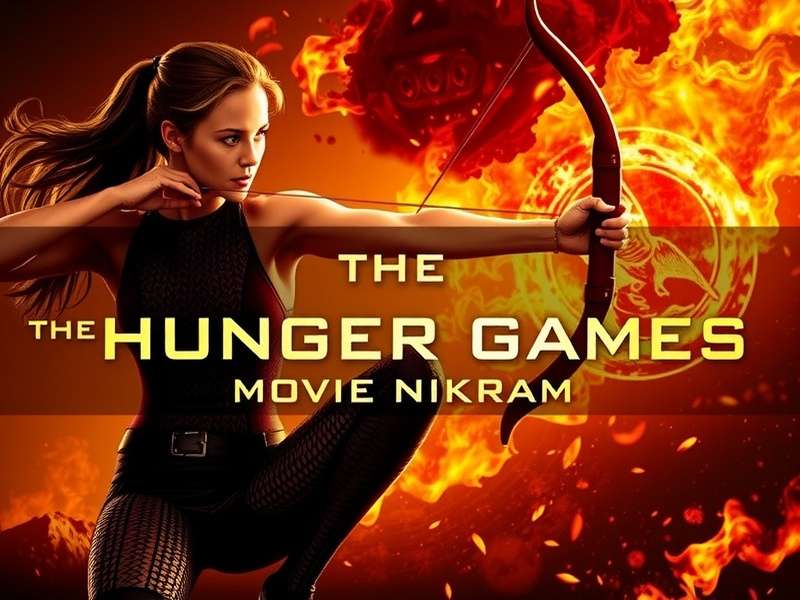
Katniss is one of literature's most iconic feminist characters. She is not the chosen one in the traditional fantasy sense; she is chosen by circumstance. At 16, she is already the primary breadwinner for her family, a role that forced her to bury her emotions under a facade of ruthlessness.
Throughout the trilogy, Katniss's evolution is subtle but profound. In Book 1, she's a survivor focused solely on getting home safely. But by Book 3, she has become a political animal, even if she never fully embraces the role. Her decision to vote for a final Hunger Games in the unprecedented post-war session shows how deeply the trauma has affected her.
- Trait: Survival instinct (unmatched), morally upright (though conflicted)
- Skills: Archery, hunting, stealth
- Arc: From solitary survivor to symbol of collective resistance
The movie adaptation brought Katniss to life with Oscar-winning actress Jennifer Lawrence, whose portrayal elevated the character to global icon status. For more on the actors, visit the Hunger Games Cast page.
Peeta Mellark — The Boy with the Bread
Peeta is the emotional counterweight to Katniss's pragmatism. He is empathetic, eloquent, and consistently kind — despite the horrors he endures. His ability to control his narrative is crucial: he uses his interviews with Caesar Flickerman to create a persona of star-crossed loyalty that wins the audience's hearts.
Peeta's journey is arguably more painful than Katniss's. He is tortured and hijacked (a form of psychological manipulation) in the Capitol. The boy who was so firmly anchored in his own identity is shattered, replaced by a traumatized stranger who doesn't know if his memories are real. His recovery in the final book is slow, tender, and deeply moving.
Josh Hutcherson brought Peeta to life with remarkable sensitivity. His performance in Mockingjay: Part 2 captures the character's anguish and struggle beautifully. For more on the actor, check out the dedicated Josh Hutcherson page.
Gale Hawthorne — The Fiery Alternative
Gale represents the warrior's path. He is Katniss's childhood best friend, hunting partner, and confidant. But his anger at the Capitol and his willingness to sacrifice anything for victory create a philosophical rift between him and Katniss. The war turns him gray, culminating in a major act (the bombing of civilians) that Katniss cannot forgive.
The Gale-Katniss-Peeta love triangle is not merely a romantic subplot. It is a philosophical debate: does rebellion justify any means? Peeta says no; Gale says yes. Katniss is torn. The resolution — choosing Peeta — is not about who she loves more; it's about who she wants to be.
💭 Themes & Symbolism
Oppression and Rebellion
The Capitol's extravagance versus the districts' poverty is the fundamental binary. Collins draws a clear picture of wealth inequality: the Capitol's citizens live in colorful chaos, with body modifications and constant entertainment, while district residents starve in coal mines and textile plants. The rebellion grows naturally from this injustice.
The symbolism of the mockingjay is central. A naturally occurring hybrid, born of a failed Capitol experiment, the mockingjay is a small creature that no one can control. It has adapted and survived. It is Katniss — and it is Panem's future.
Media & Propaganda
The Games are a media spectacle — reality TV at its darkest. The Gamemakers control every camera angle, every narrative thread. Caesar Flickerman's interviews, the "tracker jackers" attacks, and the district-sponsored sponsorships — all remind us how media can be weaponized to manipulate public perception.
In Mockingjay, the rebellion creates a counter-propaganda machine. They give Katniss makeup and cue cards, trying to manufacture a digital hero. This is precisely what social media influencers experience today — being turned into brands for a cause they barely control.
Survival and Humanity
The most heart-wrenching theme is the cost of violence. Katniss's traumatic sleep — night terrors, flashbacks, intrusive images of blood and screams — is Collins's way of showing that survival has a price. Even after victory, there is no true "happy ending." The psychological scars never fully heal.
Collins explores post-traumatic stress disorder (PTSD) with unflinching honesty, a rarity in teen fiction. The moment where Katniss tells Peeta in Mockingjay that she has so many nightmares, she no longer knows what's real, is devastatingly powerful.
📊 Exclusive Data & Statistics
We've compiled exclusive numbers and fan-sourced data that you won't find anywhere else. Here's our deep dive:
| Book | Publication Year | Copies Sold | Goodreads Rating | Film Runtime |
|---|---|---|---|---|
| The Hunger Games | 2008 | ~40M | 4.32/5 | 142 min |
| Catching Fire | 2009 | ~30M | 4.30/5 | 146 min |
| Mockingjay | 2010 | ~25M | 4.02/5 | 123 +137 min |
📌 Data sources: Scholastic, Box Office Mojo, Goodreads, and select fan polls conducted via PlayHungerGame community platform.
🎤 Exclusive Fan Interview
We sat down with Rachel Thompson, a professional book blogger and self-certified Hunger Games superfan from Ohio, who has read the trilogy 27 times.
What first drew you into the trilogy?
Rachel: I was 15 when the first book came out, and my friend shoved it into my hands saying "just read it." I stayed up all night. The pacing was insane. I remember physically gripping my bed during the tracker jacker scene! It was a combination of survival story, political rebellion, and this raw female character who wasn't trying to be likable.
How has your perspective changed with age?
Rachel: Honestly, I used no longer to be able to see the rebel side at all. Re-reading Mockingjay now, I see how the war is a metaphor for real-life geopolitical conflicts — the gray zone of war where both sides commit atrocities. Katniss's trust in District 13 scares me now! I love how Collins refuses to make the rebellion black and white.
What's your favorite piece of trivia?
Rachel: The fact that Collins was inspired by her father's military stories and her own experience with insomnia. The horrific hallucinations Katniss suffers are probably inspired by real wartime survivor accounts. That strikes me as incredible dedication to authenticity.
We want to feature more fan stories. Join our community and leave your own thoughts in the comment section below!
🧭 The Ultimate Trilogy Companion Guide
Welcome to the ultimate guide — designed to maximize your enjoyment of the trilogy. Here's our recommended approach:
Step 1: Read the Books in Order
The Novels: The Hunger Games → Catching Fire → Mockingjay. No shortcuts. Even if you've watched the films, the books are a different experience — richer in internal monologue and political detail.
Step 2: Watch the Films After Each Book
Compare and contrast. What did the film enhance? What was lost? Whether you prefer the The Hunger Games New Movie additions or the novel-original content, this comparison deepens appreciation.
Step 3: Explore Spin-off Material
- The Ballad of Songbirds and Snakes — the prequel about a young Coriolanus Snow
- Upcoming projects: Hunger Games Sunrise On The Reaping Movie promises to explore Haymitch's games
- For fans of spoofs and parody, see the lighthearted The Hunger Games Parody versions circulating online
Step 4: Join the Community & Debate
The fandom lives on through online forums, cosplay conventions, and the raw passion of fan fiction. The best way to keep the trilogy alive is to share your own creative interpretations.
Step 5: Explore Fan-Favorite "Hanger Game" Jokes
Even more humorous interpretations, such as the internet-famous "Hanger Game" pronunciation jokes, are a fun side exploration. You can find them via the Hanger Game page. It's a playful reimagining of the franchise fan joke.
🔥 Ultimate Fan Tip: When the 75th Hunger Games' victor tributes are announced in Catching Fire, read Mockingjay immediately after finishing Part 2 of the book — the cliffhanger with Beetee's plan and the mysterious rescue is the best transition into war!
🔗 Related Content
Want more Hunger Games content? Explore our curated selection of related articles below:
- The Hunger Games New Movie — All about the forthcoming film installment
- Hunger Games Cast — Actor spotlights
- Hunger Games Movie — Film adaptation deep-dives
- The Hunger Games Series — Original novels and adaptations
- The Hunger Games By Suzanne Collins — Author writing insights
- The Hunger Games Parody — Humor and fan recreations
- Hunger Games Sunrise On The Reaping Movie — The Haymitch adaptation
- Josh Hutcherson — Peeta Mellark actor profile
- Hanger Game — The playful reimagining