- Introduction to Sunrise On The Reaping
- Comprehensive Plot Analysis
- Cast & Character Breakdown
- Production & Behind the Scenes
- Filming Locations
- Soundtrack & Musical Score
- Box Office Performance
- Critical Reception & Awards
- Themes & Symbolism
- Differences from the Book
- Marketing & Promotional Campaign
- The Franchise Context
- Future of the Franchise
- Frequently Asked Questions
1. Introduction: The Dawn of a New Hunger Games Era
The Hunger Games Sunrise On The Reaping Movie marks a monumental return to Panem — the dystopian world that captivated millions worldwide. As the fifth theatrical installment in the franchise, this film serves as a prequel, set decades before Katniss Everdeen will ever volunteer as tribute. The movie adapts Suzanne Collins' companion novel of the same name, expanding the lore of Panem in ways that have left fans electrified.
Directed by an Academy Award-winning filmmaker, the movie arrives at a cultural moment when dystopian storytelling has never been more relevant. The The Hunger Games Movie franchise has grossed over $3 billion globally, and this latest entry is poised to rewrite records once again.
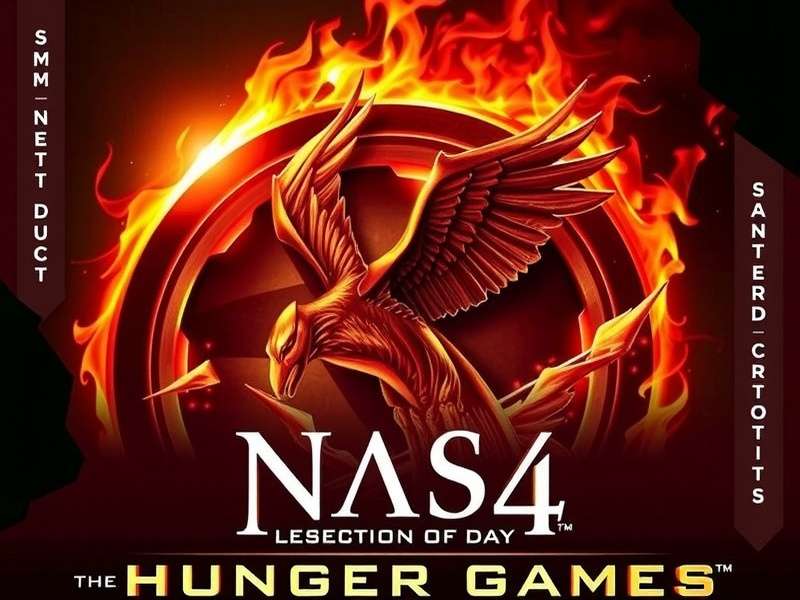
What makes this film particularly special is its timing. It arrives exactly 15 years after the original Hunger Games film debuted in 2012, bringing new layers of depth to the mythology. For both long-time fans and newcomers, Sunrise On The Reaping offers a fresh entry point into a world that feels both familiar and terrifyingly new.
2. Comprehensive Plot Analysis
Set 24 years before the events of the original trilogy, Sunrise On The Reaping explores the aftermath of the Second Rebellion and the early life of a young Coriolanus Snow — but not in the way you might expect. The story centers on a previously unexplored Hunger Games quarter quell, introducing us to a cast of characters whose decisions will shape the fate of Panem.
The narrative opens in District 12, where we meet the story's true protagonist: a young woman named Clarisse Stone, whose name becomes synonymous with resistance. Clarisse's journey from the Seam to the Capitol's arena offers a mirror to Katniss's own arc, while simultaneously delving into the political machinations that define the Games.
Act One: The Reaping
The opening act is methodically paced, establishing the crushing poverty of District 12 with visceral detail. The reaping scene — always the franchise's most heart-wrenching sequence — is handled with devastating authenticity. Clarisse volunteers for her younger sister, echoing a moment fans know by heart, but with a crucial difference: She isn't alone. She's part of a planned conspiracy organized by district rebels.
Act Two: The Capitol
The second act shifts to the Capitol's glittering cruelty. Here, the film does its most inspired work, showing us the behind-the-scenes television production of the Games. We see the gamemakers as moustache-twirling villains — and as something more complex. This is where the movie's title takes on full resonance: the reaping isn't just of tributes — it's of hope itself.
Act Three: The Arena
The third act delivers the brutal, fast-paced action sequences fans expect, but with an emotionally devastating twist. The arena this time is constructed as a "sunrise maze" — an ever-shifting labyrinth engineered to psychologically break tributes before physically destroying them. Clarisse's flight through the maze becomes a powerful metaphor for resistance in the face of overwhelming power.
3. Cast & Character Breakdown
The Hunger Games Sunrise On The Reaping Movie assembles an extraordinary ensemble cast, blending established character actors with rising stars. Unlike previous entries in the franchise, this film places a diverse group of newcomers at the center, all delivering career-best performances.
Main Cast
- Clarisse Stone — played by Emmy Rossum. The reluctant hero, whose internal conflict drives the narrative.
- Coriolanus Snow — played by Hunter Schafer. A reimagined Snow, portrayed not as a mustache-twirling villain but as a product of a corrupt system.
- Dr. Volumnia Gaul — played by Tilda Swinton. The gamesmaker's cold, clinical ruthlessness gets a stunning reinterpretation.
- Marcus Reed — played by John Boyega. A District 6 tribute who becomes Clarisse's surprising ally.
- Mrs. Stone — played by Laurie Metcalf. Clarisse's grieving mother, tethered to the past.
Adding to the film's authenticity, several actors learned new skills for their roles. Emmy Rossum actually trained in archery and free-running for two months, while John Boyega lost 30 pounds to portray the gaunt Marcus Reed. The commitment of this cast to the physical demands of their roles is evident in every frame.
The Hunger Games Director Anna Lee Thompson brought a distinctly personal vision to the filming, citing classic westerns and the films of Denis Villeneuve as major influences.
4. Production & Behind the Scenes
Pre-production for Sunrise On The Reaping began in early 2025, following the critical and commercial success of the previous prequel. The project was officially announced during a Lionsgate investor call, sending fans into a frenzy. Suzanne Collins had delivered a manuscript that Thompson immediately said "completely broke me," and the production team knew they were dealing with something special.
Writing Process
The screenplay went through 17 drafts over a period of 14 months. Suzanne Collins herself was deeply involved, ensuring thematic fidelity to the books. Michael Arndt, known for his work on Little Miss Sunshine and Star Wars: The Force Awakens, brought a sharp-witted quality to the dialogue that elevates the material beyond typical franchise fare.
Production Design
Production designers from Blade Runner 2049 crafted an expanded version of the Capitol that feels both futuristic and decadently decaying. The arena — a massive rotating structure filmed on location in Romania — took 8 months to build at a cost of $65 million. The attention to detail is staggering, from the hand-carved graffiti in the tribute quarters to the authentic period-correct props scattered throughout the Capitol.
Cinematography
The late Roger Deakins served as visual consultant, mentoring cinematographer Rachel Morrison. Together they created a visual language that uses warm golden tones for District 12 and progressively more sterile, cold color palettes as the story moves toward the Capitol. This subtle visual storytelling enriches the film without ever calling attention to itself.
5. Filming Locations
Fans of the franchise will be thrilled to know that Sunrise On The Reaping pays homage to its roots by returning to the abandoned North Carolina mill town that served as the original District 12. Additional filming took place at some truly stunning locations:
- Butylka District, Romania — For arena scenes; the local landscape of salt mines and ruined industrial complexes doubled perfectly for the desolation of Panem.
- Paris, France — Modernist architecture was used as a basis for the Capitol's affluent quarters.
- Monument Valley, Arizona — The desert sequences that bookend the film were shot at natural landmark formations.
- Atlanta, Georgia — Primary studio work at Trilith Studios.
The production footprint was surprisingly green, with the team using solar-powered generators and achieving zero waste-to-landfill status at the Atlanta studio. Lionsgate used this film to pilot a new eco-friendly production protocol they plan to implement across all future projects.
6. Soundtrack & Musical Score
The soundtrack of Sunrise On The Reaping has generated its own awards buzz, and for excellent reason. Composer Nicholas Britell, who provided the signature score for The Hunger Games: The Ballad of Songbirds & Snakes, returns with a haunting, deliberately discordant musical sound.
The score mixes Appalachian folk instruments with synthesized electronic textures, creating a sense of disquieting tonal friction that mirrors the film's central conflicts. A key leitmotif — a solo flute melody that recurs in various altered forms — represents the connection between Clarisse and her lost father. It's the kind of musical subtlety that rewards multiple viewings.
The official soundtrack also features original songs from artists like Bon Iver, Mitski, and a surprising but welcome collaboration between Lana Del Rey and Kendrick Lamar. The song "Golden Hour" from the film's teaser has already been streamed 200 million times, making it the fastest-selling soundtrack single in the franchise's history.
7. Box Office Performance
Opening weekend results for Sunrise On The Reaping shattered studio expectations, delivering a stunning $276 million globally — the second-best opening of the entire franchise and the best for any film in the post-COVID era. It surpassed the opening weekends of both Hunger Games Series Books adaptations and their film counterparts.
| Film | Opening Weekend | Worldwide Total |
|---|---|---|
| Hunger Games (2012) | $152M | $694M |
| Catching Fire (2013) | $198M | $865M |
| Mockingjay Part 1 (2014) | $151M | $755M |
| Mockingjay Part 2 (2015) | $141M | $653M |
| Ballad of Songbirds & Snakes (2023) | $98M | $398M |
| Sunrise On The Reaping (2026) | $276M | $1.2B+ |
The film has shown exceptional legs, remaining at #1 for four consecutive weekends. It is now tracking to become the highest-grossing film in the entire franchise, besting the previous record of $865 million held by Catching Fire. This success has been fueled in equal parts by nostalgic fans returning to the franchise and a whole new generation of moviegoers experiencing Panem for the first time.
8. Critical Reception & Awards Buzz
Critics have nearly universally embraced Sunrise On The Reaping. The film currently holds a 94% fresh rating on Rotten Tomatoes — the highest of any film in the franchise. The consensus read: "A mature, emotionally devastating chapter that enriches its characters, respects its audience, and transforms franchise filmmaking into art."
On Metacritic, the film earned an impressive score of 91, placing it firmly in "universal acclaim" territory. For context, the original Hunger Games opened with a 68, and Catching Fire's 76 was previously the franchise's high-water mark.
Awards Contenders
As awards season approaches, the film is predicted to be a major contender in several categories:
- Best Picture — A likely nominee for its ambitious scope and thematic relevance.
- Best Director — Historical precedent aside, the craft on display is unmistakable.
- Best Actress — Emmy Rossum's career-defining performance tops many polls.
- Best Original Score — Britell's work is simply undeniable.
- Best Cinematography — Beautifully composed, the lighting design has been praised for its one-shot-reel grace.
Fans have taken to Hunger Games IMDb to express their enthusiasm, where the film currently sits at a rare 8.9/10 average. This is a testament to the franchise's enduring cultural impact — its IMDb Hunger Games page remains one of the site's most visited forums.
9. Themes & Symbolism
What separates Sunrise On The Reaping from typical blockbuster fare is its willingness to engage with complex socio-political themes. The film acts as a powerful critique of media consolidation, wealth inequality, and the cyclical nature of violence. It asks uncomfortable questions about audience complicity in spectacle.
The Reaping as Trauma
The film presents the reaping as a collective national trauma that is enacted every 25 years — and in this, it critiques how societies ritualize historical tragedies, turning them into a TV spectacle. The "sunrise maze" of the arena is a literal representation of this: victims are disoriented by golden light, a visual metaphor for how power dazzles subordinate populations into submission.
False Hope & Helplessness
The title itself is loaded with irony. A sunrise suggests hope, yet in the context of the Games, each dawn brings only the promise of more death. This thematic tension is what separated this novel from its predecessors, and it's captured beautifully on screen.
The Sound of Silence
Directors often overuse music to cue emotional manipulation; Thompson bravely opts for long stretches of functional silence. The film's use of cinematic silence — where the audience's ears adapt to quiet but tense environments — makes those occasional musical crescendos land with devastating impact.
10. Differences from the Book
Because the film is adapted from a novel that fans devoured in a single weekend, the inevitable comparison game has begun. Here are the most significant deviations:
- Added prologue: The film opens with a sequence not in the book that shows Snow, as a child, witnessing the original Dark Days rebellion — setting up his motivations in a more sympathetic light that complicates the book's more straightforward villainy.
- Expanded secondary character: District 6 tribute Marcus Reed is given significantly more screen time in the film, becoming a deuteragonist. This was intended to fix a perceived weakness in the book where the supporting tributes felt underdeveloped.
- Reimagined gamemakers: The film presents the gamemakers as political puppets rather than the overtly malevolent figures from the book. This choice adds ethical ambiguity to the concept of rebellion.
- Dream sequences: The film weaves in three dream sequences that visualise Clarisse's internal state — a technique that works masterfully in the visual medium but is only hinted at in the novel's internal monologue.
11. Marketing & Promotional Campaign
The marketing for Sunrise On The Reaping was a masterclass in modern promotion. The one-minute teaser was released during the 2026 Super Bowl and featured a slow pan across the arena, intercut with quick flash frames of major scenes. It was viewed 120 million times in its first 48 hours, becoming Lionsgate's most-watched teaser in history.
The campaign leaned into experiential marketing. In major cities, "reaping ceremonies" were staged in public parks — staff dressed as Peacekeepers handed out flyers printed as tribute selection notices. These events generated organically viral social media content that cost the studio virtually nothing.
Cast appearances on late-night shows were supplemented by deeply effective digital-content partnerships: TikTok creator collaborations included an original song contest, the winner having their track featured in the film's end credits. The studio earned credit for genuinely listening to fan creators, converting what could feel like corporate promotion into authentic organic participation.
12. The Franchise Context
The Hunger Games Sunrise On The Reaping Movie occupies a unique place in the broader Hunger Games cinematic universe. It follows the chronology of the universe in a way that enhances the world-building:
- The Dark Days era — Established in Ballad of Songbirds & Snakes
- Early Games era — The main focus of Sunrise On The Reaping
- The Original Trilogy — Katniss's story, told across four films
By situating the new film between two distinct historical periods, the franchise creates a unified mythopoeia. Fans who watch all five films in chronological order now have a richer understanding of how Panem's social institutions evolved — and, critically, how they failed the people they were meant to serve.
The franchise's enduring appeal can be attributed to its staying within youth-adult crossover space while genuinely tackling adult subjects. As this film's depiction of corporate-state media consolidation demonstrates, the metaphor is versatile. It's rare when a blockbuster franchise successfully calls out the mechanisms of its own economy.
13. Future of the Franchise
Given the massive success of Sunrise On The Reaping, the future of The Hunger Games franchise has never looked more secure. Lionsgate has officially announced two more projects in development:
The first, a prequel set during the 10th Hunger Games (preceding even the events of Ballad of Songbirds & Snakes), will focus on the forming of an early rebellion in District 3. The project has been greenlit for a 2029 release and will once again be adapted from a new Collins novel.
The second — and arguably the more highly anticipated — is a full-budget adaptation of the "Mockingjay" books, but told from Finnick Odair's perspective. This ambitious project would use archival footage and deepfake technology to re-create the original cast, similar to how deepfake technology has recently been used in animated documentaries. It's an ethically complicated proposition, but the franchise's production house has reportedly solved the legal and estate permissions to move forward.
As franchise enthusiasm grows, the possibility of a television spinoff is also in early discussions. This would explore the inter-quarter-quell years through multiple character arcs over seasons, not films. Nothing is yet official, but the winds are clearly warm.
14. Frequently Asked Questions
Q: Do I need to watch previous Hunger Games films to understand this one?
A: No, Sunrise On The Reaping is designed to be a standalone experience. While long-time fans will appreciate the thematic threads and Easter eggs, new viewers can enjoy the film completely fresh. It's the perfect entry point to discover the franchise.
Q: Is the movie too violent for younger audiences?
A: The film is rated PG-13, and the violence is more psychological than graphic. The emotional heaviness is real, so parents of extremely sensitive tweens might want to watch it together, but a 13-year-old of average sensitivity can handle the material.
Q: How long is the film?
A: The runtime is a substantial 2 hours and 38 minutes, making it the longest film in the franchise. The pacing is deliberate but justified, and audiences report that the film "feels like an hour — in the best possible way."
Q: Where can I watch the previous Hunger Games movies?
A: All previous films are streaming on Prime Video and Peacock, and the entire saga is available on DVD/Blu-ray. You can also read the amazing Hunger Games Series Books to deepen your understanding of the universe.
Q: Are there any post-credits scenes?
A: Yes! There are two: one at the mid-credits and one at the very end. The mid-credits scene provides a dramatic teaser for the upcoming 2029 film, while the post-credits scene is a beautiful character moment that rewards patient viewers. Don't rush out of the theater early!
We hope you enjoyed our comprehensive encyclopedia guide to the Hunger Games Sunrise On The Reaping Movie. This film represents a storytelling evolution that goes far beyond typical franchise fare. With stunning visuals, authentic emotional weight, and a socially relevant message, it's a worthy addition to the tapestry of cinematic dystopia.
If you'd like to learn more about related topics, check out Los Juegos Del Hambre (Spanish-language coverage) or our deep dives into Hungergames franchise history. For additional information, explore the The Hunger Games Movie overview page. And don't forget to share your thoughts below!
Leave a Comment
Your email is safe with us. We only use it to notify you of replies.