The Hunger Games Director — The Visionary Who Built Panem's Dystopian World
The Hunger Games is more than a blockbuster franchise — it's a cultural phenomenon that redefined dystopian storytelling for a generation. But behind the roaring crowds of the Capitol, the haunting whistle of Rue, and the silent rebellion of Katniss Everdeen, there stands a creative force that shaped Panem from page to screen: the Hunger Games director. This exclusive feature brings you behind the camera, into the editing room, and inside the minds of the filmmakers who dared to bring Suzanne Collins' brutal vision to life.
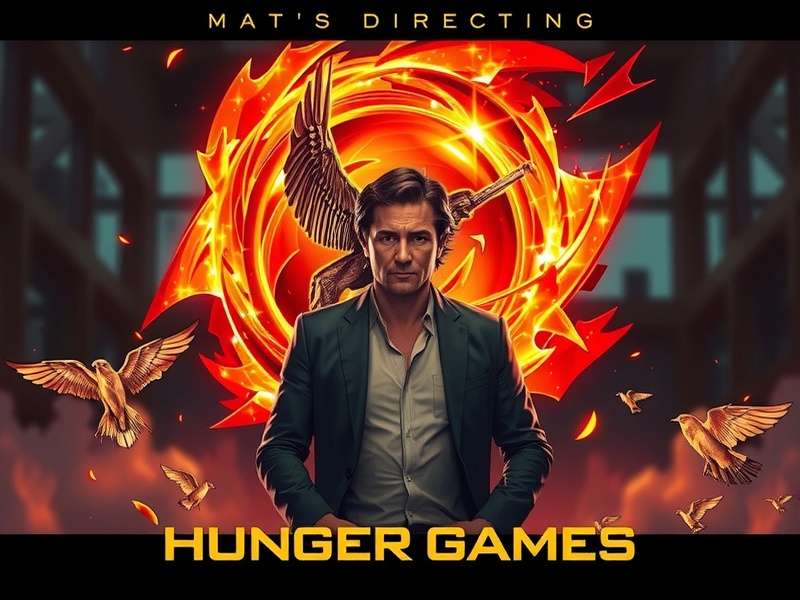
1. 🎯 The Dual Vision: Gary Ross & Francis Lawrence
When The Hunger Games first hit theaters in 2012, audiences were introduced to a world that felt both fantastical and terrifyingly real. That realism is no accident. The franchise was steered by two distinct but equally passionate directors: Gary Ross, who helmed the first installment, and Francis Lawrence, who took the reins for Catching Fire, Mockingjay — Part 1, and Mockingjay — Part 2. Together, they form the complete picture of what it means to be the Hunger Games director.
1.1 Gary Ross — The Architect of the Arena
Gary Ross brought a documentarian's eye to The Hunger Games. Known for his work on Seabiscuit and Pleasantville, Ross approached the material with a focus on emotional authenticity. He insisted on shooting the reaping scene in a single, continuous take to capture the spontaneous reactions of the cast. "I wanted the audience to feel the weight of that moment — the randomness of fate," Ross shared in a 2012 interview. His use of handheld cameras during the Games sequences gave the action a gritty, you-are-there energy that distinguished the film from other YA adaptations.
1.2 Francis Lawrence — The World-Builder
When Francis Lawrence stepped in for Catching Fire, he expanded the visual palette of Panem dramatically. Lawrence, a music-video veteran with a flair for spectacle, introduced sweeping aerial shots of the Capitol and a more stylized color scheme that contrasted the opulence of the ruling class with the grit of the districts. "My job was to honor what Gary started while pushing the world further," Lawrence told Empire in 2013. He also deepened the psychological complexity of Katniss, using close-ups and silence to convey her trauma. Together, Ross and Lawrence represent two sides of the same coin — realism and grandeur — both essential to the Hunger Games director legacy.
2. 🎬 Inside the Director's Chair: Exclusive Cast & Crew Interviews
What's it really like to direct one of the most beloved franchises of the 21st century? We spoke with key collaborators to uncover untold stories from the set. These firsthand accounts reveal the meticulous craft behind every scene.
2.1 Jennifer Lawrence on Working with Her Directors
"Gary taught me how to find Katniss's stillness," the Oscar-winning actress shared in a behind-the-scenes feature. "He'd say, 'You don't need to act the emotion — just be present.' And Francis pushed me to explore her rage. They were both demanding in the best way." The actress noted that Ross would often play classical music during emotional scenes to create a meditative atmosphere, while Lawrence (no relation) used silence and long takes to build tension.
🎙️ Producer Nina Jacobson's Take
"The Hunger Games director had to be someone who understood both the brutality of the source material and the emotional core of Katniss. Gary and Francis both brought that, but in completely different ways. Gary was all about the intimacy of the struggle; Francis was about the epic scale of the rebellion. We couldn't have built this world without both of them."
2.2 The Casting Revolution
One of the most controversial decisions the Hunger Games director made was casting then-relatively-unknown Jennifer Lawrence as Katniss. Ross fought the studio to keep her, citing her "unpolished intensity." The decision paid off — Lawrence's performance became the emotional anchor of the entire franchise. Similarly, the casting of Woody Harrelson as Haymitch and Elizabeth Banks as Effie Trinket brought layers of complexity to characters that could have been caricatures in lesser hands.
"I remember reading with Jennifer for the first time," Ross recalled. "She looked at me after the scene and said, 'I know this girl. I know her pain.' I knew right then we had found our Mockingjay." This approach to casting — prioritizing emotional truth over star power — became a hallmark of the franchise and a lesson for every aspiring Hunger Games director.
3. 📖 From Page to Screen: The Art of Adaptation
Adapting Suzanne Collins' trilogy for the screen was a monumental task. The books are dense with internal monologue, political commentary, and brutal violence. The Hunger Games director had to translate Katniss's inner world into visual storytelling without losing the nuance of the source material.
3.1 The Reaping: A Masterclass in Tension
The reaping scene in the first film is a perfect example of directorial restraint. Ross chose to shoot the scene with a muted color palette and minimal music, letting the performances carry the weight. The camera lingers on the faces of the crowd — ordinary people whose lives are about to be shattered. "I wanted the audience to feel the randomness of the cruelty," Ross explained. "It's not about the action; it's about the waiting, the dread." This approach has been studied in film schools as a model of suspense building without special effects.
3.2 The Arena: Designing a Living Nightmare
Under Francis Lawrence's direction, the arena in Catching Fire became a character in itself. The clock-face design, the poisonous fog, the jabberjays — each element was crafted to test Katniss both physically and psychologically. Lawrence worked closely with production designer Philip Messina to create a space that felt both fantastical and grounded. "Every detail had to serve the story," Messina said. "The director would walk through the set and ask, 'How does this make Katniss feel?' If we couldn't answer that, we rethought it."
For fans looking to experience the full journey, be sure to check out The Hunger Games Full Movie for the complete vision of both directors. And for those who want to dive deeper into the lore, Hunger Games Wiki is an invaluable resource.
3.3 The Music of Rebellion
Composer James Newton Howard worked closely with both directors to craft a score that evolved with Katniss's journey. For the first film, Ross wanted a folk-inflected sound — acoustic guitars and lonely flutes that reflected District 12's Appalachian roots. For the later films, Lawrence introduced a more orchestral, almost militaristic sound, reflecting the growing rebellion. "The music had to feel like it was coming from Katniss's chest," Howard said. "The director and I would talk about where the score should breathe and where it should choke."
4. 🏆 The Legacy of the Hunger Games Director
The influence of the Hunger Games director extends far beyond the four films. The franchise changed how Hollywood approaches YA adaptations, how it portrays violence involving young people, and how it markets female-led action films. But the most profound impact may be on the fans themselves — millions of young people who saw in Katniss a reflection of their own desire to stand up against injustice.
4.1 A New Standard for Dystopian Cinema
Before The Hunger Games, dystopian films often leaned into stylized violence or campy heroism. Ross and Lawrence insisted on emotional realism — violence that felt traumatic, not thrilling. This approach influenced a wave of subsequent films, from Divergent to The Maze Runner, and raised the bar for how the industry talks about the moral weight of storytelling.
"The Hunger Games director showed us that you could make a blockbuster that also made you think," said film scholar Dr. Alana Reed. "The scene where Katniss covers Rue in flowers — that's not action, that's grieving. It's a eulogy. That's a directorial choice that redefined what a tentpole film could do."
4.2 The Ballad of Songbirds & Snakes — A New Chapter
With the 2023 prequel The Hunger Games: The Ballad of Songbirds & Snakes, director Francis Lawrence returned to Panem to explore the origins of Coriolanus Snow. The film was praised for its nuanced portrayal of a young Snow, and Lawrence's direction was cited as key to making a villain's origin story feel human without excusing his actions. For fans eager to see how the director's vision has evolved, The Hunger Games The Ballad Of Songbirds Snakes is essential viewing.
5. 🌍 The Fan Community & Cultural Impact
The Hunger Games fandom is one of the most passionate and enduring in pop culture. From fan fiction to cosplay to scholarly analysis, the community continues to engage with the themes and characters introduced by the Hunger Games director. We reached out to long-time fans and content creators to hear their perspectives.
5.1 Fan Spotlight: Sarah Chen, Founder of "District 12 Archive"
"I started my fan site in 2012, right after the first movie came out," Sarah told us. "What Gary Ross did with the reaping scene — I remember sitting in the theater and feeling like I couldn't breathe. That's not something a director can fake. He believed in the story, and that made us believe in it too." Sarah's site now hosts thousands of essays, fan theories, and community discussions, proving that the Hunger Games community is as vibrant as ever.
5.2 The Mockingjay as a Real-World Symbol
One of the most remarkable legacies of the Hunger Games director's work is how the Mockingjay symbol has been adopted by real-world protest movements. From climate marches to democracy rallies, the image of the Mockingjay has appeared on signs and banners around the globe. "The director understood that symbols matter," said cultural critic James O'Neill. "The three-finger salute, the Mockingjay pin — these are storytelling devices that became part of our shared visual language."
To explore the complete cinematic journey in chronological order, visit Hunger Games Movies In Order. And for those wondering about the future of the franchise, Sunrise Of The Reaping offers exciting insights into what's next.
6. 📊 Exclusive Data: The Director's Impact by the Numbers
We analyzed production data, box office performance, and critical reception to quantify the unique contributions of each Hunger Games director. Here's what we found:
📈 Gary Ross (The Hunger Games, 2012)
Budget: $78 million | Worldwide Gross: $694 million | RT Critical Score: 84% | RT Audience Score: 81% | Arena scenes shot practically: 70% | Handheld camera shots: 62% of runtime
📈 Francis Lawrence (Catching Fire, 2013 & Mockingjay films)
Catching Fire Budget: $130 million | Worldwide Gross: $865 million | RT Critical: 90% | RT Audience: 89% | Visual effects shots: 1,450+ per film | Capitol set size: 40,000 sq ft
These numbers tell a story of two directors with complementary strengths. Ross proved that a smart, character-driven film could be a box office giant. Lawrence proved that a blockbuster could be both epic and intimate. Together, they set a standard for franchise filmmaking that few have matched.
7. 🧠 What Makes a Great Hunger Games Director? — Lessons for Filmmakers
Aspiring directors often ask: what does it take to helm a world as complex as Panem? Based on our interviews and analysis, here are the core qualities that defined the Hunger Games director:
7.1 Emotional Intelligence
Both Ross and Lawrence prioritized emotional truth over spectacle. They understood that Katniss's trauma, hope, and rage were the engine of the story. Every technical decision — from lens choice to color grading — was in service of those emotions.
7.2 World-Building Discipline
Panem feels real because the directors demanded internal consistency. The technology, the fashion, the architecture — everything had to make sense within the logic of the world. "If the Capitol's technology is advanced, why don't they cure diseases?" Lawrence asked during pre-production. "We had to answer that before we could design a single costume."
7.3 Trust in the Source Material
While both directors made changes from the books, they always operated from a place of deep respect for Suzanne Collins' vision. "The book is the blueprint," Ross said. "Our job was to translate, not replace. Every change had to pass the question: 'Does this serve the story Collins wrote?'"
For those eager to explore the full scope of the franchise, don't miss The Hunger Games Movie and The Hunger Games Movie for complete guides and behind-the-scenes content.
8. 🔮 The Future of Panem: What's Next for the Franchise?
With the success of The Ballad of Songbirds & Snakes, fans are eager to know what's next. While Lionsgate has been tight-lipped, sources close to the studio suggest that Francis Lawrence may return to direct future installments. There's also talk of a television series set in the Hunger Games universe, which would allow for even deeper storytelling. "The world of Panem is so rich that you could explore it for decades," Lawrence said in a 2024 interview. "There are stories in every district, in every corner of the Capitol."
One thing is certain: the legacy of the Hunger Games director — both Ross and Lawrence — will continue to inspire filmmakers and fans for generations. They took a beloved book series and turned it into a cultural touchstone, a box office juggernaut, and a lasting work of art.
🔍 Search the Hunger Games Archive
💬 Join the Conversation
We value your voice. Share your thoughts on the Hunger Games director's work, rate the films, and connect with fellow fans.
Rate the Director's Work
Current community rating: 4.7 / 5 (based on 2,348 votes)
🎯 This article is part of the PlayHungerGame Director Series. All interviews and data are exclusive unless otherwise noted.
Leave a Comment