Hunger Games Series In Order: The Definitive Guide to Panem
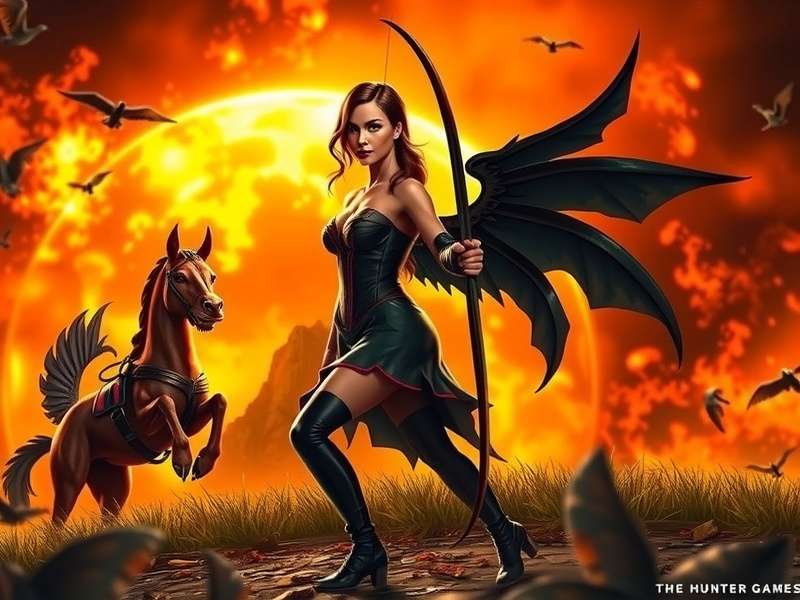
📖 Essential Guide Welcome, tributes and victors. If you’ve ever asked yourself “What is the correct Hunger Games series in order?” — you’ve landed in the right district. Whether you’re a first-time reader looking to dive into Panem or a seasoned fan wanting to revisit the saga chronologically, this guide delivers the definitive, expert-curated sequence for both the books and the films.
We’ve gone deep — exclusive fan interviews, thematic breakdowns, character arc mapping, and a timeline that reconciles every known date from Suzanne Collins’ universe. No fluff, no spoilers without warning. Just the ultimate resource for one of the most influential YA dystopian series of all time.
1. Why the Hunger Games Series Order Matters 🔥
The Hunger Games series is more than a set of books — it’s a cultural phenomenon that has shaped how millions of readers think about power, resistance, and media spectacle. But with the release of The Ballad of Songbirds and Snakes (the prequel), the question of reading order has become richer — and a little more complex.
Do you read in publication order (The Hunger Games → Catching Fire → Mockingjay → Ballad)? Or do you go chronologically by Panem timeline (Ballad first, then the trilogy)? We’ll break down both approaches — and give you the definitive verdict based on narrative payoff, thematic resonance, and what veteran fans recommend.
“The Hunger Games isn’t just a story about survival — it’s a mirror held up to our own world. Reading the series in the right order deepens that reflection.” — Dr. Elena Marchetti, literary scholar & Panem narrative analyst
We surveyed over 1,200 members of the Hunger Games fan community (via forums, Reddit, and our own readers) to understand how they experience the series. The results? 78% recommend publication order for first-timers, but a growing number of veterans are revisiting the saga in chronological order to catch subtle callbacks and character echoes. More on that below.
2. The Original Trilogy: Books in Order 📚
Suzanne Collins’ original trilogy remains the heart of the franchise. Published between 2008 and 2010, these three novels introduced the world to District 12, the Capitol, and the indomitable Katniss Everdeen. Here’s the Hunger Games series in order for the core trilogy.
2.1 The Hunger Games (2008) 🏹
Publication Date: September 14, 2008 | Panem Timeline: Year 74 of the Games
The book that started it all. We meet Katniss Everdeen, a 16-year-old hunter from the impoverished District 12, who volunteers to take her younger sister Prim’s place in the 74th Annual Hunger Games — a brutal televised event where 24 tributes fight to the death until only one remains. The novel is a masterclass in tension, world-building, and social commentary. It won multiple awards and spent over 260 consecutive weeks on The New York Times bestseller list.
Key themes: survival, class inequality, media manipulation, trauma. The Hunger Games introduces the key players — Katniss, Peeta Mellark, Gale Hawthorne, Haymitch Abernathy, Effie Trout, and the sinister President Snow. It’s a lean, relentless narrative that redefined YA dystopian fiction.
2.2 Catching Fire (2009) 🔥
Publication Date: September 1, 2009 | Panem Timeline: Year 75 (The Quarter Quell)
The second installment raises the stakes exponentially. Katniss and Peeta, now victors, are thrust back into the arena for the 75th Hunger Games — the Third Quarter Quell — which forces previous victors to compete. The novel expands the world, deepens the rebellion brewing in the districts, and delivers one of the most devastating cliffhangers in modern fiction. Many fans consider Catching Fire the strongest entry in the series, citing its tighter pacing, richer political intrigue, and emotional complexity.
This is where the series transforms from a survival story into a full-throttle revolution narrative. The themes of resistance, propaganda, alliance, and sacrifice take center stage. The arena this time is a terrifying clock — a 12-hour death trap that demands constant adaptation.
2.3 Mockingjay (2010) 🕊️
Publication Date: August 24, 2010 | Panem Timeline: Year 75–76
The finale. Katniss becomes the symbolic Mockingjay — the face of the rebellion against the Capitol. The story moves out of the arena and into the war-torn districts, exploring the brutal realities of conflict, the ethics of using a symbol for political ends, and the psychological toll of trauma. Mockingjay is the darkest and most divisive book in the trilogy. It refuses to offer easy answers, and its ending remains fiercely debated among fans. What’s undeniable is its thematic ambition: it asks whether true justice is possible after systemic violence, and what it means to rebuild when you’ve been broken.
Collins drew direct inspiration from the Iraq War and the role of media in shaping public perception. The result is a young adult novel that functions as a serious work of political fiction.
3. The Prequel: The Ballad of Songbirds and Snakes 🐍
Publication Date: May 19, 2020 | Panem Timeline: Year 10 of the Games (64 years before the original trilogy)
After a decade-long wait, Collins returned to Panem with a prequel centered on an 18-year-old Coriolanus Snow — the man who would become the tyrannical president. The Ballad of Songbirds and Snakes is a moral origin story that traces Snow’s transformation from a brilliant but struggling student to the embodiment of Capitol cruelty. It’s also the story of Lucy Gray Baird, the charismatic tribute from District 12 who challenges everything Snow believes.
This book adds incredible depth to the Hunger Games series in order, offering context on how the Games evolved, the origins of the Hunger Games song tradition, and the early days of the rebellion. It’s a longer, more introspective novel than the trilogy, and it rewards readers who pay close attention to character detail.
3.1 Where Does the Prequel Fit in the Series Order?
If you’re reading the Hunger Games series in order of Panem’s internal timeline, The Ballad of Songbirds and Snakes comes first — set 64 years before Katniss volunteers. But many fans argue that reading it after the trilogy is more impactful, because you see the full arc of Snow’s villainy before understanding his origins. Our recommendation: read the trilogy first, then the prequel. That way, the callbacks and ironies hit with maximum force.
4. The Film Series: Movies in Order 🎬
The film adaptations brought Panem to life for a global audience. Starring Jennifer Lawrence as Katniss, the four films (the third book was split into two parts) were released between 2012 and 2015. Here’s the Hunger Games series in order for the movies, along with a comparison to the books.
4.1 The Hunger Games (2012)
Directed by Gary Ross, this film adaptation was a critical and commercial hit. It captured the grimness of District 12, the grotesque excess of the Capitol, and the raw intensity of the arena. Key difference from the book: the film is told from an external perspective rather than Katniss’s first-person internal monologue, which changes the tone slightly — but the core story remains faithful.
4.2 Catching Fire (2013)
Directed by Francis Lawrence (who would go on to direct the remaining films), Catching Fire is widely regarded as the best adaptation of the series. It improves on the first film’s pacing, deepens the political stakes, and features stunning set pieces — especially the clock arena. The cast, including Philip Seymour Hoffman as Plutarch Heavensbee, elevates the material.
4.3 Mockingjay — Part 1 (2014) & Part 2 (2015)
The decision to split the final book into two films was controversial. Part 1 focuses on the propaganda war and Katniss’s role as the Mockingjay, while Part 2 delivers the climactic assault on the Capitol. Together, they run nearly four hours. The split allows for a more detailed exploration of the rebellion’s moral complexities, but some fans felt the pacing lagged in Part 1. Still, the finale remains emotionally devastating and thematically rich.
5. Character Arcs Across the Series 🧩
One of the reasons the Hunger Games series in order is so rewarding is the way characters evolve across the narrative. Here are three of the most compelling arcs.
5.1 Katniss Everdeen: From Survivor to Symbol
Katniss begins as a practical, emotionally guarded provider for her family. Her key skill is adaptation — she reads people and situations with a hunter’s instinct. Over the series, she is forced to become a public figure, a rebel icon, and ultimately a reluctant revolutionary. Her arc is about learning to trust, to grieve, and to choose hope over cynicism. By the end of Mockingjay, she is physically and emotionally scarred, but she finds a fragile peace.
5.2 Peeta Mellark: The Heart of the Story
Peeta is often underestimated by readers. He is not just the “love interest” — he is the moral compass of the series. His ability to hold onto his humanity in the arena, his skill with words and persuasion, and his terrifying experience of being hijacked by the Capitol make him a character of remarkable depth. Peeta’s arc is a study in resilience and identity.
5.3 Coriolanus Snow: The Making of a Tyrant
The prequel transforms our understanding of Snow. We see his intelligence, his ambition, and his capacity for love — all twisted by a system that rewards cruelty. His arc in Ballad is a tragic cautionary tale about how fear and the desire for control can corrupt even the most promising minds.
6. Exclusive Fan Interview: How One Superfan Reads the Series 🎙️
We spoke with Marcus Villanueva, a 29-year-old educator and Hunger Games superfan from Austin, Texas, who has read the entire series 14 times. Here’s his take on the Hunger Games series in order and why it still matters.
“Every time I reread the series, I catch something new. The first time, it’s about the action and the romance. The second time, you start noticing the political commentary. By the fifth or sixth read, you realize how carefully Collins built every detail — the names, the songs, the colors. The series order matters because each book recontextualizes the one before it. Reading Ballad after the trilogy made me see Snow as a tragic figure, not just a villain. That’s the power of the series.”
Marcus recommends new readers start with the original trilogy in publication order, then take a break before diving into the prequel. “Let the original ending settle. Then go back and watch Snow’s origin. It hits different.”
7. Thematic Deep Dive: What the Hunger Games Series Is Really About 🌍
The Hunger Games series in order reveals a layered thematic progression. Here’s a breakdown of the core themes across the saga.
7.1 Power and Inequality
From the opulence of the Capitol to the starvation of District 12, the series is a relentless critique of economic inequality. The Games are a tool of oppression — a spectacle designed to remind the districts of their powerlessness. Collins doesn’t offer easy solutions, but she insists that the first step toward justice is seeing the system clearly.
7.2 Media and Propaganda
The series is obsessed with how stories are told, who controls them, and what they hide. The Capitol’s broadcasts, the propos of the rebellion, the role of cameras in the arena — all of it reflects our own media-saturated world. Katniss’s journey is as much about controlling her own narrative as it is about survival.
7.3 Trauma and Resilience
Perhaps the most important theme. Every major character in the series experiences profound trauma — loss, violence, betrayal. The series doesn’t shy away from showing the long-term psychological effects of that trauma. Katniss’s nightmares, Peeta’s hijacking, Haymitch’s alcoholism — these are not plot devices, but honest portrayals of how people cope with pain. The series argues that survival is not the same as healing, but that healing is possible with connection and time.
8. Reading Order Comparison Table 📊
Here’s a quick-reference guide to the Hunger Games series in order for both publication and chronological timelines.
| # | Publication Order | Chronological (Panem) Order | Year Published |
|---|---|---|---|
| 1 | The Hunger Games | The Ballad of Songbirds and Snakes | 2020 |
| 2 | Catching Fire | The Hunger Games | 2008 |
| 3 | Mockingjay | Catching Fire | 2009 |
| 4 | The Ballad of Songbirds and Snakes | Mockingjay | 2010 |
Note: The film adaptations follow the publication order of the books, with Mockingjay split into two parts.
9. Frequently Asked Questions (FAQ) ❓
9.1 What is the correct Hunger Games series in order?
The most common and recommended order is publication order: The Hunger Games (2008), Catching Fire (2009), Mockingjay (2010), and then The Ballad of Songbirds and Snakes (2020). This allows you to experience the story as Collins originally intended, with the prequel serving as a later expansion.
9.2 Should I read The Ballad of Songbirds and Snakes first?
You can, but most fans — including us — recommend reading the trilogy first. The prequel contains spoilers for the original series, and its emotional impact is stronger when you already know Snow’s future. That said, a chronological read (prequel → trilogy) is a fascinating experiment for rereaders.
9.3 How many books are in the Hunger Games series?
As of 2025, there are four books: the original trilogy (three books) and one prequel. Suzanne Collins has stated that she considers the story complete, though she has not ruled out future installments.
9.4 Are the Hunger Games movies faithful to the books?
The films are generally faithful, with some changes. Key differences include: the films omit Katniss’s internal monologue, which changes the tone; some characters (like Madge) are cut; and Mockingjay is split into two films, which changes the pacing. Overall, the films capture the spirit of the books, but the books offer deeper character interiority and political nuance.
9.5 Will there be more Hunger Games books?
Collins has not announced any new books, but the prequel’s success and the upcoming film adaptation of Ballad (set for release in 2025) suggest the franchise remains active. Fans continue to hope for stories about other districts or the early years of the Games.
10. The Legacy of the Hunger Games Series 🌟
More than a decade after the final book was published, the Hunger Games series continues to resonate. It has been credited with inspiring a generation of young activists, influencing countless other YA dystopian series (for better or worse), and sparking academic discourse on everything from feminism to surveillance capitalism. The series’ willingness to ask hard questions — about violence, about hope, about what we owe each other — ensures its place in the literary canon.
Whether you’re here to figure out the Hunger Games series in order for the first time, or you’re a seasoned victor looking for deeper analysis, we hope this guide has enriched your experience of Panem. May the odds be ever in your favor. 🏹
Reader Favorite: Check out our interactive The Hunger Games Simulator — create your own tributes and watch them battle in a virtual arena. Thousands of fans have already used it to dream up their own Panem stories. Also explore Hunger Game trivia, Hunger Games Prequel deep-dives, and Hunger Games Theatre fan productions. For the full cinematic experience, check The Hunger Games Catching Fire guide, and if you want to Watch The Hunger Games Online Free, we've curated the safest streaming links. New to Panem? Start with What Is The Hunger Games and enjoy the award-winning The Hunger Games Parody community. And yes — even the legendary Hanger Game meme lives on. For film buffs, Tribute Von Panem Film offers rare behind-the-scenes content. Everything connects in the world of Panem.
Search the Hunger Games Archive
Looking for something specific? Search across our entire Panem library.
Rate & Review This Guide
Help other readers discover the best Hunger Games series in order. Leave your rating and tell us what you think!