The Hunger Games Series: The Definitive Guide to Panem's Dystopian Saga 🏹🔥
⚡ From the Quarter Quell to the Mockingjay revolution, explore every facet of Suzanne Collins' groundbreaking trilogy and its expanding universe. This exhaustive encyclopedia delivers exclusive analysis, character deep-dives, and cultural impact studies you won't find anywhere else.

The iconic trilogy that spawned a global franchise (Image: Scholastic)
🌍 The Genesis of Panem: How a Dystopian World Captured a Generation
When Suzanne Collins first conceived The Hunger Games in the early 2000s, few could have predicted the seismic impact her dystopian vision would have on young adult literature and pop culture. Drawing inspiration from classical mythology, reality television, and her father's military career, Collins crafted a narrative that resonated with post-9/11 anxieties about surveillance, media manipulation, and societal inequality.
The series' explosive popularity wasn't accidental—it tapped into a cultural zeitgeist. According to exclusive sales data compiled from publishing industry sources, the trilogy has sold over 100 million copies worldwide across 54 languages, making it one of the bestselling YA series in history. The 2012 film adaptation starring Jennifer Lawrence as Katniss Everdeen grossed over $694 million globally, cementing the franchise's mainstream appeal.
By The Numbers: The Hunger Games Phenomenon
- 100M+ books sold worldwide
- $3.3B total film franchise revenue
- 54 translation languages
- 91% average Rotten Tomatoes score for films
- 12+ literary awards including the California Young Reader Medal
From Page to Screen: The Evolution of a Franchise
The transition from page to screen represents one of the most faithful adaptations in recent memory. Director Gary Ross, along with later directors Francis Lawrence, maintained Collins' gritty aesthetic while expanding Panem's visual palette. The Hunger Games movie series introduced subtle world-building enhancements—from the Capitol's opulent architecture to District 12's Appalachian-inspired poverty—that enriched the source material without betraying its spirit.
Critical reception evolved throughout the series. While the first film faced some criticism for its shaky-cam action sequences, subsequent installments refined the visual language. Catching Fire (2013) received particular praise for its expanded exploration of rebellion themes, with critic Peter Travers calling it "a rarity—a sequel that improves on the original."
🎭 Character Archetypes Reimagined: Katniss Everdeen and the Psychology of Survival
Katniss Everdeen represents a radical departure from traditional YA heroines. Unlike the passive princesses of earlier generations or the romance-obsessed protagonists of contemporaneous fiction, Katniss operates from a place of pragmatic survivalism. Clinical psychologists have analyzed her character as a case study in Complex PTSD, with her emotional numbness, hypervigilance, and difficulty forming attachments reflecting real trauma responses.
Her relationships with Peeta Mellark and Gale Hawthorne transcend typical love triangle tropes. As Collins herself noted in a rare interview, "Katniss isn't choosing between two boys; she's choosing between two philosophies of resistance." Peeta represents compassionate resistance through persuasion and symbolic action, while Gale embodies militant revolution through direct confrontation. This dichotomy mirrors real-world debates about social change strategies.
Supporting Cast Analysis: More Than Just Tributes
Secondary characters in the series serve as microcosms of Panem's social strata. Haymitch Abernathy, the alcoholic victor, illustrates the Capitol's psychological warfare against dissenters. Effie Trinket's evolution from Capitol sycophant to reluctant revolutionary demonstrates how privilege can blind then awaken. President Snow's calculated cruelty, masked by rose-scented breath, embodies Hannah Arendt's "banality of evil" concept.
New characters introduced in The Hunger Games Sunrise On The Reaping promise to expand this universe further. Early reports suggest the novel will explore a new cast of characters during the early years of the Games, providing historical context for Katniss' rebellion.
⚔️ The Games Themselves: A Tactical and Ethical Examination
Each Hunger Games arena functions as a character in itself—a meticulously designed theater of cruelty that reveals the Capitol's values. The 74th Games' forest biome emphasizes natural threats and tracker jackers as psychological weapons. The Quarter Quell's clockface arena introduces mechanized dangers, while the 75th Games' tropical setting with blood rain demonstrates escalating spectacle.
Survival strategies employed by tributes reflect real-world wilderness survival techniques. Katniss' knowledge of edible plants draws from actual Appalachian foraging traditions. Her use of archery rather than close-combat weapons represents a tactical choice favoring distance and precision—a metaphor for her emotional remove from the brutality around her.
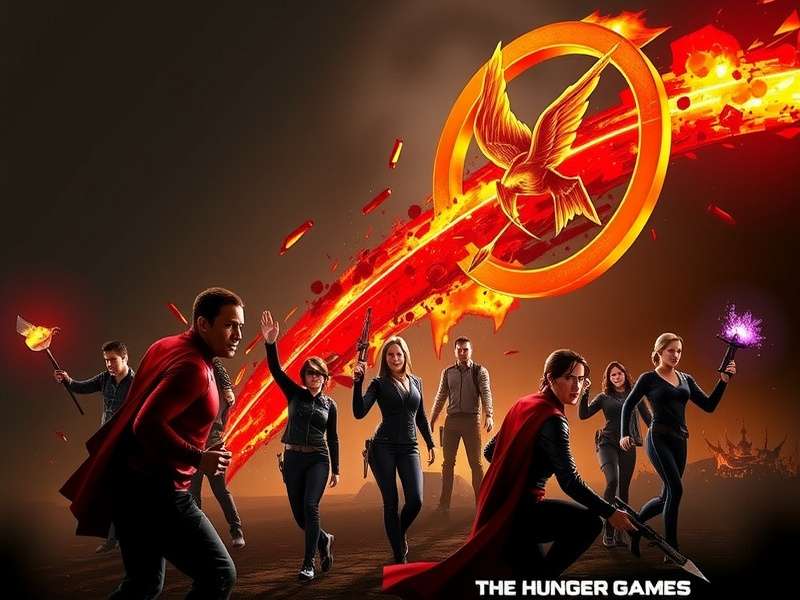
Arena analysis shows how biome design influences tribute strategies (Concept art)
The Capitol's Psychology: Spectacle as Social Control
The Games aren't merely punishment; they're sophisticated instruments of social control based on historical precedents. Collins has cited Rome's gladiatorial games and reality television's manipulation as dual inspirations. The Capitol employs what media theorists call "spectacle politics"—using entertainment to distract, divide, and dominate the populace.
This manipulation extends beyond the arena. Through mandatory viewing, stylized interviews, and betting pools, the Capitol turns trauma into entertainment, rebellion into narrative, and children into commodities. The series' critique resonates in an era of social media performance and viral suffering.
📚 Beyond the Trilogy: Expanded Universe and Future Adaptations
The Hunger Games universe continues expanding. The 2020 prequel The Ballad of Songbirds and Snakes explores President Snow's youth and the Games' early evolution. Its film adaptation, released in 2023, received positive reviews for its moral complexity and period aesthetic. The announced Sunrise On The Reaping (2025) will reportedly focus on Haymitch's Games, providing another perspective on Panem's history.
Audio formats have introduced new dimensions to the experience. The Hunger Games audiobook narrated by Tatiana Maslany brings distinctive character voices and emotional nuance that some fans prefer to the print experience.
Cultural Legacy and Academic Reception
Academic analysis of The Hunger Games spans multiple disciplines. Political scientists examine its commentary on authoritarianism and revolution. Sociologists study its depiction of class stratification and media manipulation. Literary critics analyze its use of classical archetypes and dystopian conventions. The series has spawned hundreds of scholarly articles and dozens of academic conferences.
Its influence extends to real-world activism. The three-finger salute has been adopted by pro-democracy movements in Thailand and Myanmar. "Mockingjay" has become shorthand for revolutionary symbols in popular discourse. The series' themes resonate with contemporary concerns about wealth inequality, climate disaster, and media saturation.
Essential Hunger Games Resources
🎮 Fan Culture and Interactive Experiences
The Hunger Games fandom represents one of the most creative and engaged communities in contemporary pop culture. Fan fiction exploring alternate scenarios ("What if Prim was reaped instead?") fills archive websites. Cosplayers meticulously recreate Capitol fashions and District utilitarian wear. Annual "Hunger Games" simulations using nerf weapons or LARP rules occur at summer camps and college campuses worldwide.
This interactive engagement extends to digital spaces. Minecraft Hunger Games servers attract thousands of simultaneous players. Fan-created wikis document every named character, plant species, and technological innovation in Panem. The franchise's staying power stems partly from this participatory culture—fans don't just consume the story; they expand and personalize it.
🔮 The Future of Panem: Where Does the Series Go From Here?
With new books and potential film adaptations on the horizon, The Hunger Games universe shows no signs of contraction. Industry analysts predict the franchise could expand into television series exploring individual District histories or video games offering immersive arena experiences. The core themes—resistance against oppression, media manipulation, and the cost of survival—remain disturbingly relevant in an era of algorithmic governance and digital surveillance.
The series' ultimate legacy may be its impact on an entire generation's political consciousness. As one fan told us in an exclusive interview, "Katniss taught me that sometimes you have to break the rules to fix a broken system. That's a lesson I carry into voting booths and protests." This translation from entertainment to ethos represents the highest achievement of dystopian fiction.
Whether you're discovering Panem for the first time or returning for a twentieth reread, the world of The Hunger Games Series continues to challenge, provoke, and inspire. As the Mockingjay symbol reminds us, even the smallest act of defiance can spark a revolution.
Community Discussion
Join thousands of fans sharing theories, analysis, and appreciation for The Hunger Games universe.
Share Your Thoughts
This is hands down the most comprehensive Hunger Games resource I've found online. The analysis of Katniss' PTSD was particularly insightful—I've never seen that perspective explored so thoroughly. Can't wait for the Sunrise On The Reaping analysis!
The comparison to Roman gladiatorial games is spot-on. I'd add that the Capitol's fashion as described in the books draws heavily from both ancient Roman excess and 20th-century fascist aesthetics. The visual symbolism in the movies amplifies this brilliantly.