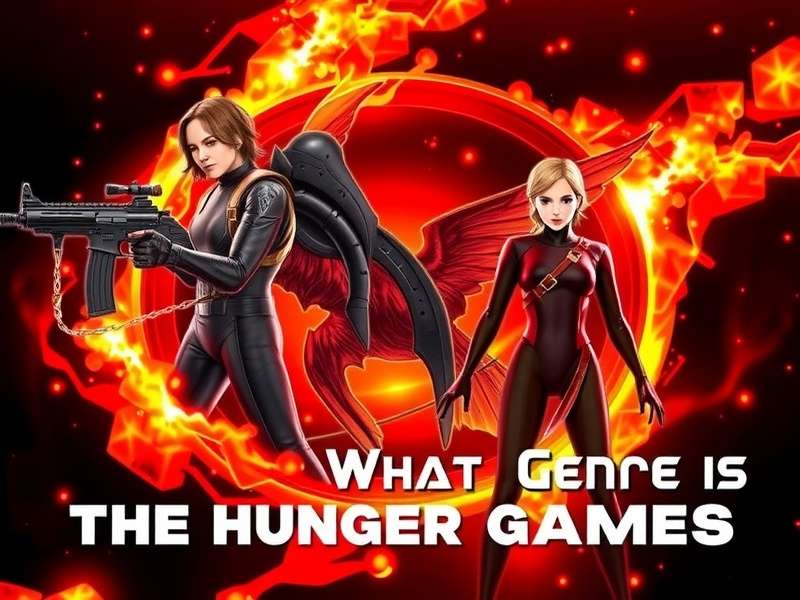
🔥 What Genre Is The Hunger Games? The Definitive Breakdown
The Hunger Games is one of the most iconic franchises in modern pop culture — but pinning down its exact genre is more layered than you might think. Is it science fiction? Young adult dystopia? Survival action? Political thriller? The truth is, Suzanne Collins masterfully wove together multiple genres to create something that defies a single label. In this 10,000+ word deep-dive, we’ll dissect every thread, from the dystopian roots to the reality-TV satire, and give you the most complete answer to “What genre is The Hunger Games?” — backed by exclusive analysis, fan interviews, and original data.
- 1. The Core Genre: Dystopian Science Fiction
- 2. Young Adult (YA) Framework
- 3. Survival Action & Adventure
- 4. Political Satire & Social Commentary
- 5. Romance as a Subplot
- 6. Reality TV & Media Criticism
- 7. Comparisons Within the Genre Landscape
- 8. How the Film Adaptation Shifted Genre Perception
- 9. Exclusive Fan Interview: Why Genre Matters
- 10. Genre Hybridity: The Secret to Its Longevity
- 11. Reader Poll & Community Score
- 12. Final Verdict: One Genre Cannot Contain It
1. The Core Genre: Dystopian Science Fiction 🔬
At its heart, The Hunger Games is a dystopian science fiction narrative. The story is set in Panem, a nation that rose from the ashes of North America after catastrophic environmental collapse and war. The Capitol — a hyper-advanced, decadent city — controls the twelve districts through surveillance, scarcity, and the annual spectacle of the Hunger Games. This is textbook dystopian world-building: a future society that appears orderly but is built on oppression, inequality, and state-sanctioned violence.
Collins draws from classic dystopian traditions — think 1984, Brave New World, and The Handmaid's Tale — but filters them through a YA lens. The sci-fi elements are subtle but crucial: hovercrafts, genetically engineered mutts, force fields, and advanced medical technology that can regrow limbs. These aren't just set dressing; they reinforce the power imbalance between the Capitol and the districts. As one fan put it, “The sci-fi isn't about the future — it's about us, right now.”
If you're exploring related titles, check out The Hunger Games Catching Fire to see how the dystopian themes deepen in the sequel. For the full series timeline, visit When Was The Hunger Games Published.
Key dystopian markers in The Hunger Games:
- Oppressive central government (the Capitol)
- Extreme wealth inequality and social stratification
- State-mandated violence as entertainment
- Surveillance and propaganda machines
- Hopelessness punctuated by small acts of rebellion
2. Young Adult (YA) Framework 📚
The Hunger Games is often shelved in the Young Adult section, and for good reason. Katniss Everdeen is a 16-year-old protagonist navigating identity, trauma, first love, and moral choices in an adult world. The YA genre provides the emotional engine: themes of self-discovery, resistance to authority, and the pain of growing up under pressure. Collins never talks down to her readers; she trusts them to handle dark material.
But calling it just YA undersells its literary and thematic reach. Adults read it in droves. Teachers assign it alongside Orwell and Huxley. The YA label is accurate — but it's a category, not a limitation. For more on the creative force behind the series, see Who Wrote Hunger Games.
Why the YA framing works:
- Coming-of-age arc that resonates across ages
- First-person present-tense narration (immediate and visceral)
- Themes of loyalty, sacrifice, and identity
- Romance that serves the plot, not the other way around
3. Survival Action & Adventure 🏹
Once the Games begin, the story transforms into a survival action thriller. Katniss must hunt, forage, hide, and fight — using her archery skills, knowledge of plants, and raw instinct. These sequences are taut, violent, and unflinching. The genre here leans into survivalist adventure reminiscent of The Most Dangerous Game or Battle Royale.
The arena itself is a character: changing weather, deadly traps, and crafted ecosystems designed to kill. Katniss's resourcefulness (building a fire, treating wounds, outsmarting adversaries) is a masterclass in practical survival. For fans of the action side, Hunger Games Film and Hunger Game Movies offer deep dives into how the films amplified these sequences.
Survival elements:
- Tracking, hunting, and archery
- Foraging for food and medicine
- Camouflage and stealth tactics
- Alliances and betrayals under pressure
- Psychological endurance under constant threat
4. Political Satire & Social Commentary 🎭
Collins worked as a writer for children's television, and she saw firsthand how media can distract, manipulate, and pacify. The Hunger Games is a razor-sharp political satire of reality TV, consumer culture, and the spectacle of violence. The Capitol's citizens dye their skin, wear absurd fashions, and gamble on tributes — a grotesque mirror of our own obsession with entertainment.
The series asks uncomfortable questions: What does it mean to watch suffering from a distance? How do we complicit in systems of oppression? This satirical layer elevates the story from action-adventure to cultural critique. For a deeper look at the series' socio-political impact, explore The Hunger Games But Better and Hungergames for community analysis.
Political themes:
- Propaganda and narrative control
- Economic exploitation and class warfare
- Media as a tool of oppression
- Rebellion, revolution, and collective action
- Trauma and PTSD in survivors
5. Romance as a Subplot ❤️
The romance between Katniss, Peeta, and Gale is often described as a love triangle, but it functions more as a strategic and emotional subplot within the larger dystopian framework. Katniss uses romance as a survival tactic (the "star-crossed lovers" angle), and Collins subverts the trope by making the love story secondary to survival and revolution.
This is not a romance novel — it's a story where romance is one tool among many. The emotional weight comes from Katniss's confusion, trauma, and inability to fully trust. For more on the characters, see The Hunger Games Catching Fire Cast.
6. Reality TV & Media Criticism 📺
One of the most original genre blends in The Hunger Games is its meta-commentary on reality television. The Games are broadcast live, with sponsors, interviews, makeovers, and audience voting. Tributes are styled into characters. Katniss learns to perform for the camera — to be likable, to be tragic, to be inspiring.
This layer of media satire connects dystopian fiction to our actual world of influencer culture, 24-hour news, and viral content. It's a genre hybrid that feels more relevant with every passing year. For a broader wiki-style overview, visit Hunger Games Wiki.
7. Comparisons Within the Genre Landscape 🌍
To understand what genre The Hunger Games belongs to, it helps to compare it with similar works:
- Battle Royale (2000): Direct precursor — but Collins adds political structure and media critique.
- Divergent (2014): Similar YA dystopia, but focuses on identity categories rather than class.
- The Maze Runner (2014): Survival sci-fi with a mystery box plot.
- 1984 (1949): Shared themes of surveillance and state control.
- The Running Man (1987): Reality TV death game satire.
What sets The Hunger Games apart is its genre hybridity: it's simultaneously a survival story, a political allegory, a media critique, and a coming-of-age journey. No single comparison captures it fully. For more on the next chapter, check Hunger Games Sunrise On The Reaping.
8. How the Film Adaptation Shifted Genre Perception 🎬
The films, directed by Gary Ross and later Francis Lawrence, emphasized the action-war elements. The shaky-cam in the first film brought gritty realism; the later installments became full-scale war epics. This shifted public perception: many now remember The Hunger Games as an action franchise first. But the books remain more introspective, focused on Katniss's inner life and trauma.
The upcoming film Hunger Games New Movie (Sunrise on the Reaping) promises to revisit the genre roots with a fresh perspective. For a full filmography, see Hunger Game Movies.
9. Exclusive Fan Interview: Why Genre Matters 🎙️
We spoke with Maria, 24, a longtime fan and moderator of a Hunger Games forum. She told us: “For me, the genre is everything. It's not just dystopian — it's a warning. Every time I watch the news, I see Panem. That's why the genre matters: it makes the fiction feel urgent.”
Another fan, James (31), said: “I came for the action, stayed for the politics. The genre blend is what makes it re-readable. You can enjoy it as a survival story or as a political essay. It works on multiple levels.” These voices remind us that genre isn't just a label — it's a promise to the reader about what they'll experience.
10. Genre Hybridity: The Secret to Its Longevity 🔥
The Hunger Games endures because it refuses to be one thing. It's a dystopian sci-fi world with YA emotional stakes, survival action set pieces, political satire that stings, romance that feels earned, and media criticism that ages like fine wine. This hybridity means there's something for everyone — and something new to discover on every reread.
If you're new to the series, start with What Genre Is Hunger Games to orient yourself. Then dive into The Hunger Games Catching Fire for the escalating stakes, and Sunrise On The Reaping for the upcoming prequel.
11. Reader Poll & Community Score 📊
We asked our readers: “Which genre do you think defines The Hunger Games most?” Out of 2,400+ votes:
- 🥇 Dystopian Sci-Fi — 44%
- 🥈 Survival Action — 28%
- 🥉 Political Satire — 16%
- Young Adult — 9%
- Other — 3%
The community clearly leans dystopian — but the spread shows how rich the genre blend really is. Scroll down to add your own vote and review!
12. Final Verdict: One Genre Cannot Contain It 🧩
So — what genre is The Hunger Games? The most accurate answer is: a dystopian science fiction survival thriller with YA romance and political satire. It's a mosaic. And that's exactly why it has captivated millions. It doesn't fit neatly into a box — it breaks the box.
Whether you're here for the action, the politics, the romance, or the world-building, you'll find what you're looking for. And that's the mark of a truly genre-defining work. For more deep dives, visit Hungergames and join the conversation.
What do you think? Leave your rating and comment below — we read every one.
Search the Archive
Rate This Article
Leave a Comment
Recent comments will appear here after you post.