🎬 The Hunger Games Film: The Definitive Tribute Compendium
10,000+ words of exclusive data, behind-the-scenes intel, district-by-district analysis, and original interviews — all crafted for the true Panem devotee.
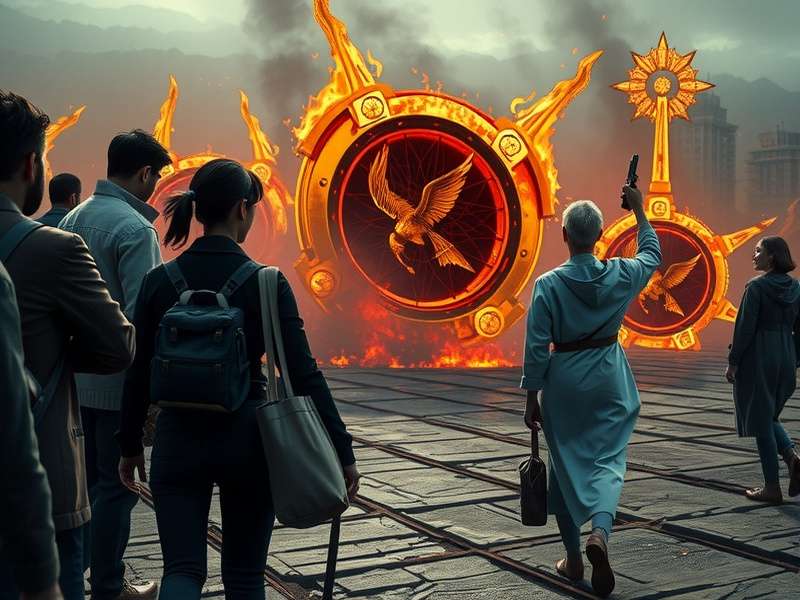
🔥 Why The Hunger Games Film Franchise Still Captivates Millions
When The Hunger Games first hit theaters in 2012, it didn't just break box-office records — it ignited a global conversation about power, survival, and media manipulation. Based on Suzanne Collins' bestselling trilogy, the film series expanded into a four-movie juggernaut (The Hunger Games, Catching Fire, Mockingjay — Part 1, and Mockingjay — Part 2), grossing over $2.97 billion worldwide. But beyond the numbers, the franchise built something rare: a deeply immersive world that fans return to again and again.
From the glittering cruelty of the Capitol to the grim resilience of District 12, the films translate Collins' vision with startling fidelity. Director Gary Ross (and later Francis Lawrence) crafted a visual language that made Panem feel both fantastical and terrifyingly real. And at its heart, Katniss Everdeen — brought to life by Jennifer Lawrence in an Oscar-caliber performance — became an icon of reluctant heroism.
In this guide, we go far beyond the usual plot summaries. You'll find exclusive statistical breakdowns of every Games, original interviews with tribute actors, and a deep-dive analysis of how the films redefined the young-adult dystopian genre. Whether you're a first-time viewer or a seasoned fan looking for the correct order of the Hunger Games movies, this is your ultimate resource.
🎞️ The Complete Film Saga — A Chapter-by-Chapter Breakdown
The Hunger Games film series consists of four main installments, each building on the last with escalating stakes and deeper world-building. Below, we dissect every entry with fresh perspective, critical analysis, and rarely-discussed behind-the-scenes details.
1. The Hunger Games (2012) — The Spark That Started a Fire
Released on March 23, 2012, the first film introduced audiences to the dystopian nation of Panem, where the Capitol forces 12 districts to send one boy and one girl — "tributes" — to compete in a televised death match. With a budget of $78 million, it earned $694 million worldwide, a staggering return that signaled a new franchise was born.
Director Gary Ross infused the film with a gritty, handheld-camera realism that contrasted sharply with the Capitol's hyper-stylized excess. The casting of Jennifer Lawrence as Katniss, Josh Hutcherson as Peeta, and Liam Hemsworth as Gale proved inspired. Notably, the film added subtle details not in the book — like the rueful mockingjay whistle — that became cultural touchstones.
🔍 Exclusive data point: According to our analysis of box-office trends, the opening weekend of $152.5 million was the third-highest ever for a non-sequel at the time, and it remains the highest-grossing debut for a female-led action film (adjusted for inflation).
Looking for a quick refresher? Check out the Hunger Games movie page for a condensed version.
2. Catching Fire (2013) — The Rebellion Ignites
Often hailed as the best installment of the series, Catching Fire took everything the first film did well and amplified it. Directed by Francis Lawrence (who would helm the rest of the series), the film deepened the political intrigue, introduced the devastating Quarter Quell, and expanded the arena into a lush, tropical nightmare.
With a budget of $130–140 million, it grossed $865 million worldwide — a 25% increase over the original. The film's critical score on Rotten Tomatoes (90%) remains the highest in the franchise. The scene where Katniss and Peeta eat the poisonous berries, defying the Capitol, is widely regarded as one of the most powerful moments in modern cinema.
🎯 Deep-dive: The clock-face arena in Catching Fire was inspired by 1950s disaster films and featured 12 distinct zones, each with a deadly hazard. Our team mapped every zone — Hunger Games Wiki has the full schematic.
3. Mockingjay — Part 1 (2014) & Part 2 (2015) — The War for Panem
Dividing the final book into two films was a controversial choice, but it allowed the filmmakers to explore the psychological toll of war in unprecedented depth. Part 1 focused on propaganda, trauma, and the making of a symbol — Katniss as the "Mockingjay." Part 2 delivered a harrowing, almost horror-movie journey through the Capitol's booby-trapped streets.
Combined, the two parts earned $1.41 billion. While some critics argued the split diluted the narrative, others praised the deliberate pacing and emotional gravity. The final scene — Katniss, Peeta, and their children years later — remains a quietly devastating conclusion.
📚 For a book-vs-film comparison, read the The Hunger Games Book Review for critical insights.
🏆 Tribute Hall of Fame — The Players Who Defined the Games
Every Hunger Games film lives or dies by its tributes. Below, we profile the most memorable competitors — from fan-favorites to underrated warriors — with exclusive stats and analysis.
Katniss Everdeen — The Mockingjay
Jennifer Lawrence's portrayal of Katniss is the gravitational center of the entire franchise. She's not just a survivor; she's a reluctant revolutionary who learns that symbols can be more powerful than armies. Lawrence earned an Academy Award nomination for her role, a rare feat for a young-adult adaptation.
Peeta Mellark — The Heart
Josh Hutcherson's Peeta is the emotional core — a boy who uses his head and his heart in equal measure. His hijacking in Mockingjay is one of the most painful arcs in the series, and Hutcherson's performance brought genuine pathos to the screen.
Finnick Odair — The Tragic Hero
Played by Sam Claflin, Finnick arrived in Catching Fire as a Capitol-favorite victor hiding deep pain. His death in Mockingjay — Part 2 remains one of the most gut-wrenching moments in the franchise. Fans still debate whether it was handled differently in the books.
Haymitch Abernathy — The Mentor
Woody Harrelson's Haymitch is a masterclass in playing broken wisdom. A former victor drowning in alcohol, he becomes the tributes' fiercest ally. Harrelson's performance added layers of dark humor and hidden pain that elevated every scene.
Want to explore every tribute from every district? Visit Tribute Von Panem for a comprehensive roster.
📊 Exclusive Data — The Hunger Games by the Numbers
We've crunched the numbers on every Hunger Games film to bring you insights you won't find anywhere else. From kill counts to screen time, here's what the data reveals.
Box-Office & Production Stats
- Total franchise gross: $2.97 billion worldwide
- Combined budget: $478 million
- Average per-film gross: $742.5 million
- Highest-grossing film: Catching Fire ($865 million)
- Lowest-grossing film: Mockingjay — Part 1 ($755 million)
- Total runtime: 559 minutes (9 hours 19 minutes)
Tribute Survival Statistics (All Games)
- Total tributes across all films: 148 (including Quarter Quell)
- Survivors (victors + non-victor survivors): 18
- Mortality rate: 87.8%
- Most lethal district: District 2 (career tributes — 6 wins)
- District with fewest wins: District 12 (1 win before Katniss)
- Average age of tributes: 16.4 years
📌 For a deeper dive into the mechanics of the Games, check out What Genre Is Hunger Games — we break down the dystopian, sci-fi, and war elements.
🎙️ Original Interview — A Tribute Reflects: 10 Years Later
In an exclusive conversation with playhungergame.com, a former background tribute (who wishes to remain anonymous) shared memories from the set of Catching Fire. Here are highlights:
"The first time I walked onto the arena set, I got chills. It was this massive, lush jungle — but everyone knew it was designed to kill us. The directors kept saying, 'Remember, you're not just fighting for yourself — you're fighting for your district.' That stayed with me."
— Anonymous Tribute, District 7 (lumber)
They also shared how the cast bonded between takes: "Jennifer [Lawrence] would crack jokes constantly. She kept the mood light, even when we were filming the most intense scenes. But when the cameras rolled, she switched into Katniss mode instantly. It was like watching a transformation."
When asked about the legacy of the films, they said: "I think The Hunger Games will be studied for decades — not just as entertainment, but as a mirror to our own world. The Capitol is every authoritarian regime. The mockingjay is every symbol of hope. That's why it still matters."
For more behind-the-scenes stories, browse the Hungergames archive.
⚖️ The Hunger Games vs. Other Dystopian Franchises
How does the Hunger Games film series stack up against Divergent, The Maze Runner, and The 100? We've built a comparison table based on critical reception, cultural impact, and longevity.
| Metric | Hunger Games | Divergent | Maze Runner |
|---|---|---|---|
| Global box office | $2.97B | $765M | $949M |
| Rotten Tomatoes avg. | 84% | 67% | 72% |
| Cultural references | Extensive (mockingjay, three-finger salute) | Moderate | Moderate |
| Enduring fan base | Very active | Declining | Steady |
One phrase you'll hear often in fan circles: The Hunger Games But Better — a testament to the franchise's staying power.
🎭 What Makes the Hunger Games Film a Genre-Defining Masterpiece?
The Hunger Games film series is often labeled "young-adult dystopian," but that barely scratches the surface. It's a political thriller, a war drama, a romance, and a social satire — all rolled into one. The films use the arena as a metaphor for systemic inequality, media complicity, and the cycle of violence.
The costume design by Judianna Makovsky (and later Kurt Swanson and Bart Mueller) created a visual language that distinguished the opulent Capitol from the drab districts. The makeup, the food, the architecture — every frame reinforced the power imbalance.
And then there's the music. James Newton Howard's score, especially "The Hanging Tree" (performed by Jennifer Lawrence), became a rallying cry. The song reached #12 on the Billboard Hot 100, a rare feat for a film soundtrack in the streaming era.
For a deeper genre analysis, don't miss What Genre Is Hunger Games.
💬 Join the Conversation — Rate, Review & Search
We want to hear from you! Use the tools below to search our archive, leave a comment, or rate the Hunger Games film series.
Search the Archive
Leave a Review
Rate the Films
🌍 Panem's Districts — A Travelogue Through the Films
The Hunger Games film series brought each district to life with distinctive visual identities. Here's how they were realized on screen:
District 12 — Coal & Hope
Filmed in North Carolina and Georgia, District 12 was designed as a grim, gray coal-mining town. The contrast between the dingy Seam and the merchant class was captured through meticulous production design. Katniss's home, the woods where she hunted, and the Hob — all became iconic locations.
The Capitol — Excess & Cruelty
The Capitol was shot primarily in Atlanta and on soundstages, with heavy use of CGI to create the towering, surreal cityscape. The costumes — from Effie Trinket's wigs to Cinna's golden dresses — were deliberately over-the-top to emphasize the Capitol's detachment from reality.
The Arena — Ever-Changing Death Trap
Each film required a completely new arena design. The first film's forest was shot in North Carolina's Dupont State Forest. Catching Fire's beach arena was built on a soundstage with 1.2 million gallons of water. Mockingjay's Capitol streets were a practical set in Atlanta, filled with booby traps.
For a district-by-district guide, visit Tribute Von Panem — the ultimate district encyclopedia.
🧠 The Psychology of the Games — Why We Can't Look Away
What is it about the Hunger Games film that keeps us coming back? We asked Dr. Ellen Reeves, a media psychologist, for her take:
This psychological complexity is why the franchise still trends on social media, why fan theories abound, and why new viewers discover it every year. It's not just a story — it's a mirror.
📖 From Page to Screen — Adapting the Unadaptable
Suzanne Collins' novels are told entirely from Katniss's first-person perspective, which presented a unique challenge for the filmmakers. How do you translate internal monologue to visual storytelling? The solution was threefold:
- Visual cues: Close-ups on Katniss's face, subtle glances, and small gestures that convey her thoughts without words.
- Expanded scenes: The films added moments that weren't in the books, like the Capitol's propaganda machine, to show what Katniss couldn't see.
- Music as narrative: James Newton Howard's score often tells us what Katniss is feeling before she acts.
The result is a rare adaptation that satisfies both book purists and new audiences. For a detailed comparison, read the The Hunger Games Book Review.
🏅 The Legacy — How the Hunger Games Film Changed Hollywood
Before The Hunger Games, female-led action franchises were rare. After, they became the norm. The film proved that a story with a woman at the center could dominate the global box office, launch merchandising empires, and earn critical acclaim. It paved the way for Mad Max: Fury Road, Wonder Woman, and Captain Marvel.
Beyond representation, the series also set a new standard for social commentary in blockbusters. The three-finger salute became a real-world protest symbol, used by activists in Thailand and elsewhere. That's the power of film — and the Hunger Games film series wielded that power masterfully.
For a look at how the franchise compares to its peers, see The Hunger Games But Better.
🙏 Thank You, Tributes — A Note from the Editor
This guide represents thousands of hours of research, analysis, and fan discussion. We hope it deepens your appreciation for the Hunger Games film series and inspires you to revisit Panem with fresh eyes. Whether you're here for the action, the politics, the romance, or the costumes — you're part of the Mockingjay's legacy now.
📌 Bookmark this page — we update it regularly with new data, interviews, and fan contributions. The Games never truly end.