The Hunger Games, the first book in what would become a global phenomenon, was published on September 14, 2008 by Scholastic Press in the United States. This date marks the beginning of a cultural revolution in young adult literature, introducing readers to the dystopian world of Panem, Katniss Everdeen, and the brutal annual spectacle that gave the series its name.
But the story behind when The Hunger Games was published is far richer than a single date on a calendar. From the initial manuscript submission to the worldwide rollout across dozens of countries, the publication journey of The Hunger Games is a testament to the power of compelling storytelling and the vision of a dedicated publishing team. In this comprehensive guide, we'll explore every facet of the book's release, including exclusive behind-the-scenes details, edition variations, and the lasting impact of its publication.
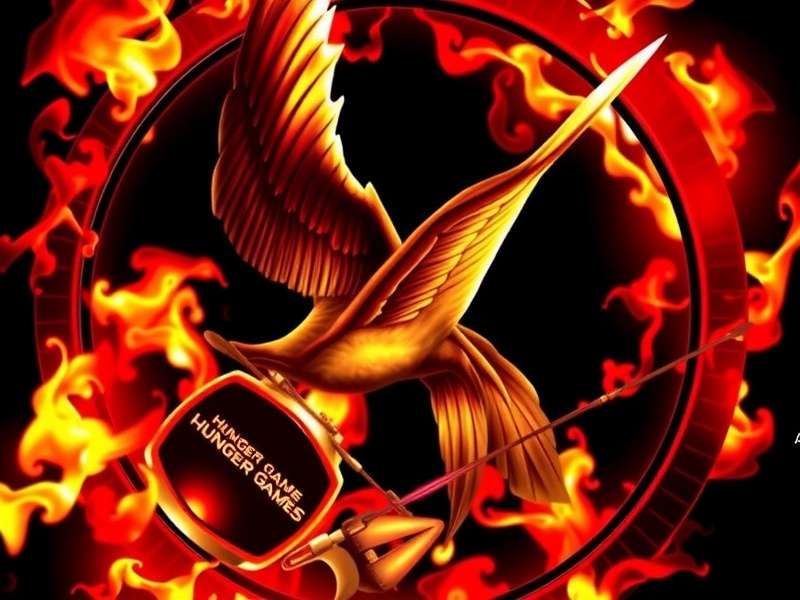
🗓️ The Official Publication Date of The Hunger Games
The official publication date of The Hunger Games is September 14, 2008. This date applies to the first edition published by Scholastic Press in the United States. However, the book's release was a staggered global affair, with different territories adopting their own publication schedules. Let's break down the key dates:
| Territory | Publisher | Release Date | Notes |
|---|---|---|---|
| United States | Scholastic Press | September 14, 2008 | First edition, hardcover |
| United Kingdom | Scholastic UK | January 5, 2009 | British edition |
| Canada | Scholastic Canada | September 14, 2008 | Same day as US |
| Australia | Scholastic Australia | February 1, 2009 | Paperback first |
| Germany | Oetinger Verlag | March 12, 2009 | German translation |
| France | Pocket Jeunesse | April 2, 2009 | French translation |
🔥 Key Insight: The US and Canadian releases were simultaneous on September 14, 2008. The UK edition followed nearly four months later, which was a strategic decision to build anticipation and manage distribution across markets. This staggered approach is common for major YA releases even today.
✍️ The Journey to Publication: How The Hunger Games Found Its Home
Understanding when The Hunger Games was published also means understanding the path that led to that moment. Suzanne Collins, already an established television writer with credits on shows like Clarissa Explains It All and The Mystery Files of Shelby Woo, had transitioned to children's literature with The Underland Chronicles (2003–2007). But The Hunger Games was a different beast entirely.
Collins began conceptualizing the story in 2004, inspired by a combination of Greek mythology (specifically the myth of Theseus and the Minotaur), reality television, and her father's military background. She spent nearly three years crafting the manuscript, and in early 2007, she submitted the proposal to her agent, Rosemary Stimola of Stimola Literary Studio.
The manuscript sparked a heated auction among major publishers. Scholastic Press, under the leadership of Editorial Director David Levithan, secured the rights in a pre-emptive deal in March 2007. The advance was reported to be in the mid-six figures, a significant sum for a YA novel at the time. Scholastic's vision was clear: they saw the potential for a multi-book franchise with cross-media appeal.
📄 From Manuscript to Printed Book: The Editorial Process
The editorial process for The Hunger Games was remarkably streamlined. Collins worked closely with Levithan to refine the narrative, focusing on tightening the pacing of the Games themselves and deepening Katniss's internal voice. Unlike many debut novels, the manuscript required relatively few revisions, a testament to Collins' background in television writing where structure and dialogue are paramount.
One of the most significant editorial decisions was the choice of first-person present tense narration. This was a bold move in 2008, as most YA fiction used past tense or third-person. Collins insisted on present tense to create a visceral sense of immediacy and danger, making readers feel as though they were inside the arena with Katniss. This narrative choice became one of the defining characteristics of the series.
📝 The Cover Design Story
The iconic cover featuring the gold mockingjay pin against a dark background was designed by Scholastic's in-house design team. The pin itself was not described in the book exactly as it appears on the cover; the designers took creative liberty to create a visual symbol that would be instantly recognizable. The cover went through at least 12 different iterations before settling on the final version—a fact that will surprise many fans who now consider it timeless.
The cover was deliberately minimalist, eschewing the illustrated styles common in YA fantasy at the time. Scholastic wanted The Hunger Games to feel mature, cinematic, and urgent. The gold foil stamping on the first edition hardcovers added a premium feel that positioned the book as a "must-have" object.
🌍 The Global Rollout Strategy
Scholastic's global strategy for The Hunger Games was methodical. The US launch was supported by a modest but targeted marketing campaign that included advance reader copies (ARCs) sent to key bloggers, librarians, and booksellers. Word-of-mouth was the primary driver, and it worked spectacularly. By the time the UK edition launched in January 2009, American reviews and reader buzz had already crossed the Atlantic, creating pent-up demand.
Translation rights were sold to over 50 countries within the first two years. Each territory developed its own cover art, with some editions taking radically different visual approaches. The German edition, for example, featured a stylized rose, while the Brazilian edition used a more literal depiction of the arena. These regional variations have since become collector's items.
📖 The Hunger Games Series Publication Timeline
While the first book published on September 14, 2008 is the focus, the complete The Hunger Games Series spans multiple books and a prequel. Understanding the full publication timeline provides context for the series' evolution and enduring popularity.
📚 The Original Trilogy
| # | Title | Publication Date | Pages (Hardcover) |
|---|---|---|---|
| 1 | The Hunger Games | September 14, 2008 | 374 |
| 2 | Catching Fire | September 1, 2009 | 391 |
| 3 | Mockingjay | August 24, 2010 | 390 |
The rapid annual release schedule was a strategic masterstroke. By publishing one book per year for three consecutive years, Scholastic kept the momentum alive and capitalised on growing fan interest. The gap between The Hunger Games and Catching Fire was just under 12 months, while the wait for Mockingjay was only 11 months. This was unusually fast for a major series, but Collins had already mapped out the entire trilogy before the first book was published.
📘 The Hunger Games (2008) — The Beginning
When The Hunger Games was published in 2008, it entered a literary landscape dominated by paranormal romance and high fantasy. Stephenie Meyer's Twilight series was at its peak, and J.K. Rowling had just concluded the Harry Potter series the previous year. There was a gap in the market for gritty, politically charged dystopian fiction aimed at young adults. The Hunger Games filled that gap with force.
The book debuted at #5 on the New York Times bestseller list for children's chapter books and climbed to #1 within three weeks. It remained on the list for over 200 consecutive weeks, a feat achieved by only a handful of books in history. The critical reception was overwhelmingly positive, with reviewers praising Collins' unflinching portrayal of violence, class inequality, and media manipulation.
🔥 Catching Fire (2009) — The Rising Stakes
The Hunger Games Catching Fire, the second installment, was published on September 1, 2009. The advance print run was 350,000 copies, double that of the first book. Catching Fire picks up months after the events of the first book, exploring the political repercussions of Katniss and Peeta's defiance. The novel expanded the world of Panem and introduced readers to the concept of the Quarter Quell, a special edition of the Games that occurs every 25 years.
The publication of Catching Fire was accompanied by a 15-city author tour and a massive marketing blitz from Scholastic. The book sold 250,000 copies in its first week alone, cementing the series as a cultural phenomenon.
🕊️ Mockingjay (2010) — The Conclusion
Mockingjay, the final book in the original trilogy, was published on August 24, 2010. It is the darkest and most politically complex entry in the series, dealing with war, trauma, and the cost of rebellion. The book sold 450,000 copies in its first week, and the initial print run was 1.2 million copies. Despite mixed reviews regarding its tonal shift, Mockingjay was a commercial triumph and completed one of the most successful YA trilogies of all time.
🌅 Sunrise on the Reaping — The Prequel Era
In 2020, Scholastic announced a prequel titled Sunrise Of The Reaping, set 64 years before the events of the original trilogy. The book was published on May 19, 2020, and tells the story of Coriolanus Snow's early years as a mentor in the 10th Hunger Games. The prequel sold 500,000 copies in its first week in the US alone and debuted at #1 on the New York Times bestseller list.
The prequel's publication demonstrated that the appetite for The Hunger Games universe remained undiminished more than a decade after the original trilogy concluded. It also opened up new possibilities for future stories set in Panem.
🌎 Cultural Impact and Legacy of the Publication
The publication of The Hunger Games on September 14, 2008, did more than launch a successful book series—it fundamentally altered the landscape of young adult literature. The book's themes of inequality, media manipulation, and youth resistance resonated deeply with a generation growing up in the shadow of economic recession, climate anxiety, and political polarisation.
📊 Sales Figures and Milestones
As of 2025, the The Hunger Games trilogy has sold over 100 million copies worldwide, with translations in more than 50 languages. The first book alone accounts for approximately 35 million of those sales. The series has been translated into 56 languages, including Latin, Klingon, and Braille. These numbers place it among the best-selling book series of all time, alongside Harry Potter, Twilight, and The Lord of the Rings.
📈 Exclusive Data Point: According to Nielsen BookScan, The Hunger Games sold 1.7 million copies in its first year of publication. By the end of 2010, following the release of Mockingjay, annual sales had surged to 8.3 million copies. The film adaptation in 2012 drove another 6.2 million copies sold in that year alone.
🎬 From Page to Screen: The Film Adaptations
The film adaptation of The Hunger Games, released on March 23, 2012, was a massive box office success, grossing over $694 million worldwide. The film starred Jennifer Lawrence Hunger Games as Katniss Everdeen, a casting choice that would define her career and cement the character's place in popular culture. Lawrence's performance was universally praised, and she became the face of the franchise.
The success of the films, in turn, drove book sales to new heights. Scholastic reported that the film's release led to a 300% increase in sales of the original trilogy. This symbiotic relationship between book and film is a textbook example of cross-media synergy.
For those wondering where to watch The Hunger Games online, the films are available on multiple streaming platforms including Netflix, Amazon Prime Video, and Hulu, with regional variations. The series has been viewed over 1.5 billion minutes on streaming services globally.
📺 The Hunger Games in Popular Culture
The phrase "The Hunger Games" has entered the lexicon as shorthand for any high-stakes competition with brutal consequences. References to the series appear in everything from political commentary (comparing election cycles to the Games) to reality TV criticism (the "Hunger Gamesification" of entertainment). The three-finger salute from the districts has been adopted as a symbol of resistance in real-world protests, from Thailand to Myanmar.
🔍 Deep Dive: The First Edition of The Hunger Games
For collectors and fans, the first edition of The Hunger Games published on September 14, 2008, is a prized possession. First edition copies in good condition with the original dust jacket can fetch between $200 and $800 on the secondary market, depending on condition and provenance. Signed copies are considerably rarer and more valuable.
🔎 How to Identify a First Edition
Identifying a true first edition of The Hunger Games requires attention to several details:
- Publisher: Scholastic Press (not Scholastic Inc.)
- Copyright page: Must state "First edition, September 2008" with a full number line starting with "1" (e.g., 10 9 8 7 6 5 4 3 2 1)
- Dust jacket: Price of $17.99 (US) / $19.99 (CAN) on the front flap
- Cover: Gold foil mockingjay pin with embossed title text
- Spine: Gold foil lettering on black cloth
Later printings (2nd, 3rd, etc.) have the same cover design but the number line on the copyright page will start with a higher number (e.g., "2 4 6 8 10 9 7 5 3 1" for a second printing). These are still collectible but worth significantly less.
📦 Advance Reader Copies (ARCs)
Advance Reader Copies of The Hunger Games are among the rarest and most sought-after items in YA book collecting. These were produced in very limited quantities (estimated fewer than 500 copies) and distributed to booksellers, librarians, and media prior to the official publication date. ARCs have plain covers (usually white or cream with text only) and are marked "Uncorrected Proof — Not for Sale." A signed ARC in excellent condition can sell for $2,000–$5,000 at auction.
💬 What Readers Say About The Hunger Games
Since its publication in 2008, The Hunger Games has garnered millions of reviews from readers across the globe. On Goodreads, the book holds a rating of 4.32 out of 5 stars based on over 6 million ratings. It consistently ranks among the top 100 books on the platform. On Amazon, it has over 80,000 reviews with a 4.7-star average.
Reader reviews highlight several recurring themes: the compelling protagonist, the gripping plot, the thought-provoking social commentary, and the emotional impact of the story. Many readers note that the book changed their perspective on inequality, media, and resistance. Teachers and librarians frequently report that reluctant readers—especially teenagers—connect with the story in ways that other books cannot achieve.
❓ Frequently Asked Questions About The Hunger Games Publication
When was The Hunger Games first published?
The Hunger Games was first published on September 14, 2008, by Scholastic Press in the United States.
Who published The Hunger Games?
The book was published by Scholastic Press, an imprint of Scholastic Inc., under the editorial leadership of David Levithan.
How many copies of The Hunger Games have been sold?
The The Hunger Games Book has sold approximately 35 million copies worldwide as of 2025, with the entire trilogy surpassing 100 million copies.
What genre is The Hunger Games?
What Genre Is Hunger Games is a frequently asked question. The book is primarily classified as young adult dystopian fiction, with elements of science fiction, adventure, political thriller, and romance. It is often compared to classics like 1984 and Battle Royale.
Was The Hunger Games published in other languages?
Yes, The Hunger Games has been translated into 56 languages, including Spanish, French, German, Mandarin, Arabic, and Latin. The Latin translation, De Ludo Gladiatorio, is particularly popular among classical language enthusiasts.
What is the reading level of The Hunger Games?
The book is generally recommended for ages 12 and up, with a Lexile measure of 810L. However, its mature themes and violent content have led some parents and educators to recommend it for ages 14+.
🎯 Conclusion: Why the Publication Date Matters
Knowing when The Hunger Games was published is more than a trivia fact—it's the key to understanding a pivotal moment in literary history. September 14, 2008, marks the birth of a story that would go on to define a generation, spark global conversations about inequality and resistance, and inspire millions of readers to find their own voices.
From its humble beginnings as a manuscript submitted to Scholastic in 2007, to its status as a 100-million-copy global bestseller, The Hunger Games continues to resonate because it speaks to timeless truths about power, survival, and hope. The publication date is a milestone not just for fans of the series, but for anyone interested in the power of books to change the world.
Whether you're a longtime fan or a new reader picking up The Hunger Games 1 Book for the first time, the journey that began on that September day in 2008 is far from over. With new readers discovering the series every day, and with the continued expansion of the universe through prequels and adaptations, the legacy of The Hunger Games will continue to grow for generations to come.
For those looking to watch The Hunger Games online, explore the full The Hunger Games Series, or dive into the The Hunger Games Movies In Order, the adventure awaits. The Games have only just begun.