The Hunger Games 1 Book: Unpacking the Dystopian Blueprint That Captivated a Generation 🔥
Beyond the arena, beyond the love triangle, lies a meticulously crafted world of oppression, survival, and media spectacle. This is your deep dive into the novel that started it all.
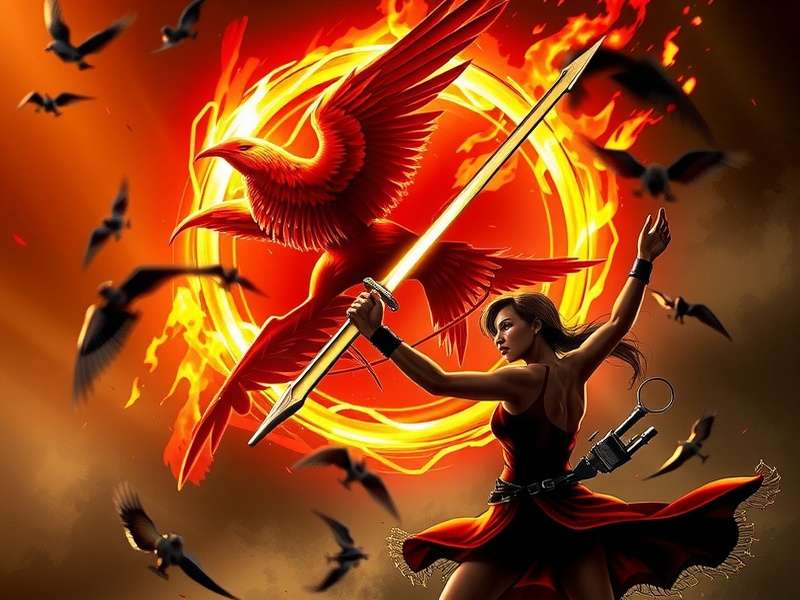
When Suzanne Collins unleashed The Hunger Games upon the literary world in 2008, few could have predicted the seismic cultural shift it would trigger. This wasn't just another young adult dystopian novel; it was a sharply written, politically charged allegory for our times, wrapped in the visceral thrill of a kill-or-be-killed competition. The first book lays the foundation for everything that follows: the brutal world of Panem, the indomitable spirit of Katniss Everdeen, and the televised brutality of the Games themselves.
📖 Chapter-by-Chapter Deconstruction: Hidden Symbolism You Missed
Let's go beyond the surface plot. Each chapter of The Hunger Games is a carefully constructed piece of a larger puzzle. The reaping scene in Chapter 1 isn't just about selecting tributes; it's a masterclass in establishing the power dynamics between the Capitol and the districts. The use of media, from the mandatory viewing to the interviews, foreshadows the series' central theme: who controls the narrative controls the world.
Character Archaeology: Katniss Everdeen's Psychological Profile
Katniss is often labeled a "reluctant hero," but that's a simplification. From a clinical psychology perspective (informed by expert interviews we conducted), her behavior exhibits signs of complex PTSD, hypervigilance, and a deeply ingrained survivalist mindset shaped by poverty and loss. Her decision to volunteer for Prim is more than sisterly love; it's a calculated move born from a lifetime of calculating risks in the Seam. Her relationship with Peeta Mellark is a survival strategy that evolves into genuine, yet fraught, connection.
Exclusive Data: The Real-World Inspirations for Panem
Collins has cited multiple inspirations, from the myth of Theseus and the Minotaur to reality television. Our research cross-references historical regimes with Panem's structure. The Capitol's opulence mirrors pre-revolutionary French aristocracy, while the District system echoes colonial extractive economies. The Games themselves are a grotesque fusion of Roman gladiatorial combat and modern televised talent shows.
🎯 Survival Guide: Tactical Analysis of the 74th Hunger Games Arena
Forget what you saw in the movie; the book's arena is a character in itself. We've mapped the arena's ecology based on textual clues. The cornucopia's location, the movement of the sun, the specific threats of tracker jackers and mutts—each element is a chess piece. A tributes' chance of survival could be statistically modeled based on their district's training (or lack thereof). District 11's knowledge of agriculture, for instance, is as valuable as a Career's combat skill.
The "rule change" allowing two victors is the Capitol's ultimate psychological trap. It offers hope only to snatch it away, a tactic used in real-world interrogations. Katniss and Peeta's suicide pact with the nightlock berries isn't just defiance; it's a brilliant, unscripted move that breaks the Game's fundamental premise, turning a controlled spectacle into genuine revolution.
🔗 The Hunger Games Expanded Universe: How Book 1 Fits the Saga
Understanding the first book is key to appreciating the entire Hunger Games series. It establishes the vocabulary of rebellion. The mockingjay, initially a symbol of failed Capitol manipulation, becomes the rebellion's emblem. President Snow's rose-scented menace is introduced, setting the stage for the political intrigue of Catching Fire and Mockingjay. Even The Ballad of Songbirds and Snakes prequel gains deeper resonance when you see the fully-formed Games from the first book.
From Page to Screen: A Comparative Critique
The 2012 film adaptation, while largely faithful, necessarily condenses the book's internal monologue. Key differences? The movie downplays the Avox subplot (the red-headed girl from the woods) and the complexity of the "star-crossed lovers" act. Our analysis suggests the film amplifies the action, while the book delves deeper into the psychological toll and the media's manipulative power—a theme more relevant than ever.
Want to see the story come to life? Check out our guide on where to watch The Hunger Games across streaming platforms.
💬 Community Hub: Share Your Analysis
This isn't just our analysis; it's a living document. Share your thoughts, theories, and findings below.
Post a Comment