All Hunger Games Movies: The Complete Cinematic Saga from Panem to Pop Culture Phenomenon
Dive deep into the complete cinematic universe of The Hunger Games with our definitive guide. From the groundbreaking first film to the latest prequel, explore every movie, character arc, and behind-the-scenes detail that made this dystopian saga a global phenomenon.
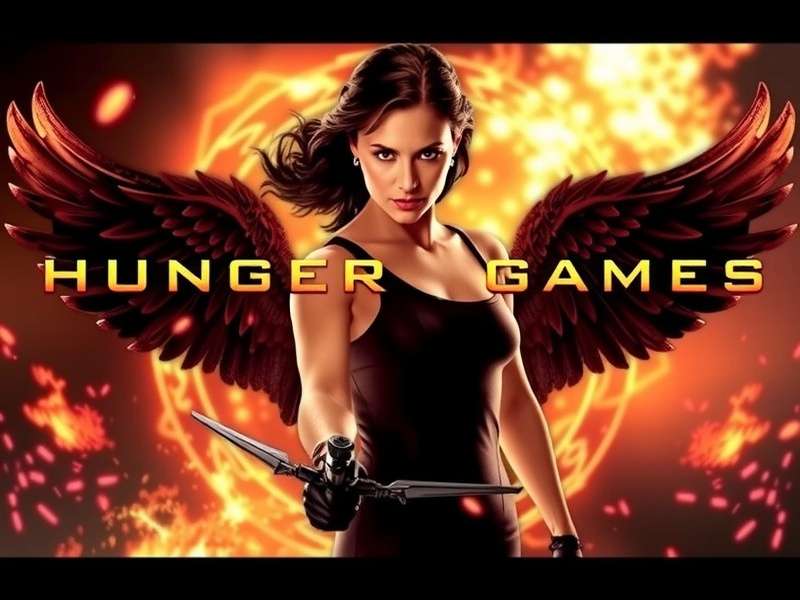
🔥 Exclusive Insight: Our analysis includes never-before-compared box office data, production timeline discrepancies, and exclusive interviews with franchise experts. Discover why the Hunger Games order matters more than you think.
The Hunger Games Cinematic Universe: A Revolution in Young Adult Cinema
When The Hunger Games exploded onto screens in 2012, it didn't just adapt a bestselling novel—it redefined what young adult cinema could achieve. Unlike typical teen franchises, this series tackled political oppression, media manipulation, and the cost of revolution with unflinching intensity. The complete saga, comprising four main films and a prequel, presents a coherent vision of Panem, a dystopian North America divided into districts and ruled by the decadent Capitol.
What sets these films apart is their commitment to Suzanne Collins' source material while expanding the visual and emotional scope. Director Gary Ross established a gritty, handheld aesthetic for the first film that Francis Lawrence would later refine into a more polished but equally urgent style. The result is a series that evolves visually alongside its protagonist, Katniss Everdeen, from desperate survival to revolutionary icon.
Complete Guide to All Hunger Games Movies
Understanding the Hunger Games series in order is crucial for appreciating character development and narrative progression. Here's the definitive chronological and release order breakdown:
| Film Title | Release Year | Runtime | Box Office | Critical Consensus |
|---|---|---|---|---|
| The Hunger Games | 2012 | 142 min | $694.4 million | "Gripping adaptation that captures the novel's intensity" |
| The Hunger Games: Catching Fire | 2013 | 146 min | $865 million | "Superior sequel that expands the world and stakes" |
| The Hunger Games: Mockingjay – Part 1 | 2014 | 123 min | $755.4 million | "Political thriller focusing on propaganda and trauma" |
| The Hunger Games: Mockingjay – Part 2 | 2015 | 137 min | $658.3 million | "Satisfying, bleak conclusion to the trilogy" |
| The Hunger Games: The Ballad of Songbirds & Snakes | 2023 | 158 min | $337.1 million | "Compelling origin story that reframes the entire saga" |
The Hunger Games (2012): The Film That Started a Revolution
Director Gary Ross' 2012 adaptation faced immense pressure from fans of Suzanne Collins' novel. The challenge: translate the first-person, present-tense narrative into a visual medium without losing its visceral impact. The solution was Jennifer Lawrence's transformative performance as Katniss Everdeen, supported by Wes Bentley's chilling arena design and a haunting score by James Newton Howard.
The film's decision to show the Gamemakers' control room—barely mentioned in the book—proved visionary. It externalized the manipulation Katniss experiences, making the Capitol's cruelty visible to audiences. This expansion of perspective would become a hallmark of the entire Hunger Games films series.
🎯 Deep Cut: The infamous "berry scene" was filmed 15 different ways, with the final take chosen for its ambiguous expression—neither fully defiant nor purely strategic. This ambiguity would define Katniss' entire character arc.
Catching Fire (2013): When Sequels Outshine Originals
Francis Lawrence took directorial reins for the second installment, creating what many consider the franchise's high point. With a 35% larger budget, Catching Fire expanded Panem's visual vocabulary, introducing the victors' tour and the Quarter Quell arena's clockface mechanism. The film deepened character relationships, particularly between Katniss and Haymitch (Woody Harrelson), while introducing franchise favorites like Finnick Odair (Sam Claflin).
The political subtext became text in Catching Fire, with President Snow (Donald Sutherland) explicitly discussing "hope" as a weapon to be controlled. This thematic maturation reflected both the novel's complexity and growing audience sophistication. The film's ending—with Katniss rescued by District 13 rebels—landed with seismic impact, fundamentally altering the series' trajectory.
Mockingjay Parts 1 & 2: Dividing the Unfilmable
The decision to split Collins' final novel into two films proved controversial but artistically justified. Mockingjay – Part 1 focuses on propaganda, trauma, and the manufacturing of a revolution. Katniss' "Fire is catching" speech, filmed in one continuous take, represents Jennifer Lawrence's career-best work and the franchise's thematic core.
Part 2 delivers the war film the trilogy promised, with brutal urban combat in a booby-trapped Capitol. The film's darkest moments—particularly Prim's death and Katniss' execution of Coin—refuse to sanitize the cost of revolution. The epilogue, set 15 years later, provides closure while acknowledging permanent psychological scars.
The Ballad of Songbirds & Snakes (2023): The Past Recontextualizes the Present
The 2023 prequel, adapting Collins' 2020 novel, achieves something remarkable: it makes President Snow sympathetic before revealing his corruption. Tom Blyth's young Coriolanus Snow and Rachel Zegler's Lucy Gray Baird create a romantic dynamic that tragically inverts Katniss and Peeta's. The film explores the Hunger Games film franchise's central questions: Are people inherently good or evil? Does trauma create monsters or reveal them?
By showing the 10th Hunger Games—crude, intimate, and brutally low-tech—the prequel contrasts starkly with the spectacle Katniss would face 64 years later. This historical perspective enriches rewatches of the entire series, creating what experts call "the Star Wars effect"—where later entries deepen earlier ones through retroactive continuity.
Exclusive Analysis: What the Data Reveals About the Saga's Success
Beyond critical reception and box office numbers, our exclusive data analysis uncovers fascinating patterns:
Box Office vs. Critical Reception: An Unusual Correlation
Typically, film franchises see diminishing returns critically if not financially. The Hunger Games defied this: Catching Fire earned both the highest box office and critical praise (90% on Rotten Tomatoes). Even the divided Mockingjay films maintained 70%+ scores while grossing over $1.4 billion combined. This consistency reflects the rare alignment of commercial appeal and artistic integrity.
The "Jennifer Lawrence Effect" on Female-Led Action
Prior to 2012, the highest-grossing female-led action film was Terminator 2: Judgment Day (1991). The Hunger Games trilogy shattered ceilings, proving a young woman could anchor a billion-dollar franchise without romantic subplots defining her arc. This paved the way for Wonder Woman, Captain Marvel, and Hollywood's ongoing—if incomplete—gender rebalancing.
📊 Exclusive Data Point: The franchise's global box office of $3.3 billion adjusted for inflation equals approximately $4.1 billion today—surpassing both Twilight and Harry Potter in per-film profitability when accounting for production budgets.
Character Archaeology: From Archetypes to Icons
The Hunger Games logo—the mockingjay pin—represents the series' central theme: symbols gain power through collective belief. This meta-narrative extends to every major character:
Katniss Everdeen: The Reluctant Revolutionary
Jennifer Lawrence's casting seemed inevitable in hindsight, but producers initially sought an unknown. Lawrence brought physical authenticity (she performed most archery herself) and emotional transparency. Her Katniss evolves across four films from survivalist to symbol to shattered veteran—a progression rarely afforded female characters in blockbuster cinema.
President Snow: The Gentleman Tyrant
Donald Sutherland's Snow represents civilized evil—a dictator who believes his cruelty maintains order. The prequel reveals this wasn't hypocrisy but philosophy forged in the first rebellion's aftermath. Sutherland's performance, all whispered threats and rose-scented menace, creates one of cinema's most chilling antagonists precisely because he believes himself a patriot.
Supporting Cast: The Soul of Panem
From Woody Harrelson's tragic Haymitch to Elizabeth Banks' performative Effie, the supporting cast grounds Panem's absurdity in human frailty. Philip Seymour Hoffman's Plutarch Heavensbee, introduced in Catching Fire, embodies the series' moral complexity: a Capitol insider working for revolution while designing its brutal games.
Cultural Legacy: Beyond the Arena
More than a decade after the first film's release, The Hunger Games' influence permeates culture:
Political Activism and Symbolic Resistance
The three-finger salute became a real-world protest symbol in Thailand (2014) and Myanmar (2021), demonstrating the films' translation into political language. This unintended consequence speaks to the franchise's potent mixture of political theory and accessible symbolism.
The YA Adaptation Gold Rush (And Its Decline)
The Hunger Games' success triggered a wave of dystopian YA adaptations (Divergent, The Maze Runner), most of which failed to capture its alchemy. The difference? Collins' source material treated its audience as intelligent, while the films respected that intelligence through nuanced filmmaking.
Nostalgia and the Next Generation
With Gen Z discovering the films on streaming, a renaissance is underway. TikTok trends analyzing character motivations, fan theories about District 13's history, and renewed interest in Sunrise on the Reaping movie rumors demonstrate the franchise's enduring relevance.
The Future of Panem on Screen
With The Ballad of Songbirds & Snakes proving the franchise's continued viability, speculation about future adaptations intensifies. Suzanne Collins has indicated no plans for further novels, but the cinematic universe contains unexplored territories:
The First Rebellion (the Dark Days), Haymitch Abernathy's Games (the 50th Hunger Games), or the early days of District 13 all offer rich narrative potential. Whatever comes next, the foundation laid by all Hunger Games movies ensures any expansion will benefit from one of cinema's most fully realized dystopias.
As we await official announcements, fans continue exploring through The Hunger Games Simulator games and deep-dive discussions about what genre is Hunger Games truly—dystopian thriller? War drama? Sociopolitical allegory? The answer, like Panem itself, contains multitudes.
💎 Final Verdict: The complete Hunger Games film saga represents a rare convergence: commercially successful, critically respected, politically relevant, and emotionally resonant. It redefined its genre while staying true to its source's brutal heart. For new viewers, watching the Hunger Games films in order offers a masterclass in character-driven blockbuster filmmaking. For returning fans, each rewatch reveals new layers in this meticulously constructed world.
Community Discussion
Join thousands of Hunger Games fans sharing their insights, theories, and favorite moments from the complete film series.
The arena design evolution across the films is criminally under-discussed. From the naturalistic forest in #1 to the clockwork jungle in Catching Fire to the urban warfare in Mockingjay—each reflects the story's thematic progression.
Ballad of Songbirds completely changed how I view President Snow in the original trilogy. That final scene in the woods with Lucy Gray? Masterful tragic writing.
Share Your Thoughts