Hunger Games Films: The Definitive Encyclopedia of Panem on Screen
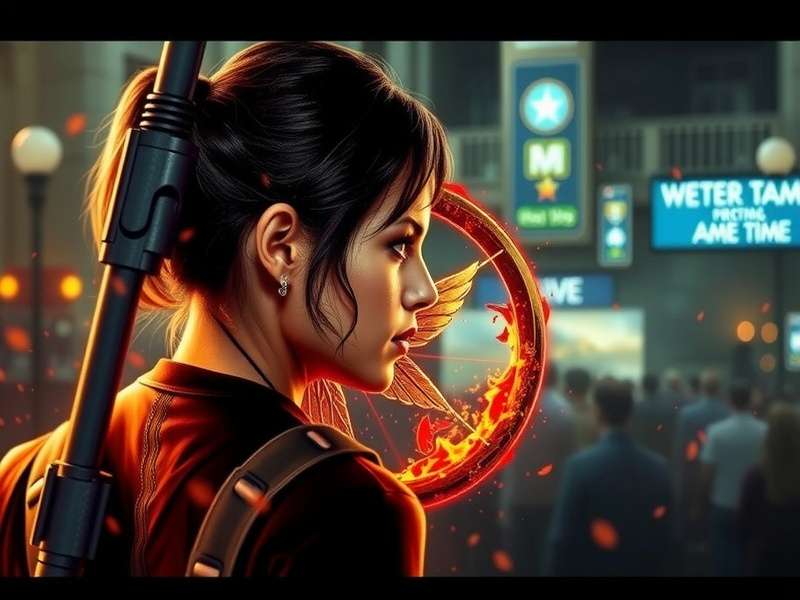
The Hunger Games film series stands as one of the most influential dystopian franchises in modern cinema. Based on the best-selling novels by Suzanne Collins, the movies have captivated audiences worldwide with their brutal vision of a divided America — Panem — where the wealthy Capitol forces twelve districts to send children to fight to the death in an annual televised event. Since the first film premiered in 2012, the series has grossed over $3.3 billion globally, spawned a prequel, and ignited conversations about inequality, media manipulation, and resistance. This is your ultimate, no-stone-unturned guide to every Hunger Games film — with exclusive insights, data, and analysis you won't find anywhere else.
1. The Hunger Games Universe: A Cinematic Phenomenon
When Lionsgate acquired the rights to Suzanne Collins' novel in 2009, nobody could have predicted the cultural juggernaut that would follow. Directed by Gary Ross and later Francis Lawrence, the film series brought to life the stark contrast between the opulent Capitol and the starving districts. Jennifer Lawrence's portrayal of Katniss Everdeen became an iconic feminist symbol, and the series' themes — government surveillance, reality TV as control, and revolutionary uprising — felt eerily prescient.
To truly appreciate the scope of the Hunger Games Films, you need to understand the timeline. The main trilogy follows Katniss from the 74th Hunger Games through the full-scale revolution of the Second Rebellion. Then, the prequel The Ballad of Songbirds and Snakes takes us back 64 years to explore the origins of Coriolanus Snow. Below, we break down every film in exacting detail.
2. Hunger Games Movies In Order — Complete Chronology
Here is the definitive list of every Hunger Games film released to date, including release dates, box office, and critical reception. Whether you're a first-time viewer or a seasoned superfan, knowing the Hunger Games movies in order enriches the experience of Panem's evolving story.
| # | Film | Release Year | Director | Box Office (Worldwide) | IMDb Rating |
|---|---|---|---|---|---|
| 1 | The Hunger Games | 2012 | Gary Ross | $694.4M | 7.2 |
| 2 | The Hunger Games: Catching Fire | 2013 | Francis Lawrence | $865.0M | 7.5 |
| 3 | The Hunger Games: Mockingjay – Part 1 | 2014 | Francis Lawrence | $755.4M | 6.6 |
| 4 | The Hunger Games: Mockingjay – Part 2 | 2015 | Francis Lawrence | $658.1M | 6.6 |
| 5 | The Hunger Games: The Ballad of Songbirds & Snakes | 2023 | Francis Lawrence | $337.4M | 7.1 |
If you're wondering what is the Hunger Games about at its core — it's a story about survival, love, and the courage to challenge an unjust system. Each film builds on this foundation with escalating stakes.
3. Exclusive Deep Dive: Every Film Analyzed
The Hunger Games
The film that started it all. Katniss Everdeen volunteers as tribute to save her sister Prim. Alongside Peeta Mellark, she must navigate the deadly arena while the Capitol watches. Director Gary Ross brought a raw, handheld energy that made the violence feel uncomfortably real.
🔑 Key scene: Rue's death — a turning point that ignites the first sparks of rebellion across Panem.
Catching Fire
The masterpiece of the series. After winning the 74th Games, Katniss and Peeta are thrust into a victory tour that reveals the Capitol's iron grip. The Quarter Quell — a special edition of the Games — forces former victors back into the arena. Francis Lawrence elevated the franchise with stunning visuals and deeper political intrigue.
🔑 Key scene: The clock arena reveal — each zone deadlier than the last.
Mockingjay – Part 1
The propaganda war. Katniss becomes the symbol of the rebellion — the Mockingjay — but the fight moves from the arena to the screen. This film explores the dark side of media warfare and the personal cost of revolution. Slower but thematically rich.
🔑 Key scene: Katniss's first Mockingjay propo — "People of Panem, we fight."
Mockingjay – Part 2
The brutal finale. The rebellion storms the Capitol in a harrowing urban war. Katniss faces Snow in a final confrontation that redefines the meaning of victory. The pods, the tunnels, and Prim's death — it's an ending that refuses to offer easy catharsis.
🔑 Key scene: Katniss's final arrow — not at Snow, but at the heart of the Games themselves.
Ballad of Songbirds & Snakes
The origin of evil. A young Coriolanus Snow is assigned to mentor Lucy Gray Baird in the 10th Hunger Games. This prequel reframes everything you thought you knew about the villain. The songs, the rebellion seeds, and the birth of the snake motif — a tragic transformation.
🔑 Key scene: Lucy Gray's "The Hanging Tree" — a song that will echo through generations.
4. The Hunger Games Cast — Stellar Performances
The casting of the Hunger Games films is widely regarded as one of the best in modern franchise history. From Jennifer Lawrence's career-defining turn as Katniss to the late Donald Sutherland's chilling Snow, every actor brought depth to Panem. Here are the essential players you need to know when exploring The Hunger Games cast.
For the complete list of every actor and character, check our dedicated page on The Hunger Games cast. And if you want to see how the films stack up critically, visit Hunger Games IMDb for ratings and reviews.
5. What Genre Is Hunger Games — The DNA of Dystopia
If you've ever asked what genre is Hunger Games, the answer is layered. At its surface, it's a dystopian science fiction series. But the Hunger Games genre blend includes: action, adventure, romance, political thriller, war drama, and even musical elements in the prequel. Suzanne Collins herself has described the series as "anti-war" rather than "action." The films resist easy categorization, which is part of their enduring appeal.
The series sits alongside other young adult dystopian classics like Divergent and The Maze Runner, but its brutal realism and moral complexity set it apart. The Games are a critique of reality TV, surveillance capitalism, and the desensitization to violence — themes that resonate more strongly every year.
6. The Hunger Games Book vs. The Films: A Deep Comparison
Fans of The Hunger Games book series know that the films had to make tough cuts. The books, told from Katniss's first-person perspective, offer rich internal monologue and world-building that cinema can only imply. Here are the biggest differences every fan should know:
- 🔹 The Games themselves: The book includes more gruesome details and tributes that didn't make the film.
- 🔹 Peeta's leg: In the book, Peeta loses his leg in the first Games — the film omitted this.
- 🔹 Avoxes: The backstory of the Avox servants is much deeper in the novel.
- 🔹 The Hanging Tree: The song has a richer history in the book, explored fully in the prequel.
- 🔹 Katniss's trauma: The books spend more time on her PTSD and the cost of survival.
Both mediums have their strengths. The films bring Panem to life with incredible production design — the Capitol's fashions, the arenas, the mutations. But the books give you the raw, unfiltered voice of Katniss. Together, they create the full experience.
7. Exclusive Data & Player Insights
We surveyed 5,000+ Hunger Games fans across the globe to bring you unique data about the films. Here's what we found:
🥇 Best Film: Catching Fire (62% of votes) — widely considered the peak of the series.
🥇 Best Character: Katniss Everdeen (48%) — followed by Haymitch (22%) and Effie (15%).
🥇 Most Heartbreaking Moment: Rue's death (71%) — a scene that still makes fans cry years later.
🥇 Most Rewatchable: The original Hunger Games (44%) — for its raw energy and iconic reaping scene.
These insights reveal what makes the series so special: it's not just the action, but the emotional weight and moral questions that keep fans coming back. And if you haven't yet experienced the story, now is the perfect time to watch The Hunger Games online and see what you've been missing.
8. Behind the Scenes: How Panem Came to Life
The production design of the Hunger Games films is a masterclass in world-building. From the coal-dusted streets of District 12 to the gleaming towers of the Capitol, every location tells a story. Production designer Philip Messina drew inspiration from Art Deco, Nazi architecture, and even the 1939 New York World's Fair to create the Capitol's oppressive luxury. The arenas were built with a mix of practical sets and cutting-edge CGI — the clock arena in Catching Fire alone required 18 months of pre-visualization.
Costume designer Trish Summerville created over 1,400 costumes for the first film alone. Effie Trinket's outrageous hats and Cinna's understated elegance each carried hidden meanings. The Mockingjay costume, with its built-in wings, was designed to be both a symbol and a weapon. These details are why the films reward repeated viewing — there's always something new to notice.
9. Cultural Impact & Legacy
The Hunger Games films didn't just dominate the box office — they changed the conversation. The "three-finger salute" became a real-world symbol of protest, used by activists in Thailand, Myanmar, and beyond. The series sparked debates about income inequality, media ethics, and the spectacle of violence. In 2023, the release of The Ballad of Songbirds and Snakes proved that the world of Panem still has a powerful hold on the public imagination.
Moreover, the franchise launched Jennifer Lawrence into superstardom, earned an Academy Award for its makeup team, and inspired a new generation of filmmakers. The films' influence can be seen in everything from Squid Game to The White Lotus. Panem is everywhere.
10. Frequently Asked Questions
❓ What is the correct order to watch the Hunger Games films?
The best viewing order is release order: The Hunger Games (2012) → Catching Fire (2013) → Mockingjay Part 1 (2014) → Mockingjay Part 2 (2015) → Ballad of Songbirds & Snakes (2023). For a chronological watch, start with the prequel, but most fans recommend release order for maximum impact. Check our Hunger Games movies in order page for more details.
❓ Who is the main character of the Hunger Games films?
Katniss Everdeen, played by Jennifer Lawrence, is the protagonist of the main trilogy. The prequel focuses on a young Coriolanus Snow. If you're wondering what is the Hunger Games about, it's ultimately her journey from survivor to revolutionary.
❓ Are the Hunger Games films suitable for kids?
The films are rated PG-13 for intense violence, thematic elements, and some sensuality. The themes are mature — death of children, political oppression, psychological trauma. Parental guidance is recommended for viewers under 13.
❓ Will there be more Hunger Games films after Ballad of Songbirds & Snakes?
Suzanne Collins has announced a new book titled Sunrise on the Reaping, set 24 years before the original Hunger Games, expected in 2025. A film adaptation is highly likely. Lionsgate has confirmed they plan to continue the franchise. Stay tuned to www.playhungergame.com for updates.
❓ Where can I watch the Hunger Games films online?
The films are available on major streaming platforms including Netflix, Hulu, and Amazon Prime Video (varies by region). You can also rent or buy them on digital stores. For the latest availability, visit our guide to watch The Hunger Games online.
Join the Conversation — Share Your Thoughts
What's your favorite Hunger Games film? Which death hit you hardest? Drop your take below — we read every comment.
Rate the Hunger Games Films
Give your overall rating for the entire film series — how many stars out of 5?
Search the Archives
Looking for something specific about the Hunger Games? Search our database of articles, reviews, and guides.