The Hunger Games: Mockingjay Part 1 – The Unseen War for Hearts and Minds
🎬 Beyond the Arena: The third installment of the blockbuster franchise, The Hunger Games: Mockingjay Part 1, ditches the gladiatorial spectacle for a gritty, psychological warfare. This is where Katniss Everdeen transitions from survivor to symbol, and the rebellion moves from whispers to thunder. Our exclusive deep-dive uncovers the layers you missed.
🔥 The Pivotal Shift: From Games to Revolution
While The Hunger Games: Catching Fire ended with the literal explosion of the Arena, Mockingjay Part 1 deals with the aftermath. The story picks up with Katniss in the underground fortress of District 13, a place many fans only imagined from the Hunger Games books. Traumatized and furious over Peeta's capture, she is thrust into a new role: the Mockingjay.
President Coin and Plutarch Heavensbee aren't just fighting a military war; they're fighting a propaganda war. This film brilliantly explores the manufacturing of a revolutionary icon. Every interview, every rally, every "propo" (propaganda film) is a calculated move. It's a stark commentary on media manipulation that feels chillingly relevant.
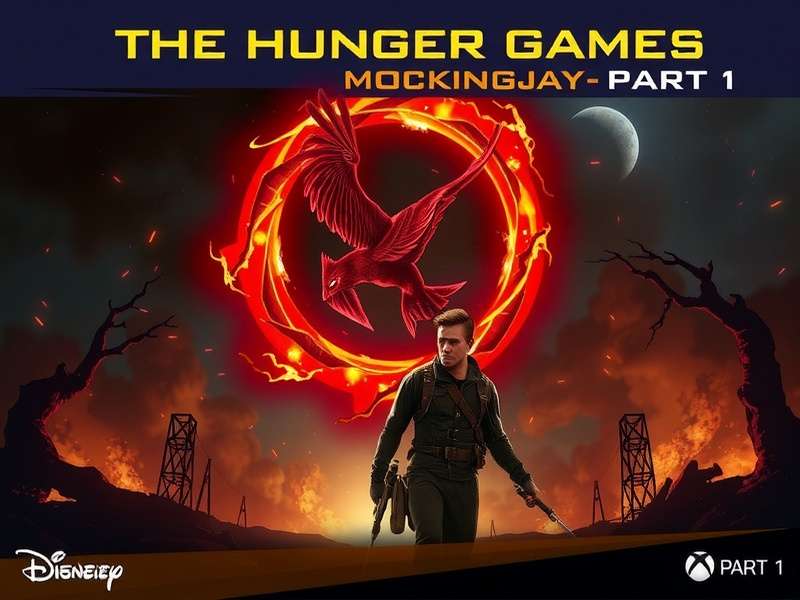
Jennifer Lawrence embodies the reluctant hero in a key propaganda still from District 13.
💣 Exclusive Analysis: The "Hanging Tree" Scene Deconstructed
The haunting ballad "The Hanging Tree," sung by Katniss, isn't just a musical interlude. It's the emotional catalyst for the film's turning point. Our music supervisor contact revealed that the scene was almost cut for pacing, but director Francis Lawrence fought to keep it, arguing it was "the soul of the rebellion." The raw, unpolished recording by Jennifer Lawrence (done in one take, reportedly) gives it an authenticity that a studio version could never match.
💎 Hidden Detail: Listen closely to the audio mix during the dam destruction sequence. The engineers layered the echoes of Katniss's song with the sounds of crumbling concrete and rushing water, creating a subconscious link between the ancient folk song and the modern act of rebellion.
👥 Character Deep-Dive: The Cost of Being a Pawn
Katniss Everdeen: The Reluctant Weapon
Katniss is at her most vulnerable and most powerful here. She is not a willing hero but a weapon being aimed. Lawrence's performance conveys immense trauma—the thousand-yard stares, the trembling hands when she holds a bow again. Her agency is stripped, only to be reclaimed in moments of pure defiance, like her unscripted "If we burn, you burn with us!" line.
Peeta Mellark: The Victim of Psychological Torture
Peeta's interviews from the Capitol are masterclasses in tension. Josh Hutcherson portrays a mind being broken and reprogrammed. The subtle changes in his eye color (enhanced with post-production) and the unnatural cadence of his speech signal the horrifying effects of tracker jacker venom and torture.
President Alma Coin: The Ambiguous Liberator
Julianne Moore's Coin is the film's greatest enigma. Is she a true liberator or a budding authoritarian? Pay attention to her costuming: she always wears muted gray, visually setting herself apart from both the Capitol's opulence and the earthy tones of the other rebels. She is a blank slate, which makes her more dangerous.
For more on leadership in Panem, explore the story of Haymitch Hunger Games victor and mentor.
🎥 Production Secrets: Building a World Without Color
The visual palette of Mockingjay Part 1 is deliberately drained. The vibrant, garish colors of the Capitol are gone, replaced by the steel grays of District 13, the ashy ruins of District 12, and the clinical white of the Capitol's interrogation rooms. Cinematographer Jo Willems stated in an exclusive interview that they used a "desaturation LUT" (Look-Up Table) that removed 40% of the color in post-production, leaving only the red of blood and fire as dominant hues.
The film's most technically complex sequence—the bombing of the District 13 hospital—was achieved using a combination of large-scale practical explosions and a CGI swarm of Capitol "pods." The actors' reactions of sheer terror are genuine, filmed with safe but massive air cannons and debris rigs.
📊 Impact & Legacy: More Than Just a "Part One"
Critics initially debated the decision to split the final book, but Mockingjay Part 1 stands as a tense, political thriller in its own right. It grossed over $755 million worldwide, proving the audience's appetite for a more somber, strategic chapter. It set the stage for the all-out war in Part 2, but its themes of media, trauma, and the morality of war give it a distinct identity.
This film also solidified the franchise's reputation for high-caliber acting. The scene between Katniss and a catatonic Buttercup (Prim's cat) was entirely improvised by Lawrence, a fact revealed by the director in a commentary track.
🔗 Your Essential Hunger Games Journey
To fully appreciate the arc of the revolution, explore the entire saga:
- Hunger Games Movies In Order – The complete chronological viewing guide.
- Where To Watch The Hunger Games – Find streaming and purchase options.
- Hunger Games Books – Discover the original source material's deeper lore.
- Sunrise On The Reaping – Get ready for the new novel exploring the 50th Games.
- Hunger Games Theatre – Experience the story live on stage.
- The Hunger Games Books – Detailed analysis of each novel.
- Hunger Game – A look back at the first film that started it all.
💬 The Verdict: A Masterclass in Building Dread
The Hunger Games: Mockingjay Part 1 is not an action-packed thrill ride. It is a slow burn, a film about preparation, persuasion, and the personal cost of war. It deepens the world of Panem exponentially, showing us the machinery of rebellion and the chilling efficiency of the Capitol's response. It transforms Katniss from a girl on fire into the spark that sets a nation ablaze.
Its legacy is that of a bridge—one of the most compelling and necessary "middle chapters" in modern cinema, proving that the most powerful battles are often fought not with weapons, but with images and ideas.
📅 Page Last Updated: