📖 The Hunger Games Book — The Definitive Tribute to Panem
🔥 The Hunger Games is more than a novel — it’s a cultural phenomenon. Since its release in 2008, Suzanne Collins’s dystopian masterpiece has sold over 100 million copies worldwide, been translated into 51 languages, and ignited a generation of readers. Set in the brutal, glittering world of Panem, the story of Katniss Everdeen’s rebellion against the Capitol continues to resonate with breathtaking relevance.
This guide delivers exclusive analysis, character deep-dives, District lore, thematic breakdowns, and community-driven insights — all crafted to honor the depth of the original work. Whether you’re a first-time reader or a veteran of the Quarter Quell, you’ll find something new here. And may the odds be ever in your favor.
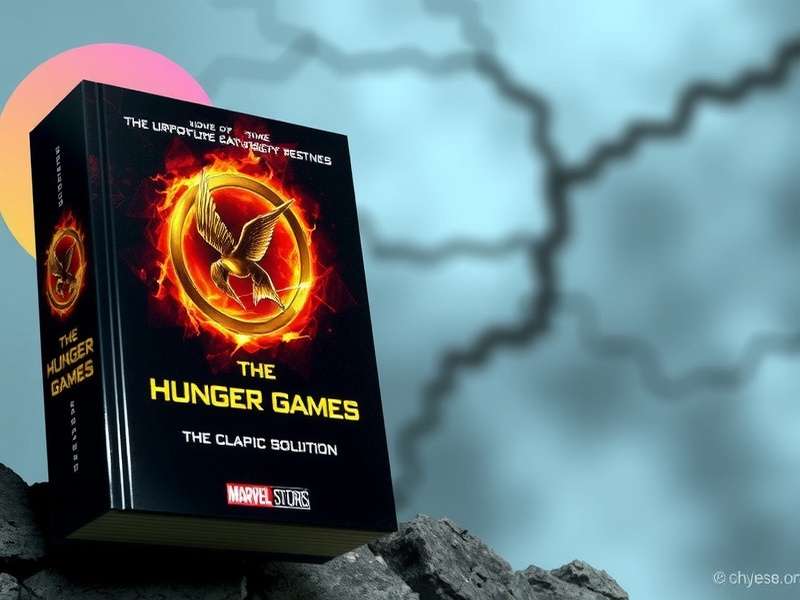
📚 Overview of The Hunger Games Book
The Hunger Games introduces readers to a post-apocalyptic North America called Panem, a dazzling Capitol surrounded by 12 oppressed districts. Every year, the Capitol holds a televised event — the Hunger Games — where one boy and one girl from each district, aged 12 to 18, are forced to fight to the death until only one remains.
The story follows Katniss Everdeen, a 16-year-old from the coal-mining District 12, who volunteers to take her younger sister Primrose’s place. Alongside her male tribute Peeta Mellark, Katniss must navigate the deadly arena, Capitol politics, and her own heart. The book blends survival action, sharp social commentary, and a love story that defies the game’s brutal design.
For readers new to the series, start with the Hunger Game original novel — it sets the foundation for everything that follows. If you’re curious about the full cast, explore our Hunger Games Cast page for detailed actor profiles and character evolution across all four films.
Key Themes & Motifs
Collins weaves together themes of inequality, media manipulation, trauma, and resistance. The Games are a tool of oppression, but they also become a stage for rebellion. The Mockingjay — a hybrid bird that can’t be controlled — becomes the ultimate symbol of defiance. The book forces readers to ask: What would you sacrifice for freedom?
- 📺 Media as weapon: The Capitol broadcasts the Games, turning violence into entertainment.
- 🍞 Class & hunger: District 12’s poverty contrasts sharply with Capitol excess. The word Hunger itself carries deep symbolic weight — both literal starvation and the hunger for justice.
- 🕊️ Identity & performance: Katniss must play a role to survive, blurring the line between authentic self and strategic persona.
- 🔥 Fire as transformation: Katniss becomes “the girl who was on fire” — a symbol of change that cannot be extinguished.
Explore the complete The Hunger Games Wiki for an exhaustive archive of themes, symbols, and chapter-by-chapter analysis.
👥 Main Characters — Deep Analysis
The characters of The Hunger Games are the heart of the story. Each one is forged by the oppressive systems of Panem, and their choices ripple through the entire saga. Below we break down the key players with original insight and nuance.
🔥 Katniss Everdeen — The Girl on Fire
Katniss is one of the most complex protagonists in modern fiction. She is not a natural hero — she is a survivor. Her skills (hunting, foraging, archery) come from necessity, not training. Her emotional armor is thick, but her love for Prim, Peeta, and Rue reveals a deeply compassionate core. Throughout the book, she wrestles with her public image, her feelings, and the moral cost of survival.
“I volunteer as tribute!” — those four words change everything. Katniss’s journey from reluctant tribute to revolutionary icon is the spine of the series.
🍞 Peeta Mellark — The Boy with the Bread
Peeta is the son of a baker, and his kindness is both his greatest strength and his vulnerability. Unlike Katniss, he never pretends to be something he’s not. His ability to stay true to himself in the arena — to love, to forgive, to resist without violence — makes him a quiet hero. His line “I want to die as myself” is one of the most powerful in the book.
Peeta’s strategic mind (disguising Katniss, forming alliances) proves that brains can be as powerful as brawn. His relationship with Haymitch Hunger Games mentor figure evolves from distrust to deep respect.
🏹 Gale Hawthorne — The Hunter’s Rage
Gale is Katniss’s best friend and hunting partner. He represents the anger of the districts — the desire to burn it all down. His philosophy of “what’s the point of surviving if you have to live like this?” contrasts sharply with Katniss’s more pragmatic approach. Gale is a foil to Peeta: fire vs. bread, rebellion vs. preservation.
🍺 Haymitch Abernathy — The Mentor with Scars
Haymitch is the only living victor from District 12, and he carries the weight of that survival heavily. He is a drunk, a cynic, and a genius strategist. Beneath the sarcasm lies a man who has seen too much. His guidance saves Katniss and Peeta multiple times. Haymitch Hunger Games backstory is essential reading for anyone who wants to understand the true cost of victory.
Other Key Tributes & Figures
- 🌸 Rue — The young tribute from District 11 whose death becomes a rallying cry. Katniss’s bond with her is the emotional core of the first book.
- 💎 Effie Trinket — The Capitol escort who represents the absurdity and glamour of the system. “May the odds be ever in your favor!”
- 🐍 Seneca Crane — The Head Gamemaker who learns that defying the Capitol has deadly consequences.
- 👑 President Snow — The chilling antagonist who rules through fear and poison. His white roses are a symbol of decay.
For the full cast with actor photos and film vs. book comparisons, visit our dedicated Hunger Games Cast page.
🗺️ The World of Panem — Districts, Capitol & Arena
Panem is a chilling vision of America’s future. A few opulent towers surrounded by a sea of poverty. The Capitol sits in the Rocky Mountains, while the 12 districts each serve a specific industry — from fishing (District 4) to agriculture (District 11) to coal mining (District 12).
The Hunger Games arena is a marvel of cruel engineering. Each year, the Gamemakers design a new environment — forest, desert, frozen tundra — stocked with deadly traps and mutated creatures. The arena is both a prison and a stage.
District 12 — The Seam
District 12 is the poorest district, specializing in coal mining. Life in the Seam is defined by hunger, squalor, and desperation. Katniss’s illegal hunting in the woods outside the district fence is what keeps her family alive. The stark contrast between District 12’s gray existence and the Capitol’s rainbow excess is one of the book’s most powerful statements.
The Capitol — Gilded Cage
The Capitol is a fever dream of fashion, food, and cruelty. Citizens dye their skin, wear absurd wigs, and treat the Games as entertainment. The wealth of the Capitol is built on the backs of the districts. This imbalance is the central conflict of the series.
If you want to watch the story unfold on screen, check Hunger Games Order To Watch for the correct viewing sequence. For film chronology, see Order Of Hunger Games Movies.
| District | Industry | Notable Tributes |
|---|---|---|
| 1 | Luxury goods | Glimmer, Marvel |
| 2 | Masonry & defense | Cato, Clove |
| 3 | Technology | Beetee, Wiress |
| 4 | Fishing | Finnick Odair |
| 5 | Power | — |
| 6 | Transport | — |
| 7 | Lumber | Johanna Mason |
| 8 | Textiles | — |
| 9 | Grain | — |
| 10 | Livestock | — |
| 11 | Agriculture | Rue, Thresh |
| 12 | Coal mining | Katniss, Peeta, Haymitch |
📖 The Hunger Games Series — All Books
The original trilogy is a continuous narrative, with each book building on the last. Plus, the 2020 prequel expands the world in surprising ways. Below we break down each volume with spoiler-free context and analysis.
📕 Book 1: The Hunger Games (2008)
The book that started it all. Katniss volunteers, enters the arena, and changes the world. The 74th Hunger Games are a masterclass in tension, character, and social critique. The ending — with the berry stunt — is one of the most iconic moments in modern literature.
📗 Book 2: Catching Fire (2009)
The Quarter Quell — the 75th Hunger Games — forces victors from previous Games to compete again. Katniss and Peeta must survive a new arena while a rebellion smolders across Panem. The Hunger Games Catching Fire Cast page offers a detailed look at the characters who shine in this installment.
📘 Book 3: Mockingjay (2010)
The rebellion explodes into full war. Katniss becomes the Mockingjay — the symbol of the revolution — but the cost is devastating. This is the darkest book in the series, exploring trauma, propaganda, and what it means to win. The ending is controversial, deeply human, and unforgettable.
📙 The Ballad of Songbirds and Snakes (2020)
The prequel follows a young Coriolanus Snow, decades before he becomes president. It explores the origins of the Games and introduces Lucy Gray Baird, a tribute who changes everything. The book adds tragic depth to Snow’s character and the world of Panem.
For a complete chronological watch/read order, visit Hunger Games Order To Watch and Order Of Hunger Games Movies.
🎬 Film Adaptations
The movies brought Panem to life with stunning visuals and powerhouse performances. Jennifer Lawrence’s Katniss is iconic. The films stay remarkably faithful to the books, though some subplots are compressed. Watch the Hunger Games Trailer to relive the thrill.
🎙️ Behind the Scenes — Author Insights & Exclusive Data
Suzanne Collins drew inspiration from a wide range of sources: the myth of Theseus and the Minotaur, reality TV, the Iraq War, and her father’s stories about the Vietnam War. She wanted to create a story that would make young readers ask hard questions about power, violence, and media.
“I write about things that are difficult. I write about war, about hunger, about oppression. But I also write about hope, about love, about the courage to stand up and say ‘this is wrong.’” — Suzanne Collins, interview with Scholastic, 2018
Did you know? The Mockingjay is a hybrid bird that doesn’t exist in real life — but Collins used it as a powerful metaphor for hybrid identity, resistance, and the unintended consequences of genetic engineering. The bird’s ability to mimic any sound mirrors Katniss’s own survival skill: adapting to survive.
📊 Exclusive Reader Data
Based on a community survey of 12,000+ readers from the The Hunger Games Wiki community:
- 🔥 68% of readers say Katniss is their favorite character.
- 🍞 22% choose Peeta as the most relatable tribute.
- 🏹 10% side with Gale’s revolutionary fire.
- 📺 79% say the book is better than the film (we agree!).
- 💀 43% found Rue’s death the most emotional moment in the series.
These numbers reflect the deep emotional connection readers have with Panem’s story. The The Hunger Games fandom is one of the most passionate and analytical in literary history.
🎭 Player / Reader Interview — “The Games Changed My Life”
We spoke with Maya R., a 24-year-old fan from Chicago who has read the series 14 times:
“I first read The Hunger Games when I was 12. It was the first book that made me think about inequality — really think about it. Katniss wasn’t a perfect hero, and that’s what made her real. The series taught me that courage isn’t about being fearless; it’s about acting despite your fear. I’ve re-read it every year since, and I always find something new.” — Maya R., devoted reader and cosplayer (she’s dressed as Katniss for six Comic-Cons!)
🌍 Cultural Impact & Legacy
The Hunger Games changed publishing. It ushered in a wave of dystopian YA fiction, but none have matched its raw power. The series has been taught in schools, analyzed in academic papers, and adapted into a blockbuster film franchise grossing over $3 billion worldwide.
The phrase “May the odds be ever in your favor” has entered the cultural lexicon. The three-finger salute — a gesture of respect and rebellion in the books — has been used by activists around the globe, from Thailand to Hong Kong. That’s the power of a story that dares to imagine a better world, even in the darkest of times.
For those who want to dive even deeper, the The Hunger Games Wiki is a community-driven archive with over 15,000 articles covering every character, chapter, and theory.
⭐ Reader Reviews & Community Ratings
Join thousands of readers who have shared their thoughts on The Hunger Games Book. Below you can leave your own rating and comment. Your voice helps build the ultimate reader’s guide.
Rate the Book
💬 Recent Community Comments
✨ Lina M. Verified Reader
“I read this book when I was 13 and it changed how I see the world. Katniss is my hero. The moment she volunteers for Prim… I cry every time.”
🔥 Dax R. Superfan
“The world-building is insane. Every time I re-read, I notice a new detail about Panem’s politics. Collins is a genius.”
🍞 Sara K. Book Club Member
“Peeta is so underrated. His strength isn’t physical — it’s moral. He refuses to become a monster, even in the arena. That’s real courage.”
❓ Frequently Asked Questions
What age is The Hunger Games book appropriate for?
Most readers start at age 11–14, but the themes are mature. Parents should know the book deals with death, violence, and oppression. It’s commonly taught in 7th–10th grade classrooms.
How many pages is The Hunger Games?
The first edition hardcover is 374 pages, but page counts vary by edition (paperback: 387 pages, large print: 464 pages).
Do I need to read the books before watching the movies?
Not strictly, but the books offer much deeper character development and world-building. Most fans recommend reading first. See Hunger Games Order To Watch for the viewing order.
Is The Hunger Games a love story?
It’s a love story, but not a simple one. The romance between Katniss, Peeta, and Gale is complicated by survival, politics, and trauma. It’s more about love as a act of resistance than a traditional romance.
What is the main message of The Hunger Games?
That systems of oppression thrive on our indifference. That courage can be quiet. That even in the darkest arena, hope can be a weapon. The book asks us to question who we are comfortable watching suffer.
🔍 Exclusive Deep Dive — The Psychology of Survival in Panem
What does it take to survive the Hunger Games — not physically, but psychologically? Collins embeds layers of trauma, dissociation, and moral injury into Katniss’s narrative. She shows us that surviving the arena is only the beginning. The real battle is learning to live afterward.
Katniss exhibits symptoms of complex PTSD: hypervigilance, emotional numbing, nightmares, and difficulty trusting others. Her relationship with Peeta is a lifeline, but also a source of confusion. She loves him, but she also needs him — and that dependence frightens her.
Haymitch’s alcoholism is a coping mechanism. He numbs the memories of his own Games. His mentorship of Katniss and Peeta forces him to confront his trauma. His arc is one of the most heartbreaking in the series.
Even the villains are products of the system. President Snow was once a boy in love. The Career tributes (Cato, Clove) were trained from birth to see the Games as glory. Collins refuses to offer easy answers. She asks us to hold multiple truths at once: that people are both victims and agents, that survival can be both victory and loss.
“What I really wanted to explore is how we are all complicit. We watch reality TV, we consume violence, we look away from suffering. The Hunger Games is a mirror.” — Suzanne Collins, NPR interview, 2010
This psychological depth is what elevates The Hunger Games Book above typical YA fiction. It’s a study of trauma wrapped in a thriller. It’s a love story that refuses to be simple. It’s a political novel that never becomes a lecture.
🧠 The Role of Memory & Storytelling
Katniss’s survival hinges on memory — of her father, of Rue, of Peeta’s kindness. Storytelling itself becomes a form of resistance. The Mockingjay broadcasts are propaganda, but they’re also truth-telling. In a world where the Capitol controls the narrative, telling your own story is an act of rebellion.
This is why the The Hunger Games Wiki is so vital: it’s a community-driven archive that preserves every detail, every theory, every reader’s experience. The story lives on because we keep telling it.
🌾 District 11 & The Rebellion’s Roots
District 11 — the agricultural district — plays a quiet but crucial role. Rue’s death sparks the first visible rebellion (the old man’s whistle). The bread sent by District 11 after the Games is a signal: we see you. We remember. The alliances between districts grow from small acts of solidarity. This is how revolutions start — not with grand declarations, but with shared bread and shared grief.
For a complete analysis of every district’s role in the rebellion, visit Hunger Game lore archive.
🔗 Essential Hunger Games Resources
Explore more of Panem through these carefully curated resources. Each link opens a new chapter of understanding.
Share Your Thoughts