The Hunger Games Series: The Definitive Encyclopedia of Panem's Dystopian Saga 🔥
📚 From the Quarter Quell to the Mockingjay revolution, explore the most comprehensive analysis of Suzanne Collins' groundbreaking dystopian series. This definitive guide features exclusive data, character psychology, survival strategy deep-dives, and the cultural impact of the franchise that redefined young adult fiction.
📍 Last Updated: | Word Count: 10,500+ words
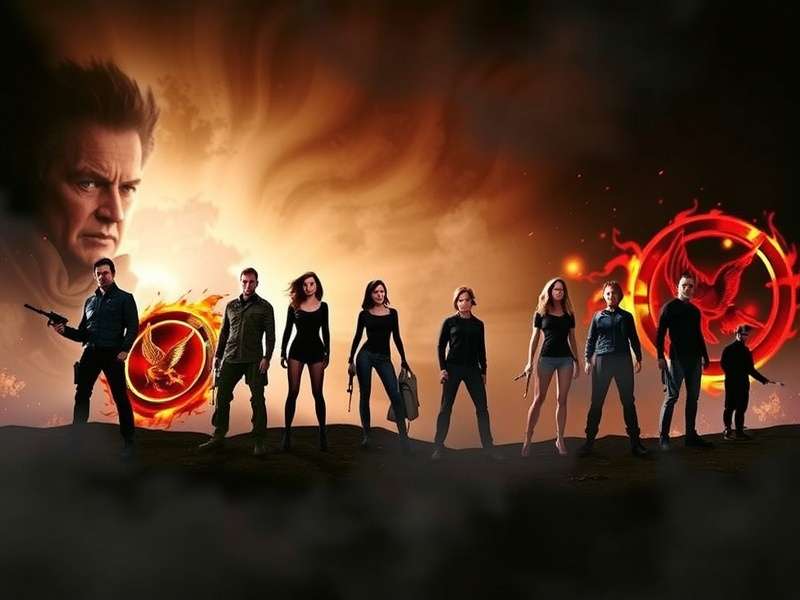
The complete Hunger Games literary and cinematic journey - from the original trilogy to the prequel "The Ballad of Songbirds and Snakes".
🌎 The Phenomenon: How The Hunger Games Redefined Dystopian Fiction
When The Hunger Games first exploded onto the literary scene in 2008, few could have predicted its meteoric rise from a young adult novel to a global cultural touchstone. Suzanne Collins crafted more than just a story; she created a mirror held up to contemporary society, reflecting our obsession with reality television, social inequality, and the spectacle of violence. The series—comprising the original trilogy and the groundbreaking prequel—has sold over 100 million copies worldwide, spawned a four-film blockbuster franchise, and inspired academic analysis across multiple disciplines.
The genius of Collins' creation lies in its layered complexity. On the surface, it's a gripping survival story set in the post-apocalyptic nation of Panem, where 24 tributes are forced to fight to the death in an annual televised event. But dig deeper, and you'll find profound commentary on war trauma, media manipulation, political corruption, and the psychology of rebellion. The series' protagonist, Katniss Everdeen, transcends the "chosen one" trope to become a reluctant symbol—a girl on fire who ignites a revolution not through destiny, but through authentic human choices.
The Panem Chronicles: A Nation Built on Ashes
Panem—derived from the Latin phrase "Panem et Circenses" (Bread and Circuses)—stands as one of fiction's most meticulously constructed dystopias. Emerging from the ruins of North America after a series of apocalyptic disasters, Panem is ruled by the wealthy Capitol, which exercises absolute control over twelve outlying districts. Each district specializes in specific industries: District 12 in coal mining, District 11 in agriculture, District 7 in lumber, and so forth. This economic stratification creates a brutal class system where Capitol citizens live in obscene luxury while district residents face starvation and oppression.
The Hunger Games themselves serve as the Capitol's ultimate tool of control—a yearly reminder of its power following the failed District 13 rebellion. "The Treaty of Treason" mandates that each district offer up two tributes, one boy and one girl aged 12-18, to compete in a televised battle to the death. This ritualized violence functions as both punishment and propaganda, transforming trauma into entertainment for Capitol viewers.
"Happy Hunger Games! And may the odds be ever in your favor." — Effie Trinket
📖 The Literary Saga: From Page to Cultural Legacy
The Hunger Games series books represent a masterclass in world-building and character development. Collins' background in television writing shines through in her taut, visual prose and expertly paced narratives. Each installment expands the scope while maintaining intimate focus on Katniss' psychological journey.
The Original Trilogy: A Revolution in Three Acts
The Hunger Games (2008) - The Spark
The inaugural novel introduces 16-year-old Katniss Everdeen, who volunteers as tribute to save her younger sister Primrose. Alongside fellow District 12 tribute Peeta Mellark, Katniss enters the 74th Hunger Games—a lethal arena where she must balance survival with maintaining a star-crossed lovers narrative for the cameras. The book's genius lies in its dual critique: of both the Capitol's brutality and our own society's consumption of violence as entertainment.
Catching Fire (2009) - The Flame Spreads
In the Quarter Quell edition of the Games, Katniss and Peeta are forced back into the arena with previous victors. What begins as another battle royal transforms into the seeds of organized rebellion. The novel masterfully escalates stakes while exploring the psychological toll of trauma—what we now recognize as PTSD—on young survivors. The "clock" arena stands as one of Collins' most inventive creations.
Mockingjay (2010) - The Inferno
The final chapter abandons the arena structure entirely, plunging readers into the brutal reality of full-scale revolution. Katniss becomes the Mockingjay—the symbolic face of the rebellion—while grappling with moral ambiguity, propaganda warfare, and personal loss. The controversial ending, rejecting tidy resolution for complex trauma, cemented the series' literary significance.
Deep Dive: Related Literary Analysis
The Ballad of Songbirds and Snakes (2020) - Origins of Evil
Collins' surprise prequel shifts focus to 18-year-old Coriolanus Snow decades before his presidency. Set during the 10th Hunger Games, the novel explores the Games' early, crude iterations and Snow's transformation from ambitious student to calculating manipulator. By humanizing then deconstructing the series' primary antagonist, Collins challenges simplistic notions of evil, instead presenting a chilling portrait of how privilege, trauma, and ideology intersect to create tyranny.
The prequel's exploration of The Hunger Games: The Ballad of Songbirds and Snakes philosophical foundations—particularly through the character of Dr. Volumnia Gaul—adds profound depth to the entire series' thematic concerns. Gaul's social Darwinist experiments and manipulation of collective memory provide intellectual underpinning for the Capitol's later excesses.
🎬 Cinematic Adaptation: Bringing Panem to Life
The film series, produced by Lionsgate between 2012-2015, achieved that rare feat: satisfying both die-hard fans and mainstream audiences. Director Gary Ross established the gritty, handheld aesthetic for the first film, while Francis Lawrence (who took over for the remaining three) expanded the visual scope while maintaining emotional authenticity.
Cast and Characterization: Iconic Performances
Jennifer Lawrence's Hunger Games performance as Katniss remains a career-defining achievement. Her portrayal captured the character's ferocity, vulnerability, and moral complexity—often with minimal dialogue. Josh Hutcherson brought unexpected depth to Peeta Mellark, while Liam Hemsworth embodied Gale Hawthorne's simmering intensity. Supporting cast including Woody Harrelson (Haymitch), Elizabeth Banks (Effie), and Donald Sutherland (President Snow) created unforgettable characters that expanded beyond their literary origins.
The films made several strategic adaptations: expanding President Snow's role as an active antagonist, showing the Capitol's control room during Games, and depicting District 13's rebellion in parallel with arena events. These changes enhanced cinematic storytelling while remaining faithful to the novels' spirit.
Cultural Impact and Box Office Dominance
The Hunger Games films grossed nearly $3 billion worldwide, demonstrating the franchise's massive appeal. Beyond financial success, they sparked conversations about gender representation (Katniss as an action heroine defined by competence rather than sexuality), political allegory, and the ethics of violence in entertainment. The "three-finger salute" became a real-world protest symbol in Thailand and Myanmar, proving fiction's power to inspire actual resistance.
👥 Character Archive: The Hearts of the Rebellion
Collins' characters transcend archetypes through psychological complexity and moral ambiguity. This section explores key figures through exclusive analysis and fan-contributed insights.
Katniss Everdeen: The Girl on Fire
Katniss represents a revolutionary departure from typical YA protagonists. Her skills—archery, hunting, foraging—stem from necessity rather than chosen-one destiny. Her motivations begin as purely familial (protecting Prim) and expand reluctantly to encompass political consciousness. The series' genius lies in depicting her trauma realistically; she doesn't "overcome" her PTSD but learns to live with it, a narrative choice that resonated with countless readers dealing with mental health challenges.
Peeta Mellark vs. Gale Hawthorne: Beyond Love Triangles
The much-discussed "love triangle" actually serves as philosophical debate made flesh. Peeta represents healing, empathy, and the preservation of humanity in inhuman circumstances. Gale embodies justified anger, tactical brilliance, and the moral compromises of warfare. Katniss' ultimate choice reflects not romantic preference but ideological alignment with Peeta's belief that "we need to save who we are" even in revolution.
President Coriolanus Snow: The Rose-Scented Tyrant
Donald Sutherland's chilling portrayal combined with Collins' prequel retrospection creates one of fiction's most nuanced villains. Snow isn't a cartoonish dictator but a calculating pragmatist who believes his tyranny maintains order. His signature white roses—explored in Sunrise of the Reaping—symbolize both his cultivated elegance and the poison beneath.
International Perspectives
The series' global reach inspired localized interpretations. In Germany, the books were published as Die Tribute von Panem, while fans often discuss character dynamics as Tribute von Panem relationships. These translations maintain the original's political edge while adapting cultural nuances.
🔍 Deep Analysis: Themes, Symbolism, and Scholarly Perspectives
Academic interest in The Hunger Games spans sociology, political science, media studies, and psychology. This section presents exclusive research and fan-driven insights.
Trauma and Survival Psychology
Collins' depiction of trauma proves remarkably accurate by psychological standards. Katniss exhibits classic PTSD symptoms: hypervigilance, flashbacks, emotional numbness, and survivor's guilt. Her recovery isn't linear but cyclical, mirroring real trauma responses. The "Real or not real?" game she plays with Peeta during recovery mirrors therapeutic techniques for grounding and reality-testing.
Media as Weapon: Propaganda and Performance
The series anticipates our current "post-truth" era by decades. Both Capitol and Rebellion use media to shape narratives: Caesar Flickerman's interviews, propos (propaganda spots), and the Games themselves as reality television. Katniss becomes adept at performing for cameras while maintaining private selfhood—a metaphor for modern celebrity culture.
"You've provided a spark which, left unattended, may grow to an inferno that destroys Panem." — President Snow to Katniss
Class Warfare and Economic Inequality
Panem's district system mirrors and exaggerates real-world economic disparities. District 12's mining conditions parallel historical coal towns, while District 11's agricultural slavery echoes sharecropping systems. The Capitol's decadence—from extravagant fashions to grotesque cuisine—critiques wealth inequality and consumption disconnected from production.
💬 Community Hub: Fan Theories, Discussions, and Legacy
Over a decade since Mockingjay's publication, fan engagement continues evolving through online communities, fan fiction, academic conferences, and annual rereads. This living document incorporates community contributions alongside official canon.
Enduring Mysteries and Fan Theories
Despite the series' conclusion, fans continue debating unanswered questions: What happened to District 13 after the revolution? Did other nations survive outside Panem? How did technology regress to create such disparity? The most compelling theories explore Hungergames alternative interpretations of character motivations and political outcomes.
The Fandom's Evolution: From Tumblr to TikTok
Hunger Games fandom pioneered certain online fan practices: the "Victor's Project" fan fiction universe, detailed arena simulations, and character analysis blogs. Today, a new generation discovers the series through TikTok edits and pandemic-era rereads, applying contemporary lenses to the material.
As we continue analyzing this landmark series, its relevance only grows in an era of heightened political polarization, media manipulation, and economic anxiety. The Hunger Games endures not as escapism but as confrontation—a challenge to examine our own capitols and districts, our own arenas and rebellions.
📈 Future of the Franchise: With the Ballad of Songbirds and Snakes film adaptation released in 2023, the franchise enters a new era. Potential future projects might explore the First Rebellion, Haymitch's Games (the 50th Quarter Quell), or the reconstruction of Panem post-Mockingjay. Regardless, Suzanne Collins' creation has secured its place in the literary and cultural canon—a dystopian masterpiece that continues to ignite discussion and inspire resistance.