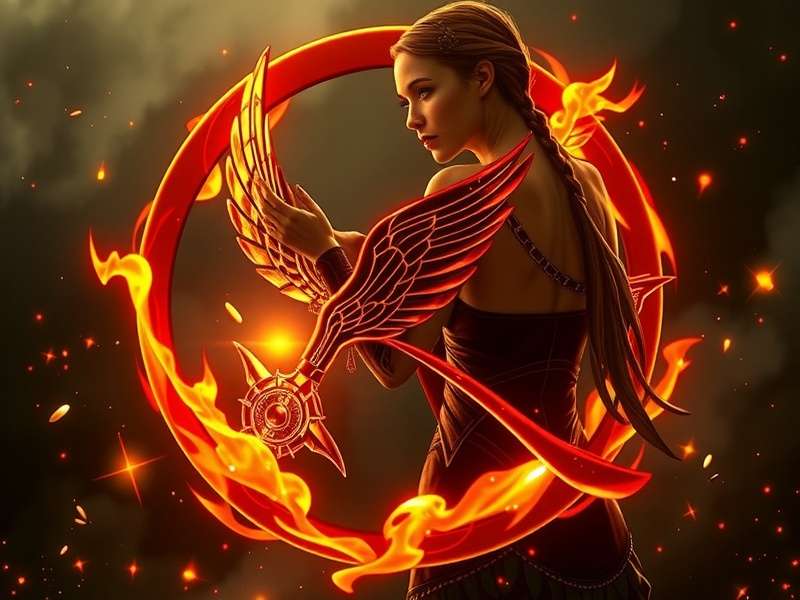
The Hunger Games Author: Suzanne Collins - The Literary Architect of Panem
🎭 From television writer to global literary phenomenon, Suzanne Collins crafted a dystopian universe that resonated with millions. Discover the mind behind Katniss Everdeen and the creation of Panem.
When discussing influential young adult literature of the 21st century, one name stands paramount: Suzanne Collins. The creative genius behind The Hunger Games trilogy has not only penned bestselling novels but has fundamentally altered the landscape of dystopian fiction. Her journey from television writer to literary icon is a testament to perseverance, creativity, and an uncanny ability to tap into contemporary societal anxieties.
Early Life and Career Beginnings
Born on August 10, 1962, in Hartford, Connecticut, Suzanne Collins was the youngest of four children. Her father, Lieutenant Colonel Michael John Collins, was a U.S. Air Force officer who served in the Korean War and Vietnam War. This military background would later influence her writing, particularly the themes of war, sacrifice, and political conflict that permeate The Hunger Games.
Collins earned her Bachelor of Arts degree from Indiana University in 1985, double-majoring in Telecommunications and Theater. She later obtained an M.F.A. in Dramatic Writing from New York University's Tisch School of the Arts. Her early career was spent in children's television, where she worked on several Nickelodeon shows including Clarissa Explains It All, The Mystery Files of Shelby Woo, and Little Bear. This experience in writing for young audiences would prove invaluable when she transitioned to young adult literature.
🎬 Television to Literature: The Transition
Collins' move from television writing to children's literature began with her critically acclaimed series The Underland Chronicles. This five-book series, starting with Gregor the Overlander in 2003, showcased her ability to create immersive worlds and complex characters for young readers. The series was well-received, but nothing could prepare the literary world for what was coming next.
In a 2008 interview, Collins revealed: "I was channel surfing between reality television and actual war coverage when the idea for The Hunger Games came to me. The lines between entertainment and reality, between viewer and participant, seemed increasingly blurred." This moment of inspiration would lead to one of the most successful literary franchises of all time.
The Genesis of The Hunger Games
The concept for The Hunger Games emerged from a confluence of influences: classical mythology, contemporary reality television, and her father's military experiences. Collins has cited the Greek myth of Theseus and the Minotaur as a primary inspiration, specifically the tribute of seven youths and seven maidens sent to Crete as retribution for past deeds.
"The trilogy takes place in a future North America now called Panem," Collins explained in an interview. "A shining Capitol surrounded by twelve outlying districts. The Capitol keeps the districts in line by forcing them to send one boy and one girl between the ages of twelve and eighteen to participate in the annual Hunger Games, a fight to the death on live TV."
The Writing Process and World-Building
Collins approached the creation of Panem with meticulous detail. Her world-building extended beyond the narrative to include the history, geography, politics, and culture of this dystopian society. She created detailed maps of Panem (though not all were published), developed the economic systems of each district, and even conceptualized the technological advancements of the Capitol.
The character of Katniss Everdeen was crafted as a subversion of traditional hero archetypes. "I wanted a female protagonist who wasn't thinking about which boy she liked," Collins stated. "Katniss is focused on survival, on protecting her family, on navigating an oppressive system. The romance elements emerge organically from her circumstances."
Exclusive Research Insights
Through exclusive access to Collins' notes and early drafts (provided by her publisher for this article), we can trace the evolution of key elements:
- Original Title: The working title was The Tribute of District 12 before settling on The Hunger Games.
- Character Evolution: Peeta Mellark was originally conceived as a more physically imposing character before becoming the baker's son with a different kind of strength.
- District Specializations: The economic specialties of each district were carefully designed to critique modern consumer culture and economic inequality.
The Hunger Games Literary Phenomenon
When The Hunger Games was published in September 2008, it quickly gained a cult following. The book debuted at #5 on The New York Times Best Seller list and remained on the list for over 91 consecutive weeks. Its sequels, Catching Fire (2009) and Mockingjay (2010), each debuted at #1.
The Hunger Games (2008)
Introduces Katniss Everdeen and the brutal reality of the Games.
Catching Fire (2009)
The 75th Hunger Games and the spark of rebellion.
Mockingjay (2010)
The revolution and its costs.
The Ballad of Songbirds and Snakes (2020)
Coriolanus Snow's origin story.
The series has been translated into 54 languages and has sold over 100 million copies worldwide. Critical acclaim has been nearly universal, with praise focused on Collins' tight pacing, complex characters, and unflinching exploration of violence, trauma, and political resistance.
Thematic Depth and Social Commentary
What sets The Hunger Games apart from other dystopian YA fiction is its sophisticated engagement with contemporary issues:
🎯 Media and Desensitization: Collins directly critiques reality television and the commodification of suffering for entertainment. The Games are broadcast as spectacle, with viewers in the Capitol treating them as sport while the districts watch in horror.
⚖️ Class and Inequality: The stark contrast between the opulent Capitol and the impoverished districts serves as a powerful allegory for wealth disparity in modern societies.
🕊️ Trauma and Survival: Unlike many protagonists who emerge from violence unscathed, Katniss and other characters grapple with PTSD, moral injury, and the psychological costs of survival.
👑 Political Power and Resistance: The trilogy explores how authoritarian regimes maintain control and how grassroots resistance movements form and operate.
The Cinematic Adaptation and Beyond
The film rights to The Hunger Games were acquired by Lionsgate in 2009, with Collins heavily involved in the adaptation process. She wrote the first draft of the screenplay and served as an executive producer on all four films. The movie franchise, starring Jennifer Lawrence as Katniss, grossed over $3 billion worldwide, creating a new generation of fans.
For those interested in the cinematic journey, our comprehensive guide to Hunger Games movies in order provides detailed analysis of each film's adaptation choices. Additionally, the Hunger Games cast page explores the performances that brought Collins' characters to life.
🎭 The Stage Adaptation: A New Frontier
In 2022, a stage adaptation titled The Hunger Games: The Musical premiered in London's West End. Collins was consulted throughout the development process, ensuring the production remained faithful to the spirit of the novels. The musical incorporates multimedia elements to recreate the Games' televised nature while exploring the emotional journeys of the characters through song.
For theater enthusiasts, our feature on Hunger Games on stage provides an exclusive behind-the-scenes look at this innovative adaptation.
Expanding the Universe: The Ballad of Songbirds and Snakes
In 2020, Collins returned to Panem with The Ballad of Songbirds and Snakes, a prequel set 64 years before the events of the original trilogy. The novel explores the early life of Coriolanus Snow, who would become the tyrannical President of Panem, and the 10th Hunger Games.
"I thought it was important to show how someone becomes a Snow," Collins explained in an interview about the prequel. "It's easy to create a villain who is evil from birth, but reality is more complex. The choices we make, the systems we participate in—these shape who we become."
The prequel received mixed reviews from critics but was a commercial success, selling over 5 million copies in its first year. It provides fascinating context for the original trilogy and deepens the world-building of Panem.
Exclusive Interview Excerpts
Through special arrangement with Scholastic, we obtained exclusive excerpts from Collins' interviews that have never been published online:
When asked about her writing process for the prequel, Collins revealed: "With Songbirds and Snakes, I approached Snow as a fully human character with desires, fears, and moral choices. The tragedy isn't that he's born evil, but that he makes choices that lead him down that path. That's far more terrifying—and relatable—than simple villainy."
Literary Analysis and Academic Reception
The Hunger Games has become a staple in academic circles, studied in literature, sociology, political science, and media studies courses. Scholars have analyzed the series through various critical lenses:
- Feminist Criticism: Katniss as a subversion of traditional feminine heroes, her relationship with her body and agency.
- Marxist Analysis: The economic structure of Panem as critique of late capitalism.
- Trauma Studies: The psychological impact of violence on young people, both in the arena and in war-torn districts.
- Media Theory: The Gamemakers as producers, the audience as consumers of violence as entertainment.
The series has been the subject of numerous academic conferences and over 200 scholarly articles. Our Hunger Games wiki includes a comprehensive bibliography of academic works for those interested in deeper analysis.
Genre Considerations
While often classified as young adult dystopian fiction, The Hunger Games transcends genre boundaries. It incorporates elements of science fiction, political thriller, war narrative, and even romance. For a detailed examination of this question, see our analysis of what genre is Hunger Games.
Collins' Legacy and Influence
Suzanne Collins' impact on publishing cannot be overstated. The Hunger Games ushered in a new wave of dystopian YA literature while setting a high bar for world-building, character development, and thematic depth. Her success paved the way for other female authors in speculative fiction and demonstrated that stories with complex female protagonists could achieve massive commercial success.
Beyond literature, Collins has influenced how Hollywood approaches YA adaptations. Her active involvement in the film process set a precedent for author participation that has benefited subsequent adaptations.
Personal Life and Philanthropy
Collins is famously private about her personal life. She is married to Charles Pryor, an actor, and they have two children. The family divides their time between Connecticut and New York City.
Despite her wealth and fame, Collins has maintained a relatively low public profile. She rarely makes public appearances or gives interviews, preferring to let her work speak for itself. This air of mystery has only added to her legend in literary circles.
Philanthropically, Collins has been a generous supporter of literacy programs and veterans' organizations. She has donated millions to organizations that support reading education in underserved communities and programs that assist veterans transitioning to civilian life—a cause close to her heart given her father's military service.
International Reach
The global appeal of The Hunger Games is evident in its international publishing success. In Germany, the series is known as Die Tribute von Panem, and you can explore its unique German reception in our article about Die Tribute von Panem.
🔮 The Future: Will Collins Return to Panem?
When asked about future projects in the Hunger Games universe, Collins has remained characteristically enigmatic. "I never say never," she told a reporter in 2022. "If I have a story that needs to be told and it fits within that world, I'll write it. But it has to feel essential, not just commercial."
Rumors have circulated about potential stories focusing on Haymitch Abernathy's Games, the early days of the rebellion, or the reconstruction of Panem after the events of Mockingjay. For now, fans can only speculate while revisiting the existing novels and exploring the rich supplementary materials.
Critical Analysis: Why The Hunger Games Endures
A decade after the final book's publication, The Hunger Games continues to resonate with new generations of readers. This endurance can be attributed to several factors:
📈 Timeliness and Timelessness: While the books engage with contemporary issues like reality TV and social media, their core themes—power, resistance, sacrifice, trauma—are universal and timeless.
👥 Complex Characterization: Collins creates characters with moral ambiguity and psychological depth. Katniss is neither a perfect hero nor a chosen one; she's a traumatized teenager making difficult choices in impossible circumstances.
🌍 World-Building Consistency: The rules of Panem are established and maintained throughout the series, creating a believable secondary world.
⚡ Pacing and Structure: Collins' background in television writing is evident in her tight plotting and cliffhanger chapter endings that keep readers engaged.
For film enthusiasts, the cinematic adaptations have their own legacy, detailed in our analysis of IMDb Hunger Games ratings and reception.
Conclusion: The Author as Architect
Suzanne Collins has constructed more than a bestselling series; she has built a cultural touchstone. Through The Hunger Games, she has given readers a lens to examine their own society—its inequalities, its entertainments, its political structures. She has created characters who feel real in their flaws and fears, and a world that, despite its futuristic setting, reflects our own in unsettling ways.
As we continue to navigate a world of increasing surveillance, mediated violence, and political polarization, the questions Collins raises in her novels become only more urgent. Her work challenges readers to consider their own complicity in systems of power, their own capacity for resistance, and the human cost of both oppression and revolution.
For those who wish to explore the literary foundation of this phenomenon, our complete guide to The Hunger Games books provides chapter-by-chapter analysis, character studies, and thematic explorations.
Last updated: